Delhi HC notices Centre on Ranitidine safety review delay amid NDMA cancer risk
Synopsis
India's regulatory review of Ranitidine — a widely used acidity drug linked to a probable carcinogen — missed its own October 2025 deadline without a public conclusion. The Delhi High Court has now stepped in, issuing notice to the Centre, CDSCO, DTAB, and ICMR, forcing a process that has stalled for over five years to finally face judicial scrutiny.
Key Takeaways
The Delhi High Court issued notice on 4 November 2026 in a PIL seeking a time-bound safety review of Ranitidine .
Notices were served on the Ministry of Health , CDSCO , DTAB , and ICMR .
Ranitidine has been under scrutiny since September 2019 over the possible presence of NDMA , a probable human carcinogen.
A 16-member DCGI Sub-Committee set up on 24 July 2025 missed its three-month deadline , with its report still undisclosed as of the petition.
The US FDA withdrew all Ranitidine products in April 2020 ; India's own regulatory verdict remains pending.
The PIL does not seek a ban — only a disclosed, reasoned conclusion within a fixed timeframe.
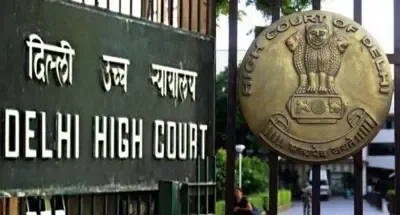
The Delhi High Court on Wednesday, 4 November 2026 issued notice on a Public Interest Litigation (PIL) demanding a time-bound and reasoned decision from the Centre on the safety of Ranitidine, a widely prescribed acidity medication sold in India for over three decades, amid unresolved concerns about the possible presence of a cancer-linked impurity in the drug.
What the Court Has Directed
A Division Bench comprising Acting Chief Justice Nitin Wasudeo Sambre and Justice Sanjay Sharma issued notices to the Union Ministry of Health and Family Welfare, the Central Drugs Standard Control Organisation (CDSCO), the Drugs Technical Advisory Board (DTAB), and the Indian Council of Medical Research (ICMR), seeking their responses to the petition. The PIL was filed by Dr Chandresh Jain, described as a qualified doctor and practising advocate.
Notably, the petition does not seek an outright ban on Ranitidine or ask the court to rule on its scientific safety. Instead, it asks that the government's own regulatory review — which has passed through successive expert committees without a publicly disclosed conclusion — be brought to a time-bound end.
The NDMA Concern and Global Context
Ranitidine came under international scrutiny in September 2019 after regulators flagged the possible presence or in-situ formation of nitrosodimethylamine (NDMA), a compound classified by the International Agency for Research on Cancer (IARC) as a probable human carcinogen. In April 2020, the US Food and Drug Administration (FDA) requested manufacturers to withdraw all prescription and over-the-counter Ranitidine products. The European Medicines Agency similarly recommended a precautionary suspension across the European Union.
The PIL, however, clarified that regulatory actions in other jurisdictions do not automatically determine the status of products sold in India, and that an independent domestic assessment is both necessary and overdue.
India's Stalled Regulatory Process
The petition traced a detailed timeline of India's own regulatory proceedings. The 92nd meeting of the DTAB, held on 24 April 2025, recommended constituting a larger expert committee, commissioning an ICMR safety study, monitoring NDMA levels in circulating stocks, and considering risk-based measures including a possible reduction in the drug's shelf life.
Acting on that recommendation, the Drugs Controller General of India (DCGI) issued an Office Memorandum on 24 July 2025, constituting a 16-member Sub-Committee with a three-month deadline to submit its report — a deadline that reportedly expired around 24 October 2025.
The petitioner relied on a reply obtained under the Right to Information (RTI) Act from the First Appellate Authority of CDSCO, which confirmed that the Sub-Committee's report was still awaited and that the matter remained under active review. Ranitidine is currently marketed in India under brands including Aciloc, Rantac, R Loc, Ranitin, and Zinetac.
What the Petition Asks For
The PIL contends that the prolonged pendency of the regulatory exercise — spanning multiple expert panels and a missed reporting deadline — warrants judicial oversight to ensure a disclosed, reasoned conclusion is reached within a reasonable timeframe. The petitioner has explicitly stated that the High Court is not being invited to substitute its judgment for that of scientific experts or to direct a prohibition on the drug's manufacture, distribution, or sale.
What Happens Next
With notices now issued, the Ministry of Health, CDSCO, DTAB, and ICMR are expected to file their responses before the bench. The court's intervention could accelerate a regulatory process that has remained inconclusive for over five years since global safety concerns first surfaced. How the government responds — and how quickly — will determine whether millions of Indians who use Ranitidine-based products receive a clear, evidence-backed safety verdict.
Point of View
Not merely a procedural delay. The DCGI's own Sub-Committee missed a self-imposed deadline, and an RTI response was needed to confirm that. The Delhi High Court's intervention is a corrective, not an overreach — but it also raises a harder question: why does India's drug safety architecture require PIL petitions to trigger deadline compliance on issues with direct public health consequences?
NationPress
4 Nov 2026
Frequently Asked Questions
Why is Ranitidine under scrutiny in India?
Ranitidine came under scrutiny in September 2019 over the possible presence or formation of nitrosodimethylamine (NDMA), classified by the International Agency for Research on Cancer (IARC) as a probable human carcinogen. While the US FDA withdrew all Ranitidine products in April 2020, India's own regulatory review has not yet produced a publicly disclosed final decision.
What did the Delhi High Court order on 4 November 2026?
The Delhi High Court issued notices to the Union Ministry of Health, CDSCO, DTAB, and ICMR, asking them to respond to a PIL filed by Dr Chandresh Jain. The PIL seeks a time-bound and reasoned safety conclusion on Ranitidine — not an outright ban.
What is the current status of India's Ranitidine regulatory review?
A 16-member Sub-Committee constituted by the DCGI on 24 July 2025 was given a three-month deadline to submit its safety report, a deadline that reportedly expired around 24 October 2025. An RTI reply from the First Appellate Authority of CDSCO confirmed the report was still awaited at the time of the petition.
Is Ranitidine banned in India?
No, Ranitidine has not been banned in India. The drug continues to be sold under brand names such as Aciloc, Rantac, R Loc, Ranitin, and Zinetac, pending the outcome of an ongoing domestic regulatory review.
What exactly is the PIL asking the court to do?
The PIL asks the Delhi High Court to direct the relevant authorities — Ministry of Health, CDSCO, DTAB, and ICMR — to complete their pending safety review and publish a reasoned conclusion within a fixed timeframe. It explicitly does not ask the court to ban the drug or override scientific expert judgment.