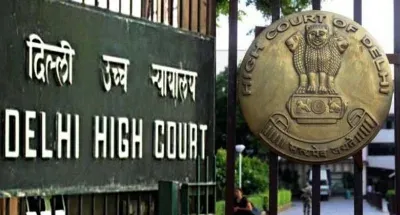
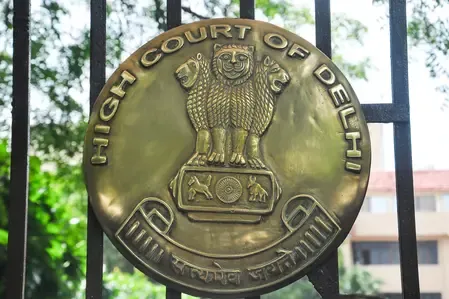
Delhi HC initiates contempt against Tihar Jail Superintendent over parole defiance
Synopsis
The Delhi High Court has initiated contempt proceedings against the Superintendent of Tihar's Central Jail-02, after he allegedly blocked the parole release of an undertrial who had already spent over five years in custody — despite two explicit court orders. The court's finding that a jail authority imposed conditions 'over and above' those set by a Constitutional Court strikes at a systemic pressure point in India's undertrial crisis.
Key Takeaways
The Delhi High Court has initiated contempt proceedings against Dr Pawan Kumar , Superintendent of Central Jail-02, Tihar , on 17 September 2026 .
Undertrial Anwar Hussain had spent 5 years and 5 months in custody and was directed for parole release by the court on 30 July 2026 .
A follow-up order on 11 August 2026 specifying explicit conditions was also not acted upon by jail officials.
Jail officials allegedly told Hussain's wife the order would not be honoured unless received directly from the court — despite it being a digitally signed public document.
The court held that the jail authority violated Articles 14 and 21 of the Constitution and made a 'mockery' of the legal system.
Dr Kumar must appear personally and file his response at the next hearing on 22 September 2026 .
The Delhi High Court has initiated contempt proceedings against Dr Pawan Kumar, Superintendent of Central Jail-02, Tihar, for wilfully frustrating its order directing the release of undertrial prisoner Anwar Hussain on parole, holding that the jail authority's conduct made a 'mockery' of the legal system and violated the petitioner's fundamental rights under Articles 14 and 21 of the Constitution.
Background: Five Years as an Undertrial
Anwar Hussain had spent five years and five months as an undertrial prisoner before petitioning the High Court, challenging the jail authority's rejection of his parole application. He had sought eight weeks of parole to pursue legal remedies before the Supreme Court following the dismissal of his criminal appeal.
In an order dated 30 July 2026, a single-judge Bench of Justice Purushaindra Kumar Kaurav directed Hussain's release on parole for four weeks, subject to conditions to be imposed by the competent authority. Despite this clear judicial direction, the jail authority failed to impose the required conditions, leaving Hussain behind bars.
The Chain of Non-Compliance
Hussain was compelled to file a fresh application seeking enforcement of the 30 July order. The High Court responded on 11 August 2026 by modifying the operative portion of its earlier direction and specifying explicit conditions for the parole release.
When Hussain's wife approached jail officials to fulfil those conditions and secure his release, she was allegedly told that prison authorities would not act on the 11 August order unless it was received directly from the High Court — despite the order being a digitally signed public document whose authenticity could be readily verified.
Justice Kaurav took serious note of this explanation, calling the jail authority's rationale 'flimsy and unjustifiable.' The court observed that the Superintendent had further demanded verification of the petitioner's address as a condition for release — a requirement that appeared nowhere in the 11 August order.
What the Court Found
'The Jail Authority, in an attempt to frustrate the order of the Court, and prevent the petitioner from being released, seems to have given a flimsy and unjustifiable reason,' the High Court noted in its order.
Justice Kaurav further observed: 'While Dr Kumar has cleverly tried to justify the blatant abuse of the powers vested in the office of the Jail Superintendent, by making references to catch phrases such as 'customary' and 'routine', the fact of the matter remains that he wants the Court to allow the Jail Authority to impose conditions over and above those imposed by the Court in its order dated 11.08.2026.'
The court concluded that Dr Kumar's conduct amounted to a wilful violation of its directions, resulting in continued and unlawful deprivation of Hussain's liberty. 'Owing to flimsy and untenable excuses of the Jail Authority and Dr Kumar, a mockery has been made of the legal system,' Justice Kaurav recorded.
Contempt Notice and Next Steps
Justice Kaurav directed Dr Pawan Kumar to file a written response explaining why he should not be punished under the Contempt of Courts Act, 1971. Dr Kumar accepted the contempt notice and was granted time to respond. He has also been directed to remain personally present at the next hearing, scheduled for 22 September 2026.
In his initial response, Dr Kumar submitted that his actions were not motivated by ill intent or malice, and that he had been unable to verify the petitioner's address of residence — which the court rejected as an excuse for non-compliance with an explicit judicial order.
The case is now being closely watched as a test of accountability for prison officials who obstruct court-directed releases — a pattern that legal observers say is not uncommon across India's overcrowded undertrial system.
Point of View
And delays in executing release orders are reportedly widespread. Contempt action is rare; whether the court presses through to punishment will signal how seriously it intends to enforce compliance beyond the courtroom.
NationPress
17 Sept 2026
Frequently Asked Questions
Why has the Delhi High Court initiated contempt proceedings against the Tihar Jail Superintendent?
The Delhi High Court initiated contempt proceedings against Dr Pawan Kumar , Superintendent of Central Jail-02, Tihar, because he failed to act on two court orders — dated 30 July 2026 and 11 August 2026 — directing the parole release of undertrial prisoner Anwar Hussain. The court found his justifications 'flimsy and unjustifiable' and held that his conduct amounted to a wilful violation of its directions.
Who is Anwar Hussain and why did he seek parole?
Anwar Hussain is an undertrial prisoner who had been in custody for five years and five months at the time of his petition. He sought parole for eight weeks to pursue legal remedies before the Supreme Court after his criminal appeal was dismissed.
What reasons did the Tihar Jail Superintendent give for not complying?
Dr Pawan Kumar stated that he could not verify the address where Hussain was to reside after release, calling it a 'customary' and 'routine' requirement. The High Court rejected this, noting that the 11 August 2026 order contained no such condition and that the superintendent was effectively adding requirements beyond those set by the court.
What are Articles 14 and 21 of the Constitution, and how were they violated?
Article 14 guarantees equality before the law and Article 21 guarantees the right to life and personal liberty. The Delhi High Court held that by keeping Hussain imprisoned despite explicit release orders, the jail authority directly violated both these fundamental rights.
What happens next in the contempt case?
Dr Pawan Kumar has accepted the contempt notice and must file a written response explaining why he should not be punished under the Contempt of Courts Act, 1971 . He is also required to appear personally before Justice Purushaindra Kumar Kaurav at the next hearing, scheduled for 22 September 2026 .