Delhi HC upholds attempt to murder charge in 2022 Agniveer protest at JP Nadda's residence
Synopsis
The Delhi High Court has refused to let nine Agniveer protesters off the hook for attempt to murder, ruling that hurling a burning effigy onto a security room rooftop — where guards were stationed — was 'imminently dangerous' regardless of the fact that no one was hurt. The judgment draws a hard constitutional line: violence dressed as protest is still violence.
Key Takeaways
The Delhi High Court upheld attempt to murder and other charges against nine protesters from the 21 June 2022 Agniveer demonstration.
The accused allegedly threw a burning effigy onto the rooftop of a security room at J.P.
Nadda's official bungalow on Motilal Nehru Marg .
Justice Girish Kathpalia held that absence of injury does not negate a charge under Section 307 IPC (attempt to murder).
The court dismissed the revision petition as 'completely frivolous' and imposed a cost of ₹25,000 to be deposited with the Bharat Ke Veer fund.
The entire incident was captured on CCTV and the footage formed part of the chargesheet.
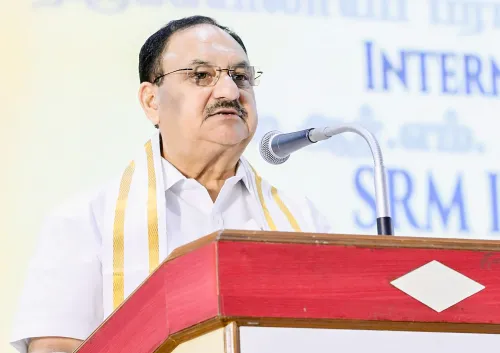
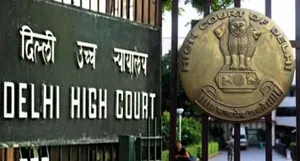
The Delhi High Court has upheld charges including attempt to murder against nine protesters who allegedly threw a burning effigy onto the rooftop of a security room at the official bungalow of J.P. Nadda — then Bharatiya Janata Party (BJP) president and now Union Health Minister — during a demonstration against the Agniveer scheme on 21 June 2022. The ruling, delivered by a single-judge bench of Justice Girish Kathpalia, dismissed a revision petition filed by the accused challenging the trial court's refusal to discharge them.
What Happened on 21 June 2022
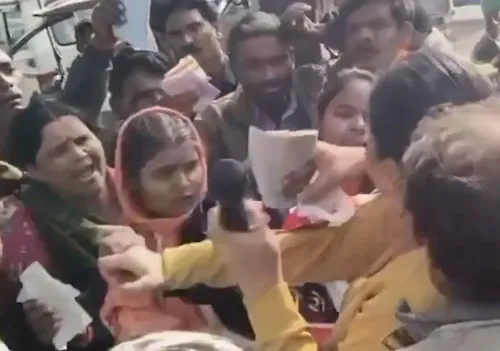
According to the First Information Report (FIR), the accused gathered outside Nadda's official bungalow at Motilal Nehru Marg, raised slogans, and burnt an effigy on the main road. They then allegedly carried the burning effigy on wooden sticks, crossed the road and footpath, and hurled the burning portions onto the gate and rooftop of the bungalow's security room before fleeing. The entire sequence was recorded on CCTV cameras installed at the site, and the footage was included in the chargesheet.
What the Court Ruled
Justice Kathpalia rejected the petitioners' core argument that no injury had been caused and therefore no offence under Section 307 IPC (attempt to murder) was attracted. The court held that the absence of injury did not negate the charge. 'To say the least, the petitioners cannot deny knowledge that their act of throwing the burning effigy across the gate where security men were standing and on the rooftop of the security room was so imminently dangerous that it must, in all probability, have caused death, though for the good fortune of those security men, they escaped unhurt,' the court observed.
The bench also rejected the argument that only Section 285 IPC — covering negligent conduct involving fire — applied, holding that the act was clearly intentional. 'What the petitioners did was not a negligent act; it was clearly an intentional act,' the order stated. On Section 436 IPC, the court clarified that the provision covers mischief by fire and is not limited to explosive substances.
On the Nature of Protest
The court used the ruling to draw a sharp line between legitimate protest and violence. 'One of the disconcerting issues raised in the present case is as to what should be the inherent nature and extent of protest,' Justice Kathpalia observed. 'Such acts of shoot and scoot do not constitute protest. It is indeed a matter of serious concern that a section of society today thrives on such disruptive activities in the name of protest,' he added. The court noted that the petitioners offered no explanation for why, after burning the effigy on the road, they crossed a wide footpath and service road to throw it at the security room.
Charges and Penalty
The petitioners had sought discharge from offences under Sections 307, 436, 147, 149 and 188 of the Indian Penal Code (IPC). Advocate Vimal Tyagi, appearing for the petitioners, had contended that no explosive substance was used and no injury was caused. The prosecution countered with eyewitness accounts and CCTV footage, arguing the accused intended to endanger security personnel inside the bungalow. Finding no infirmity in the trial court's order, the Delhi High Court dismissed the petition as 'completely frivolous' and imposed a cost of ₹25,000 on the petitioners, to be deposited with the Bharat Ke Veer fund within one week.
The case now returns to the trial court, where proceedings against the nine accused will continue on the upheld charges.
Point of View
Provided the act carries a high probability of causing death. Courts have historically been inconsistent on this threshold, and Justice Kathpalia's reasoning — that knowledge of imminent danger suffices — could be cited in future protest-related prosecutions. The ₹25,000 cost imposed on petitioners and its direction to the Bharat Ke Veer fund carries a pointed symbolism, linking the penalty directly to the armed forces welfare cause that the Agniveer protests were ostensibly about. What the judgment does not address is the broader policy debate over the Agniveer scheme itself — a silence that will not go unnoticed by critics who argue that the scheme's design, not the protests, is the root issue.
NationPress
15 Sept 2026
Frequently Asked Questions
What did the Delhi High Court rule in the Agniveer protest case?
The Delhi High Court upheld charges including attempt to murder against nine protesters who allegedly threw a burning effigy at the security room of J.P. Nadda's official bungalow on 21 June 2022. Justice Girish Kathpalia dismissed their revision petition as 'completely frivolous' and imposed a ₹25,000 cost on the petitioners.
Why was attempt to murder charged if no one was injured?
The court held that the absence of injury does not negate a charge under Section 307 IPC. Justice Kathpalia ruled that throwing a burning effigy onto a rooftop where security personnel were stationed was 'imminently dangerous' and carried a high probability of causing death.
What was the Agniveer protest about?
The protest on 21 June 2022 was directed against the Agniveer scheme, a short-term military recruitment programme introduced by the Centre. Demonstrators gathered outside J.P. Nadda's bungalow — he was then BJP president — and burnt an effigy before the incident escalated.
What charges did the accused face?
The accused faced charges under Sections 307 (attempt to murder), 436 (mischief by fire), 147 (rioting), 149 (unlawful assembly), and 188 (disobedience of public order) of the Indian Penal Code. The trial court had earlier refused to discharge them, a decision now upheld by the Delhi High Court.
What happens next in the case?
With the Delhi High Court dismissing the revision petition, the case returns to the trial court where proceedings against the nine accused will continue on all upheld charges. The petitioners must also deposit ₹25,000 with the Bharat Ke Veer fund within one week.