Nadda Holds Third Round of Talks with CJP Delegation on Student Agitation
Synopsis
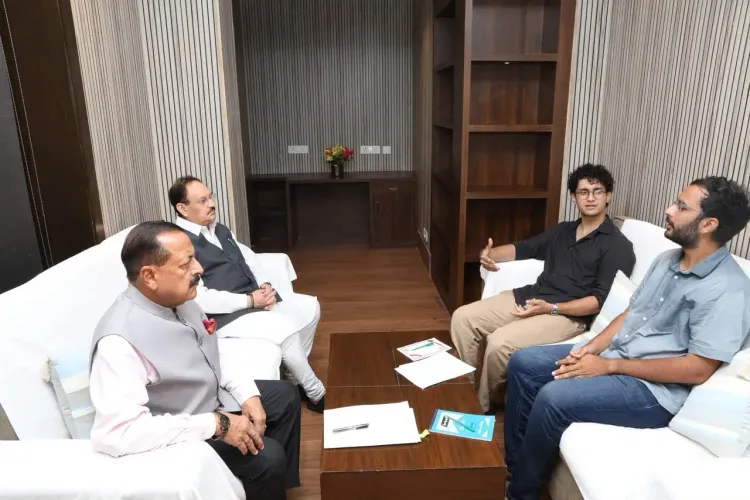
Union Health Minister J. P. Nadda announced on 25 July 2026 that a third round of talks with the CJP delegation concluded with government assurances of no action against protesters, condolences and compensation for families of deceased students, and a positive response to a Five-Point Charter on examination and education reforms.
Key Takeaways
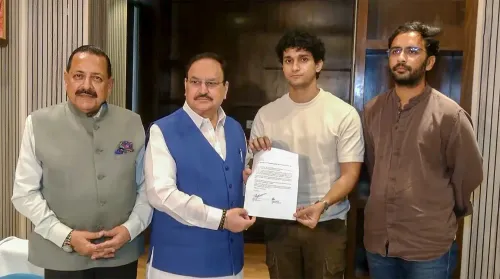
A third round of talks was held between the government and the CJP delegation on 25 July 2026 .
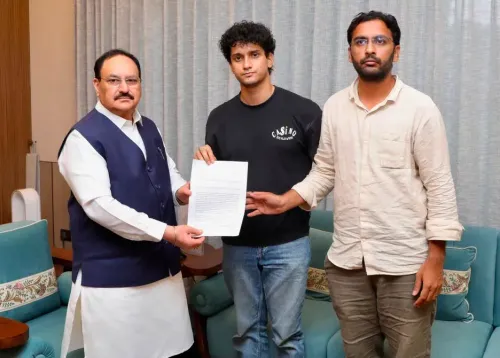
The delegation submitted a written proposal and a Five-Point Charter on examination and education reforms.
The government assured that no action will be taken against organisers and protesters and no new cases will be registered.
Condolences were extended to families of students who lost their lives , with a promise of the highest possible compensation under existing rules.
The government responded positively to the Five-Point Charter and committed to further discussions on education reforms.
Students and youth were urged to end the agitation peacefully and allow the dialogue process to continue.
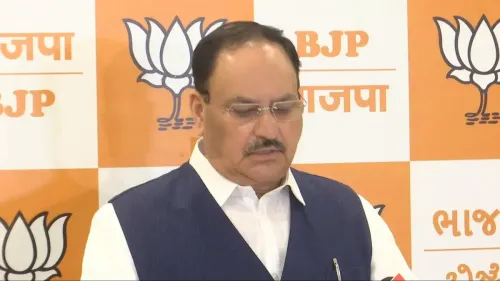
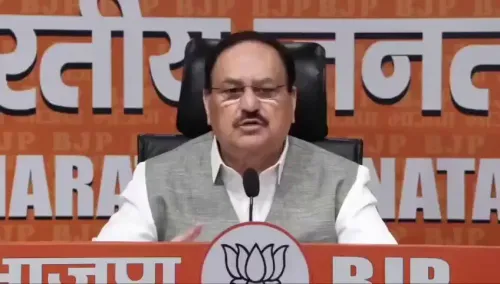
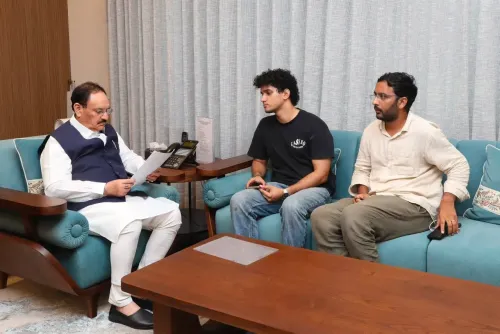
Union Health Minister and BJP national president J. P. Nadda on Saturday, 25 July 2026, announced that a third round of talks had been held with a CJP delegation, with the government assuring protesters that no action would be taken against organisers and no new cases would be registered in connection with the ongoing agitation.
Context
The CJP delegation submitted a written proposal covering cases related to the agitation along with a Five-Point Charter focused on examination and education reforms. The meeting marks the third structured dialogue between the government and the delegation, signalling a sustained effort to resolve the standoff through negotiation rather than enforcement.
The government extended condolences to the families of students who lost their lives during the agitation and assured them of 'the highest possible compensation as per the rules.' Nadda's post called on students and youth to 'end the agitation peacefully and allow the dialogue process to continue.'
Policy Backdrop
Structured government-delegation talks during student agitations have a precedent in India, where administrations have historically offered assurances on case withdrawal and compensation to de-escalate protests. The current agitation appears rooted in grievances over examination and education systems — a domain that has seen sustained policy attention since the National Education Policy (NEP) 2020.
The Five-Point Charter on examination and education reforms aligns with a broader national conversation around assessment practices, student welfare, and institutional accountability. The government's positive response to the charter suggests at least a partial alignment with the delegation's demands, though specifics of the charter have not been made public.
Stakeholders and Impact
The primary stakeholders are the students and youth protesters who have sustained the agitation, and the families of those who died — who have now been offered government-assured compensation. The CJP delegation serves as the formal interlocutor channelling these demands to the administration.
The assurance that 'no new cases will be registered in connection with the agitation' and that 'no action will be taken against the organisers and protesters' represents a significant concession that directly addresses the legal exposure faced by participants. This is likely to influence whether protesters choose to stand down and allow talks to proceed.
What's Next
The government has committed to continuing discussions on the Five-Point Charter, meaning further rounds of dialogue are expected. The immediate test will be whether students respond to the government's appeal to end the agitation peacefully, and whether the administration follows through with formal orders on case withdrawal and compensation disbursement.
Any concrete policy changes on examination reforms — the core demand of the charter — will require inter-ministerial coordination, potentially involving the Ministry of Education alongside the political leadership engaged in these talks. The outcome of this dialogue could set a precedent for how future student-led agitations are managed at the national level.
Point of View
The administration is attempting to neutralise the protest's moral force. The positive response to the Five-Point Charter on education reforms signals that at least some demands are being treated as legitimate policy inputs, not just political pressure. However, the true measure of this engagement will be whether written orders follow verbal assurances, and whether the charter's demands translate into durable institutional changes.
NationPress
24 Oct 2026
Frequently Asked Questions
What is the CJP delegation that met J. P. Nadda?
The CJP delegation is a group representing students and protesters involved in an ongoing agitation. They submitted a written proposal and a Five-Point Charter on examination and education reforms during the third round of talks with the government on 25 July 2026.
What did the government promise to student protesters after the third round of talks?
The government assured that no action will be taken against the organisers and protesters, no new cases will be registered in connection with the agitation, and families of students who died will receive the highest possible compensation as per existing rules.
What is the Five-Point Charter submitted by the CJP delegation?
The Five-Point Charter is a set of demands related to examination and education reforms submitted by the CJP delegation to the government. The government has responded positively to the charter and committed to continuing discussions, though the specific points have not been made public.
Has the student agitation ended after Nadda's announcement?
As of 25 July 2026, the agitation had not formally ended. The government appealed to students and youth to end the protest peacefully and allow the dialogue process to continue, with further rounds of discussion on the Five-Point Charter expected.
What is J. P. Nadda's role in the student agitation talks?
J. P. Nadda, Union Minister of Health and Family Welfare, Minister of Chemicals and Fertilizers, and BJP national president, announced the outcome of the third round of talks on his official social media account, indicating he is involved in or overseeing the government's engagement with the delegation.