What Were the Landmark Judgments of the Delhi High Court in 2025?
Synopsis
Explore the landmark judgments delivered by the Delhi High Court in 2025, addressing crucial issues like personality rights, electricity access, and more. This comprehensive overview showcases the court's role in shaping legal precedents.
Key Takeaways
Delhi High Court protects personality rights in the digital realm.
Electricity is reaffirmed as a fundamental right .
Significant rulings address issues of sexual violence and justice.
Mandatory e-KYC established to combat online fraud.
Political sensitivities highlighted in the National Herald case .
New Delhi, Jan 2 (NationPress) This year, the Delhi High Court made significant strides in various legal domains, from safeguarding personality rights in the digital landscape to affirming that access to electricity is a fundamental human right. Below is a recap of some pivotal rulings from the past year.
Safeguarding Personality Rights:
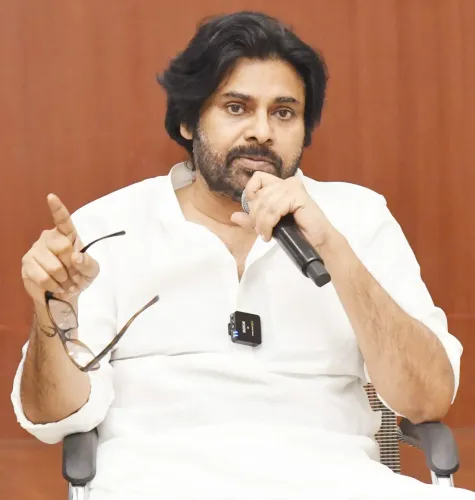
The Delhi High Court has taken a proactive approach in defending personality and publicity rights in light of the burgeoning influence of artificial intelligence and online commercialization. In December, Justice Manmeet Pritam Singh Arora's single-judge bench granted an interim injunction to actor and Andhra Pradesh Deputy Chief Minister Pawan Kalyan, preventing online platforms, AI services, and unknown entities from exploiting his name, image, voice, and likeness for profit.
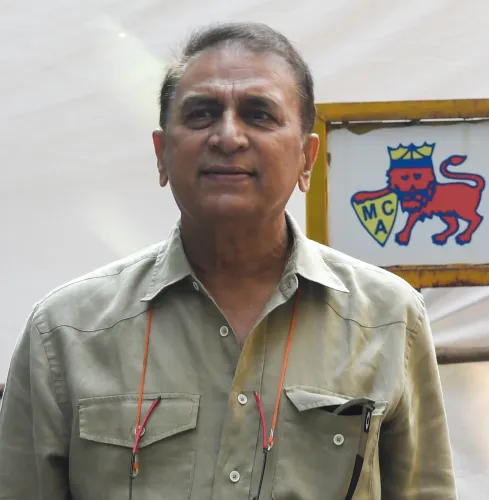
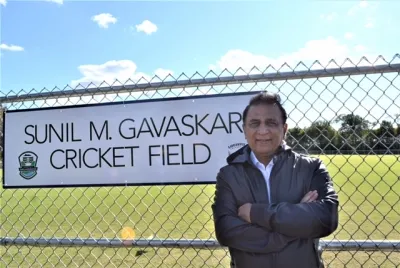
Similarly, the court protected former Indian cricket captain Sunil Gavaskar's personality rights, directing social media and e-commerce platforms to eliminate unauthorized content and merchandise that misappropriated his identity.
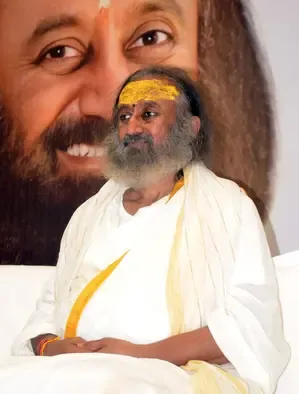
Numerous public figures—including actors Nagarjuna, Aishwarya Rai Bachchan, Abhishek Bachchan, filmmaker Karan Johar, podcaster Raj Shamani, and spiritual leader Sri Sri Ravi Shankar—have received comparable relief recently.
Electricity as an Inherent Right:
Reaffirming the constitutional guarantee of essential services, the Delhi High Court ordered BSES Rajdhani Power Limited to restore electricity to a tenant's residence without requiring an NOC (No Objection Certificate) from the landlord. It ruled that electricity is integral to the right to life under Article 21 and cannot be withheld due to an ongoing landlord-tenant dispute. The court rejected claims that the lack of an NOC justified the disconnection, stating that possession cannot be deemed unlawful until a competent court issues an eviction order.
"No citizen should be expected to live without basic necessities such as electricity," the court remarked while directing restoration through the existing meter, allowing police assistance if necessary.
Unnao Rape Case—Suspension of Sentence, Public Outrage, and SC Intervention:
One of the year's most contentious decisions involved the Delhi High Court suspending the life sentence of expelled Bharatiya Janata Party leader Kuldeep Singh Sengar in the 2017 Unnao rape case and granting him bail pending appeal. Although stringent conditions were imposed, the ruling sparked widespread backlash and protests. Sengar could not be released due to a separate conviction connected to the death of the survivor's father.
Following this, the Supreme Court intervened, staying the Delhi High Court's order, citing "peculiar facts" and clarifying that Sengar would not be freed.
Mandatory e-KYC for Domain Registrations:
In a comprehensive 248-page ruling, the Delhi High Court mandated strict e-KYC verification for domain name registrants, recognizing that anonymity in registrations has led to increased online fraud and consumer deception. In response to cases filed by Dabur India Limited, Justice Prathiba M. Singh's single-judge bench rejected the notion of "privacy by default," pointing out that unverified identities have become a major facilitator of financial fraud.
The Delhi High Court instructed all domain registrars in India to verify registrant information upon registration and periodically thereafter, in compliance with CERT-In standards, and to provide verified information to relevant authorities within 72 hours when requested. Non-compliance could lead to the loss of safe harbor protections and potential blocking under the IT Act. The judgment also urged the Union government to consider a uniform e-KYC framework that balances fraud prevention with data protection, while adhering to the Digital Personal Data Protection Act.
National Herald Case:
The Delhi High Court issued a notice to Congress leaders Sonia Gandhi, Rahul Gandhi, and others regarding a criminal revision petition filed by the Enforcement Directorate (ED) contesting a trial court's refusal to acknowledge its money laundering complaint in the National Herald case. Justice Ravinder Dudeja’s single-judge bench scheduled the matter for March 2026, reigniting discussions on the scope of the Prevention of Money Laundering Act (PMLA).
The ED argued that if the trial court's order stands, it would undermine the PMLA, asserting that the anti-money laundering law does not specify a particular mode for initiating proceedings. This case, which involves the alleged acquisition of assets exceeding Rs 2,000 crore, continues to be one of the most politically sensitive matters before the Delhi High Court.
Relief for Mahua Moitra:
In another critical ruling, the Delhi High Court overturned a Lokpal decision permitting the Central Bureau of Investigation to file a charge sheet against Trinamool Congress MP Mahua Moitra in an alleged cash-for-query case. The court noted that the Lokpal did not adequately consider the public servant's arguments before granting sanction. The court ordered reconsideration within a month, reaffirming that statutory safeguards and principles of natural justice cannot be overlooked, even at the sanction stage under the Lokpal and Lokayuktas Act.
Reinstatement of HIV-Positive BSF Constable:
The Delhi High Court directed the reinstatement of a BSF constable who was discharged solely for being HIV-positive, asserting that the termination contravened the HIV/AIDS Act, 2017, and the Rights of Persons with Disabilities (RPwD) Act, 2016. Justices C. Hari Shankar and Om Prakash Shukla noted that there was "not even an attempt" to fulfill the statutory requirement for an independent medical evaluation and consideration of reasonable accommodations.
The Delhi High Court affirmed that an HIV-positive employee is classified as a person with a disability and deserves protection against discrimination. While denying back wages, it granted continuity of service and other benefits, reinforcing workplace equality and dignity.
Mutual Consent Divorce—Courts Can Waive Statutory Timelines:
In a groundbreaking Full Bench ruling, the Delhi High Court clarified that courts are not obligated to rigidly enforce statutory waiting periods in mutual consent divorces. It held that both the one-year separation requirement and the six-month cooling-off period under the Hindu Marriage Act can be waived in instances of exceptional hardship or depravity.
Refusal of Conjugal Relations Constitutes Mental Cruelty:
The Delhi High Court upheld a divorce decree based on mental cruelty, citing that the marriage had been unconsummated from the beginning. Relying on documentary evidence, the court ruled that a persistent denial of conjugal relations constitutes cruelty under the Hindu Marriage Act.
Release of Seized Rolex Watch:
The Delhi High Court ordered the Customs Department to return a seized Rolex watch, noting that authorities failed to issue a mandatory show-cause notice within the required timeframe. Declaring continued detention as "impermissible," it reiterated that bona fide personal belongings of travelers are not subject to customs duties and that procedural oversights necessitate automatic release.
Delhi High Court Denies Bail in 2020 'Larger Conspiracy' Case:
In September, the Delhi High Court rejected the bail applications of student activists Umar Khalid, Sharjeel Imam, and others implicated in the 2020 Delhi riots "larger conspiracy" case. A bench comprising Justices Navin Chawla and Shalinder Kaur reserved its ruling after extensive arguments from the accused and Solicitor General (SG) Tushar Mehta, representing the Delhi Police.
The SG opposed bail, asserting that prolonged detention could not justify release, claiming the accused were part of a "well-orchestrated criminal conspiracy" aligned with the visit of US President Donald Trump in 2020. SG Mehta described it as a "premeditated attack on the nation's sovereignty," arguing that the accused were not merely protesting against a law but were planning something more sinister.
As of December, the Supreme Court has reserved judgment on petitions contesting the Delhi High Court ruling, with the accused facing charges under the Unlawful Activities Prevention Act and having spent over five years in custody.
Point of View
I believe that the Delhi High Court has played a crucial role in upholding justice and protecting fundamental rights in our nation. The court's decisions reflect the evolving societal norms and the importance of safeguarding individual liberties in a rapidly changing world.
NationPress
15 Oct 2026
Frequently Asked Questions
What are personality rights?
Personality rights refer to the legal rights that protect an individual's name, image, and likeness from unauthorized commercial exploitation.
Why is electricity considered a fundamental right?
Electricity is deemed a fundamental right as it is essential for the right to life under Article 21 of the Constitution, ensuring that citizens have access to basic amenities.
What is the significance of the Unnao rape case ruling?
The ruling in the Unnao rape case highlighted the court's role in addressing issues of sexual violence and the complexities of legal proceedings involving high-profile individuals.
What does e-KYC mean in domain registration?
e-KYC stands for electronic Know Your Customer, a process mandated by the Delhi High Court to verify the identity of domain registrants to prevent online fraud.
What is the impact of the National Herald case?
The National Herald case remains politically sensitive and raises questions about the application of the Prevention of Money Laundering Act in high-profile political matters.