Delhi L-G Sandhu at IIM Rohtak: Believe in yourself to lead
Synopsis
Delhi L-G T.S. Sandhu used IIM Rohtak's Orientation 2026 to deliver a message that cuts against conventional management wisdom: technical skills matter less than judgement, self-belief, and the ability to think across sectors. In an India simultaneously scaling infrastructure, digital systems, and financial inclusion, he argued, a managerial call is never just a business call.
Key Takeaways
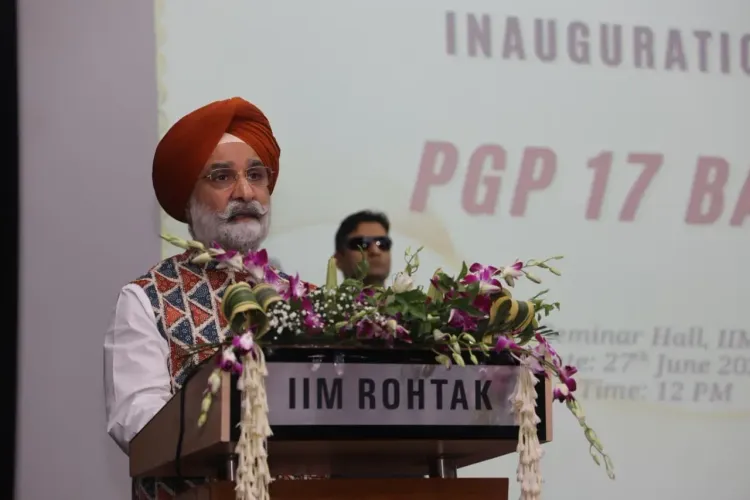
Sandhu addressed IIM Rohtak's Inauguration and Orientation Programme 2026 on 27 June .
Sandhu quoted PM Narendra Modi on leadership: clarity of thought and communication, not imposition of authority.
He stressed that in India, managerial decisions affect employment, social mobility, urbanisation, and public outcomes — not just business metrics.
Sandhu argued that judgement — not technical expertise alone — is the defining managerial skill, developed through exposure to complexity.
He urged students to use the next two years to expand their thinking, cultivate intellectual discipline, and embrace ambiguity.
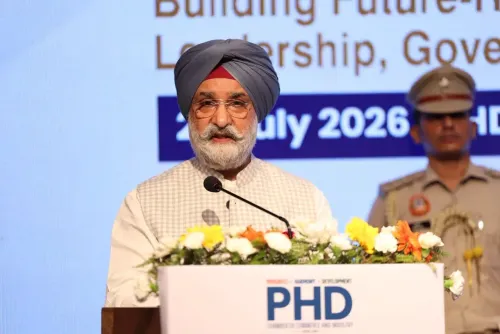
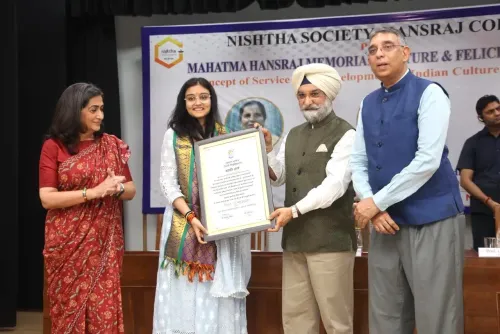
Delhi Lieutenant Governor T.S. Sandhu on Saturday, 27 June addressed incoming students at IIM Rohtak's Inauguration and Orientation Programme 2026, urging them to cultivate self-belief as the foundation of effective leadership. Quoting Prime Minister Narendra Modi, Sandhu framed the message around conviction, clarity, and the ability to inspire trust — not authority.
The Leadership Lesson
Sandhu opened with a quote attributed to the Prime Minister: 'To be a leader, you have to believe in yourself first; leadership is about clarity, of thought and communication, not about imposing authority.' He said this insight sits at the core of management education — that leadership is not a function of rank but of conviction, adaptability, and the capacity to earn trust. The remark set the tone for what he described as a fundamentally different kind of managerial challenge facing the next generation.
India's Growth Story and Its Demands on Managers
Sandhu pointed to the scale and complexity of India's current development arc as context for why the stakes for management graduates are unusually high. 'We are simultaneously building infrastructure at scale, expanding digital systems, strengthening manufacturing, deepening financial inclusion, and responding to the aspirations of one of the world's youngest populations,' he said. He stressed that in this environment, a managerial decision is rarely a purely commercial one — it can ripple outward into employment, social mobility, urbanisation, and public outcomes.
This comes at a moment when the line between public and private domains is increasingly difficult to draw. Technology, healthcare, logistics, education, governance, and business now intersect constantly, Sandhu noted, making sector-specific thinking insufficient. Institutions, he argued, need individuals capable of reasoning across domains rather than within silos.
Judgement Over Technical Solutions
A recurring theme in Sandhu's address was the primacy of judgement over technical expertise alone. He said management today demands the ability to balance competing priorities, navigate uncertainty, and make decisions where efficiency and sustainability may pull in opposite directions. 'Judgement cannot be taught directly; it develops through exposure to complexity, engagement with diverse perspectives, and repeated encounters with situations where no obvious answer exists,' he said.
A Message to Incoming Students
Addressing the new batch directly, Sandhu encouraged them to treat the next two years not merely as professional preparation but as an opportunity to expand how they think. 'Use this period not only to prepare for a profession, but to expand the way you think,' he said, adding that intellectual discipline and comfort with ambiguity would prove more durable than any single technical skill. He urged students to develop the capacity to make decisions without reducing every problem to its most immediate outcome.
The orientation marks the formal beginning of the academic year at IIM Rohtak, one of the newer Indian Institutes of Management established under the government's push to expand premier management education beyond the original six IIMs.
Point of View
Social mobility, urbanisation, and public outcomes' — is a deliberate blurring of the public-private boundary. It positions IIM graduates not just as corporate leaders but as quasi-public actors. Whether that framing empowers students or loads them with expectations that the private sector's incentive structures won't support is a question the orientation left unanswered.
NationPress
26 Sept 2026
Frequently Asked Questions
What did Delhi L-G T.S. Sandhu say at IIM Rohtak?
Sandhu addressed IIM Rohtak's Inauguration and Orientation Programme 2026 on 27 June, urging students to believe in themselves and develop judgement over purely technical skills. He quoted PM Narendra Modi on leadership being rooted in clarity of thought rather than authority.
What PM Modi quote did Sandhu cite at IIM Rohtak?
Sandhu quoted PM Modi as saying: 'To be a leader, you have to believe in yourself first; leadership is about clarity, of thought and communication, not about imposing authority.' He described this as central to management education.
Why did Sandhu say India places unique demands on management graduates?
Sandhu argued that India is simultaneously scaling infrastructure, digital systems, manufacturing, and financial inclusion while serving one of the world's youngest populations. In this context, he said, a managerial decision rarely stays within business boundaries — it can affect employment, social mobility, and public outcomes.
What is IIM Rohtak's Orientation Programme 2026?
It is the annual inauguration and orientation event marking the start of the academic year at the Indian Institute of Management Rohtak, welcoming incoming students to their postgraduate management programmes.
What advice did Sandhu give to incoming IIM Rohtak students?
He advised students to use their two years at the institute not just to prepare for a profession but to expand their thinking, develop intellectual discipline, and build comfort with ambiguity and complexity — skills he said cannot be taught directly but must be cultivated through experience.