Delhi Power Minister launches Smart Substation, Solarise East in Gandhi Nagar
Synopsis
Delhi's Power Minister unveiled a smart substation in Gandhi Nagar and launched a rooftop solar campaign for East Delhi — all backed by ₹1,427 crore in capital spending. The backdrop: Delhi just hit a record peak demand of 8,748 MW without a single major outage, a milestone the government is leaning on hard to make its case for the capital's grid resilience.
Key Takeaways
Delhi Power Minister Ashish Sood launched two initiatives in East Delhi on 19 July .
A Smart Pad Mounted Substation was inaugurated at Gandhi Nagar to improve distribution reliability.
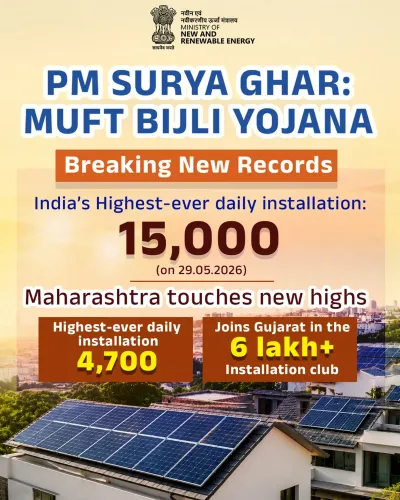
The 'Solarise East' campaign aims to expand rooftop solar adoption under the PM Surya Ghar: Muft Bijli Yojana .
The Delhi government has invested ₹1,427 crore in power sector capital expenditure within one year.
Delhi recorded its highest-ever peak demand of 8,748 MW this year with no major power outage reported.
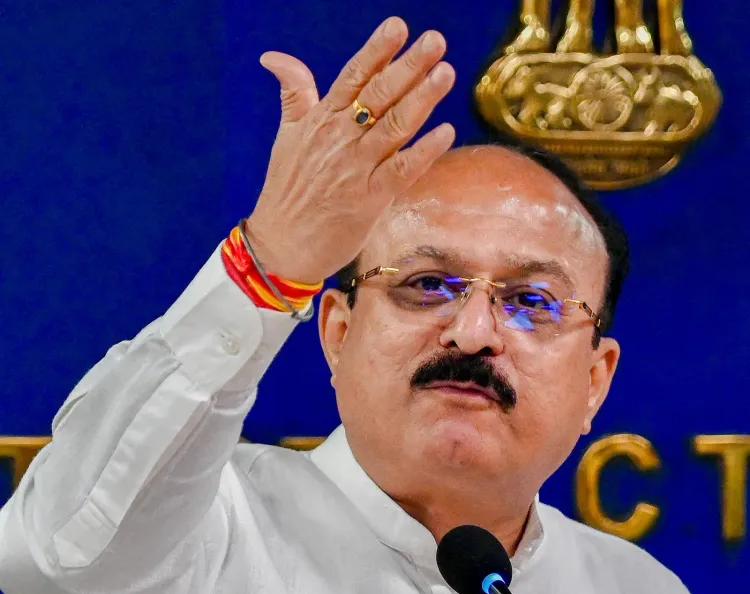
Delhi Power Minister Ashish Sood on Sunday, 19 July inaugurated two landmark initiatives in East Delhi aimed at overhauling the capital's power infrastructure and accelerating clean energy adoption. The launches — a Smart Pad Mounted Substation at Gandhi Nagar and the 'Solarise East' campaign — mark the latest steps in what the Delhi government describes as a long-term modernisation drive for the city's electricity sector.
What Was Launched
The Smart Pad Mounted Substation at Gandhi Nagar is a state-of-the-art facility designed to improve distribution reliability and reduce outage risk in East Delhi. Alongside it, the 'Solarise East' campaign was rolled out to connect more residents with rooftop solar systems under the PM Surya Ghar: Muft Bijli Yojana, the Centre's flagship scheme for subsidised residential solar installations.
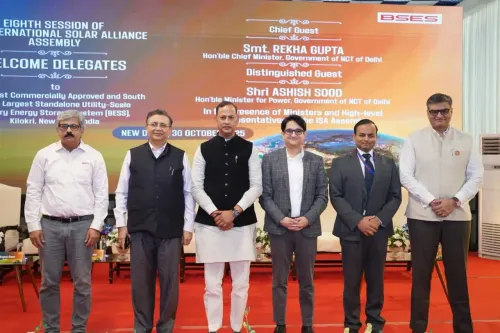
The event was attended by Union Minister of State for Road Transport and Highways and Corporate Affairs Harsh Malhotra, Members of the Legislative Assembly, Councillors, representatives of Resident Welfare Associations (RWAs), Housing Society members, senior officials of BSES Yamuna Power Limited (BYPL), and a large number of citizens.
The Investment Behind the Push
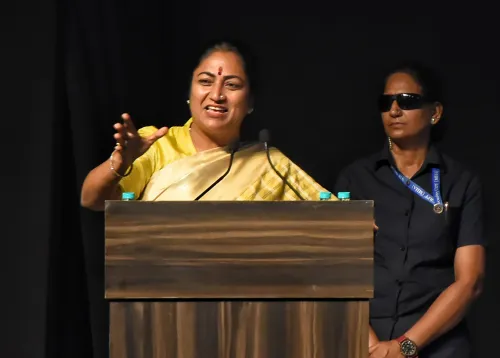
Speaking at the event, Minister Sood stated that the Delhi government has committed ₹1,427 crore in power sector capital expenditure within a single year. He said the outlay is being channelled into strengthening the transmission and distribution network, establishing new substations, modernising ageing infrastructure, and scaling up smart technologies across the grid.
Sood emphasised that the objective extends beyond meeting current demand. 'Our objective is not merely to provide electricity but to deliver reliable power, affordable power, smart power and now green power,' he said.
Record Peak Demand — and No Major Outage
Sood highlighted that Delhi recorded its highest-ever peak power demand of 8,748 MW this year — a figure that underscores the capital's rapidly growing energy appetite. Notably, despite this historic load, the city did not experience any major power outage, which officials attributed to improved planning, discom capability, and infrastructure investments made in preceding months.
This comes amid a broader national trend of surging urban electricity demand, driven by extreme heat events, expanding air conditioning use, and increasing digital infrastructure loads.
The Bigger Picture for Delhi's Power Sector
The dual launch reflects a dual mandate the Delhi government has set for itself: grid reliability on one hand and green transition on the other. The 'Solarise East' campaign, by plugging into the PM Surya Ghar scheme, leverages Central subsidies to bring rooftop solar within reach of more households — a model that, if scaled, could meaningfully reduce peak grid stress during summer months.
A reliable electricity system, Sood observed, underpins every dimension of urban life — from industries and healthcare to education and digital services. With Delhi's energy demand projected to keep rising, the coming months will test whether the ₹1,427 crore investment translates into measurable improvements in supply quality across all parts of the capital.
Point of View
427 crore capex figure and the record 8,748 MW demand milestone are being used to build a political narrative around grid competence — but the harder question is distribution equity. East Delhi has historically borne the brunt of summer outages; a single smart substation and a solar campaign, however well-intentioned, are incremental moves against a structural deficit. The 'Solarise East' campaign's real test will be uptake numbers: rooftop solar schemes have repeatedly struggled with last-mile adoption in dense urban areas due to building ownership complexity and RWA approvals. Whether this campaign clears those barriers or remains a launch-day headline will be visible within one cooling season.
NationPress
19 Oct 2026
Frequently Asked Questions
What is the Smart Pad Mounted Substation launched in Gandhi Nagar?
It is a state-of-the-art electricity distribution facility inaugurated by Delhi Power Minister Ashish Sood on 19 July in Gandhi Nagar, East Delhi. It is designed to improve grid reliability, reduce outage risk, and support the area's growing power demand.
What is the 'Solarise East' campaign?
'Solarise East' is a Delhi government initiative launched on 19 July to connect more East Delhi residents with rooftop solar systems under the PM Surya Ghar: Muft Bijli Yojana, the Centre's subsidised residential solar scheme. It aims to accelerate clean energy adoption at the household level.
How much has Delhi invested in its power sector recently?
The Delhi government has made a capital expenditure of ₹1,427 crore in the power sector within one year, according to Minister Ashish Sood. The funds are being used to strengthen transmission and distribution networks, build new substations, and modernise ageing infrastructure.
What was Delhi's peak power demand this year?
Delhi recorded its highest-ever peak power demand of 8,748 MW in 2025. Despite this record load, the city did not experience any major power outage, which officials attributed to improved planning and infrastructure investments.
Who attended the launch event in East Delhi?
The event was attended by Union Minister of State Harsh Malhotra, Members of the Legislative Assembly, Councillors, RWA representatives, Housing Society members, senior BYPL officials, and a large number of citizens.