Delhi Metro: 45 stations to stay closed Friday night amid Opposition protest
Synopsis
The Supreme Court forced Delhi authorities to pull back a sweeping Metro shutdown — cutting closures from 57 to 45 stations — hours before a major Opposition protest targeting Chief Election Commissioner Gyanesh Kumar. The court's rare intervention in protest-related transport restrictions signals judicial pushback against security overreach at the cost of public mobility.
Key Takeaways
The DMRC revised its closure order, reducing affected stations from 57 to 45 on 9 October .
Entry and exit at the 45 stations will be shut from 9 p.m.
The Supreme Court directed that Metro services must not be completely stopped, prompting the rollback.
Interchange facilities remain operational at all affected stations except New Delhi Metro station .
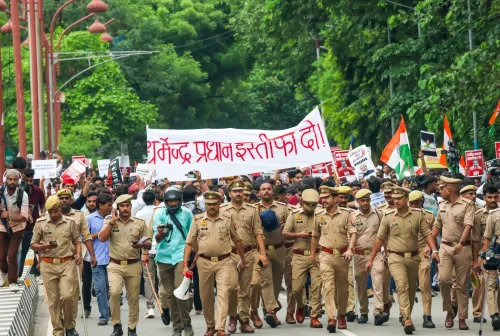
The protest targets Chief Election Commissioner Gyanesh Kumar , the Special Intensive Revision (SIR) of electoral rolls, and alleged electoral irregularities.
Security agencies will review the situation and may issue further updates before the Saturday deadline.
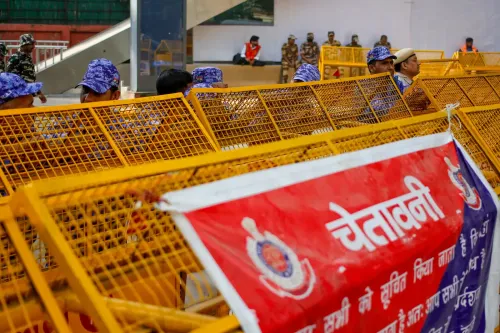
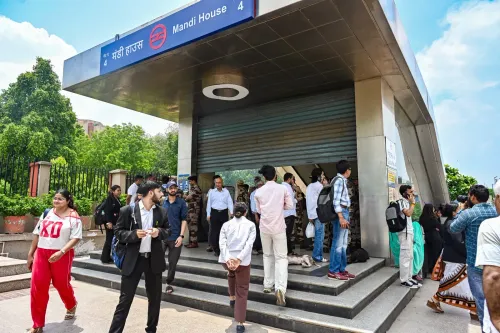
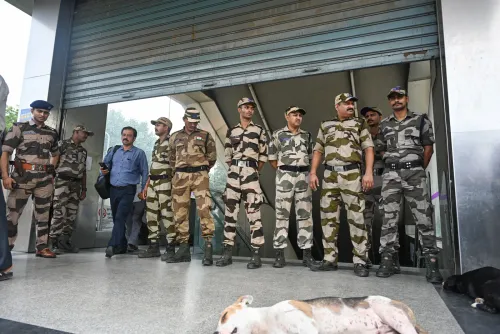
The Delhi Metro Rail Corporation (DMRC) on Friday, 9 October revised its station-closure order, reducing the number of affected stations from 57 to 45 ahead of the proposed Opposition protest in New Delhi. Entry and exit at the identified stations will remain shut from 9 p.m. Friday until 6 p.m. Saturday, according to the revised advisory.
Supreme Court Steps In
The rollback came after the Supreme Court directed on Friday that there should be no complete stoppage of Metro train services ahead of Saturday's demonstration. The apex court asked the Centre to ensure that Metro and other railway services continued to operate in a 'suitably regulated manner' so as to minimise inconvenience to the public. The court's intervention marks a significant check on the security apparatus's initial overreach in shutting down a critical public transport network.
Which Stations Are Affected
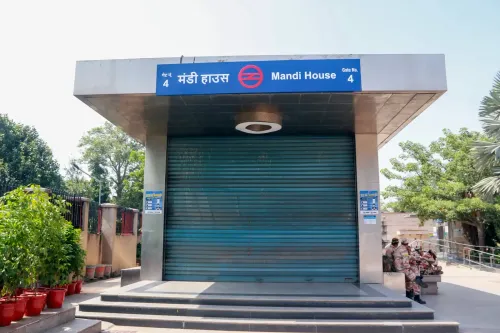
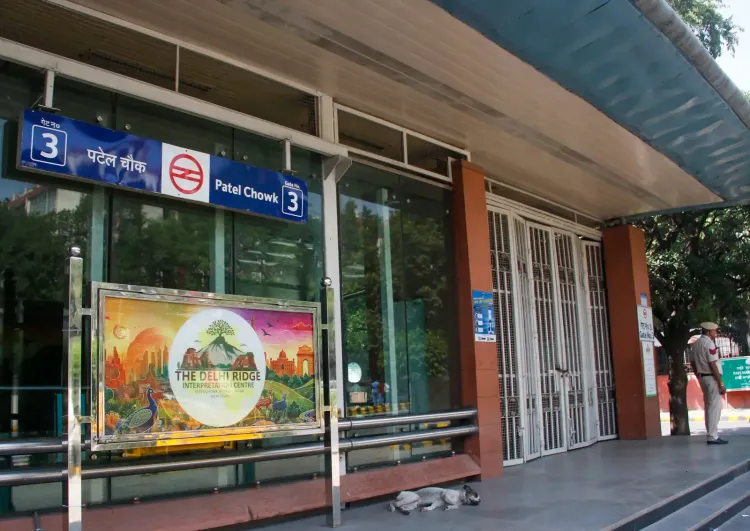
The 45 stations where entry and exit will be restricted include key interchange and central Delhi hubs: Rajiv Chowk, New Delhi, Central Secretariat, Mandi House, Barakhamba Road, ITO, Khan Market, Kashmere Gate, Karol Bagh, Hauz Khas, Lajpat Nagar, Jama Masjid, Vishwavidyalaya, Jahangirpuri, Azadpur, Majlis Park, Seelampur, Maujpur-Babarpur, Shahdara, Rithala, and others. The DMRC clarified that interchange facilities would remain available at all affected stations, with the sole exception of New Delhi Metro station.
Why the Protest Is Happening
The Opposition demonstration is directed against Chief Election Commissioner Gyanesh Kumar, the Special Intensive Revision (SIR) of electoral rolls, and alleged electoral irregularities. Opposition leaders have additionally demanded Kumar's resignation, framing the protest as a defence of electoral integrity. This comes amid a broader political standoff between the ruling establishment and opposition parties over the conduct of the Election Commission of India (ECI).
What the DMRC Said
In its revised advisory, the DMRC stated that security agencies would continuously assess the situation and issue further updates as circumstances evolved. The corporation emphasised that train services would not be halted entirely, and that the modified arrangement was designed to balance security requirements with the public's right to essential transport.
Impact on Commuters
The closures affect some of Delhi's busiest interchange points, including stations on the Yellow, Blue, Violet, Red and Pink lines. Commuters travelling through the affected corridors on Friday night and Saturday afternoon are advised to plan alternate routes. The restrictions are scheduled to be reviewed, and a partial or full reopening is possible before the 6 p.m. Saturday deadline depending on ground conditions. The situation underscores a recurring tension in Indian cities between protest-related security lockdowns and the mobility rights of ordinary residents.
Point of View
Not a vindication: dozens of critical hubs including Rajiv Chowk and New Delhi station still go dark, hitting daily-wage workers and weekend commuters hardest. The deeper question is why security planners default to blanket transport shutdowns rather than targeted perimeter management — a pattern seen repeatedly around protests in the capital. The Supreme Court's intervention, while welcome, treats the symptom; the structural tendency to securitise public space at the expense of ordinary mobility remains unaddressed.
NationPress
10 Oct 2026
Frequently Asked Questions
Which Delhi Metro stations are closed during the Opposition protest?
A total of 45 stations will have entry and exit restricted from 9 p.m. Friday, 10 October to 6 p.m. Saturday, 11 October. Key stations affected include Rajiv Chowk, New Delhi, Central Secretariat, Mandi House, ITO, Khan Market, Kashmere Gate, Karol Bagh, Hauz Khas, Lajpat Nagar, and Jama Masjid, among others.
Why did Delhi reduce Metro closures from 57 to 45 stations?
The Supreme Court directed on Friday that there should be no complete stoppage of Metro train services ahead of the Opposition protest. In response, the DMRC revised its earlier advisory, cutting the number of closed stations from 57 to 45 and ensuring train services continued in a regulated manner.
What is the Opposition protest in Delhi about?
The protest is directed against Chief Election Commissioner Gyanesh Kumar, the Special Intensive Revision (SIR) of electoral rolls, and alleged electoral irregularities. Opposition leaders have also demanded Kumar's resignation, citing concerns about the independence and conduct of the Election Commission of India.
Can commuters still interchange at closed Delhi Metro stations?
Yes, interchange facilities will remain available at all 45 affected stations except New Delhi Metro station, even though entry and exit are restricted. Commuters can pass through on trains but cannot board or alight at these stations during the specified period.
When will the closed Delhi Metro stations reopen?
The closures are scheduled to end by 6 p.m. on Saturday. Security agencies will review the ground situation and may issue updates; an earlier reopening is possible if conditions allow.