SC flags commuter hardship, tells Centre to avoid full Delhi Metro shutdown on Oct 10
Synopsis
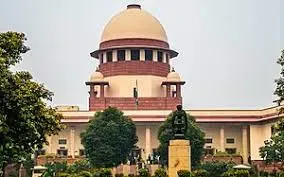
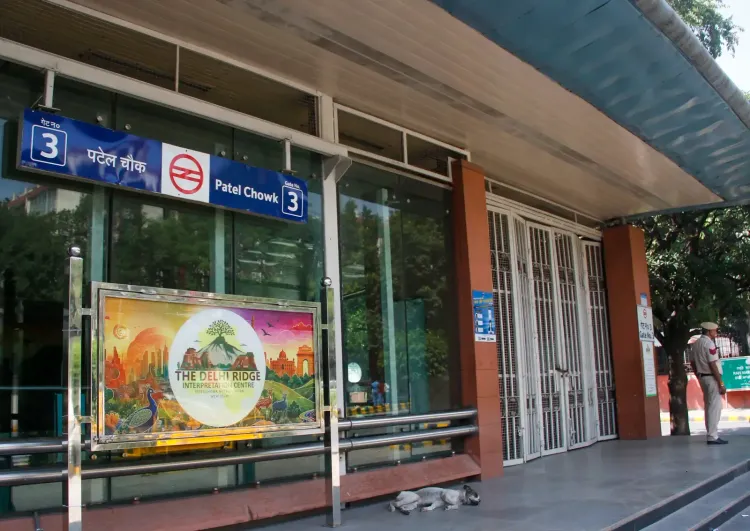
The Supreme Court stepped in on Friday to push back against the planned shutdown of 57 Delhi Metro stations ahead of a Saturday protest, telling the Centre that blanket transport closures are disproportionate and that citizens are entitled to public transit. The intervention puts the government on notice to find a middle ground before morning rush hour.
Key Takeaways
The Supreme Court on 9 October 2026 orally directed the Centre to avoid a complete Delhi Metro shutdown ahead of the 10 October protest.
A bench of CJI Sanjiv Khanna , Justice Joymalya Bagchi , and Justice V.
Mohana said preventive measures must not cut off ordinary commuters.
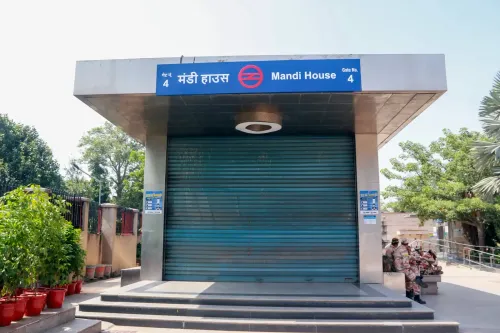
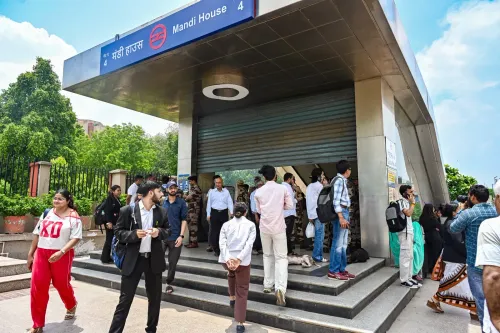
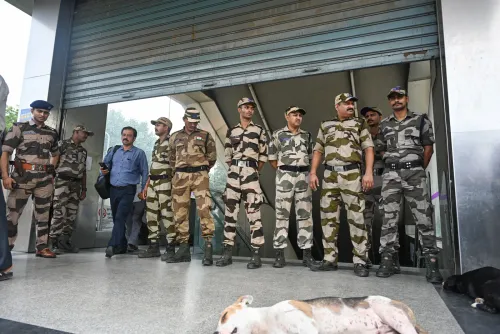
57 Metro stations and trains at New Delhi and Hazrat Nizamuddin stations were set to be shut or rescheduled.
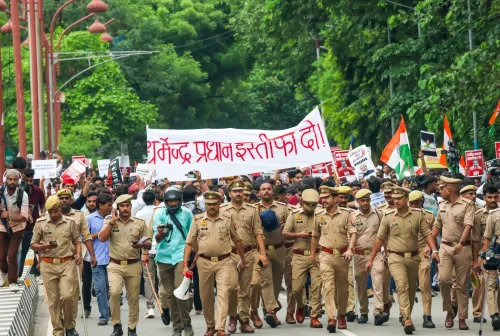
The Cockroach Janta Party (CJP) planned a demonstration at Jantar Mantar demanding accountability from Chief Election Commissioner Gyanesh Kumar .
Delhi Police denied permission for the protest, citing safety concerns; Section 163 BNSS is in force in the New Delhi area.
Solicitor General Tushar Mehta assured the court he would discuss revised measures with the government immediately.
The Supreme Court on Friday, 9 October 2026, orally directed the Centre to ensure that Delhi Metro operations are not completely suspended ahead of a proposed protest in New Delhi on Saturday, 10 October, stressing that preventive security measures must not strip ordinary commuters of essential public transport access. The bench's intervention came after concerns mounted over the planned closure of 57 Metro stations and the cancellation or rescheduling of several trains at New Delhi and Hazrat Nizamuddin railway stations.
What the Supreme Court Said
A bench comprising Chief Justice of India (CJI) Sanjiv Khanna and Justices Joymalya Bagchi and V. Mohana expressed pointed concern over the scale of the proposed restrictions. 'We are concerned with closure of metro services,' the CJI-led bench remarked, addressing Solicitor General Tushar Mehta, who appeared for the Centre.
The bench observed that hundreds of commuters travel daily from Greater Noida and other parts of the National Capital Region (NCR) for livelihood and educational purposes. It noted that authorities could consider regulating the frequency of Metro services rather than shutting them down entirely — a more proportionate approach to maintaining order.
'Citizens are entitled to these facilities,' the bench orally observed, adding that while law-and-order maintenance was the government's responsibility, any measures taken must be proportionate to the actual threat.
Government's Response
Solicitor General Tushar Mehta assured the apex court that he would take up the matter with the government immediately. He added that the restrictions could be monitored periodically and modified depending on how the situation developed on the ground. The hearing was still underway at the time of this report.
Why the Restrictions Were Imposed
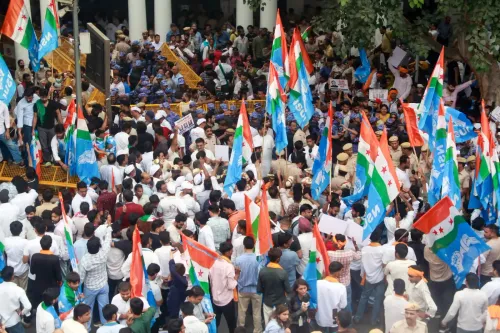
The closures and transport disruptions were imposed in anticipation of a demonstration by the Cockroach Janta Party (CJP) at Jantar Mantar, where protesters were reportedly seeking accountability from Chief Election Commissioner Gyanesh Kumar. The Delhi Police denied permission for the demonstration, citing public safety, traffic regulation, and law-and-order concerns. Police also confirmed that Section 163 of the Bharatiya Nagarik Suraksha Sanhita (BNSS) was in force across the New Delhi area.
Who Is Affected
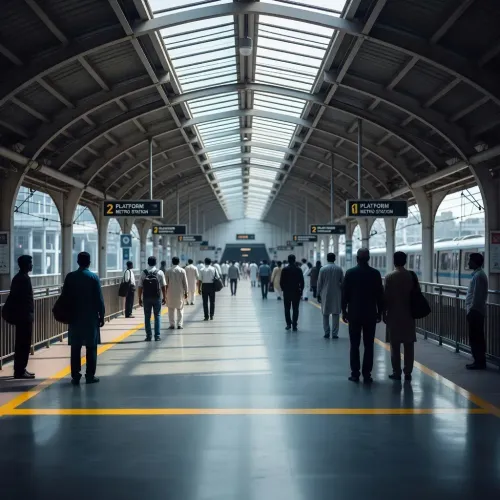
The proposed Metro shutdown affects students, office-goers, and daily wage workers who depend on the capital's rail network — one of the busiest in Asia. Notably, the 57-station closure would cover large parts of the central and south Delhi corridor, effectively cutting off NCR commuters from the city's core. The cancellation of trains at two of Delhi's busiest railway stations compounds the disruption for inter-city travellers.
What Happens Next
The Supreme Court's oral direction puts pressure on the Centre and Delhi administration to recalibrate the security plan before Saturday morning. If the government acts on the SG's assurance, partial Metro services with regulated frequency could replace the blanket shutdown. This is not the first time courts have had to intervene to protect commuter rights during protest-related security lockdowns in the capital — similar standoffs have arisen during past agitations, including the 2021 farmers' protest. All eyes are now on whether the government revises its transport orders before 10 October.
Point of View
However large — it punishes commuters for a protest they have no part in. The CJP agitation also raises a pointed question about the political space available to challenge the Election Commission, and the state's appetite to restrict that space under the cover of law-and-order logistics. If the government modifies its orders under judicial pressure rather than by its own judgment, it signals that executive proportionality in protest management still requires court oversight to function.
NationPress
9 Oct 2026
Frequently Asked Questions
Why did the Supreme Court intervene in the Delhi Metro shutdown?
The Supreme Court intervened because authorities had planned to close 57 Metro stations ahead of a protest on 10 October, which the bench found disproportionate. The court said citizens are entitled to public transport and directed the Centre to consider regulating Metro frequency instead of shutting services entirely.
Which protest prompted the Delhi Metro closure?
The closures were imposed ahead of a planned demonstration by the Cockroach Janta Party (CJP) at Jantar Mantar on 10 October, seeking accountability from Chief Election Commissioner Gyanesh Kumar. Delhi Police denied permission for the protest, citing public safety and law-and-order concerns.
What is Section 163 of the BNSS and why is it relevant?
Section 163 of the Bharatiya Nagarik Suraksha Sanhita (BNSS) empowers authorities to impose prohibitory orders restricting assembly or movement in a designated area. Delhi Police invoked it across the New Delhi area as part of the precautionary measures ahead of the 10 October demonstration.
What was the government's response to the Supreme Court's oral direction?
Solicitor General Tushar Mehta assured the Supreme Court that he would immediately discuss the matter with the government and that restrictions could be periodically monitored and modified. No formal order had been issued at the time of the hearing.
Who is most affected by the Delhi Metro and train disruptions?
Daily commuters from Greater Noida and other NCR areas, including students, office workers, and daily wage earners, are most affected. The cancellation of trains at New Delhi and Hazrat Nizamuddin stations also disrupts inter-city travellers arriving in the capital on 10 October.