Supreme Court orders normal Delhi Metro, rail, internet amid protest crackdown
Synopsis
The Supreme Court convened an emergency Sunday hearing after petitioners alleged that over 7,000 people — including lawyers, journalists, and student leaders — were detained and Delhi was effectively locked down in violation of its own 9 October order. The Bench's sharp directions on Metro services, internet, and detentions expose a direct standoff between the judiciary and executive over civil liberties ahead of a protest against the Chief Election Commissioner.
Key Takeaways
The Supreme Court on 11 October directed normal functioning of Delhi Metro, rail services , and internet connectivity ahead of a proposed protest against CEC Gyanesh Kumar .
A Bench of Justices Joymalya Bagchi and V.
Mohana heard contempt petitions alleging violation of the court's 9 October order.
Senior advocate Menaka Guruswamy alleged that more than 7,000 people , including student leaders, journalists, and political figures, were detained.
Around 150 lawyers were reportedly detained after assembling outside the Supreme Court premises.
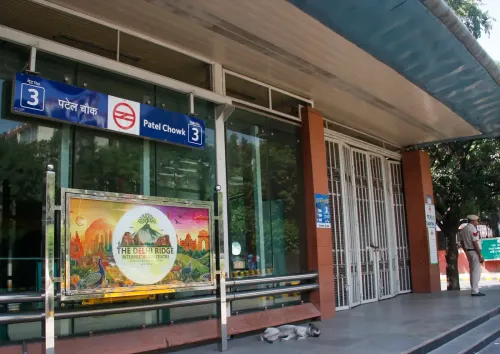
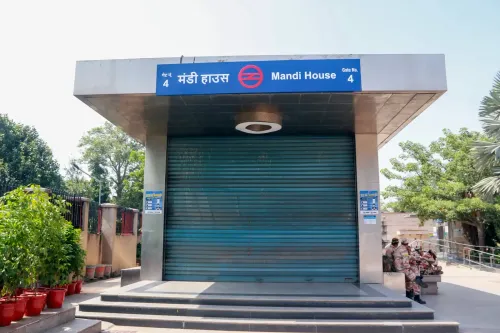
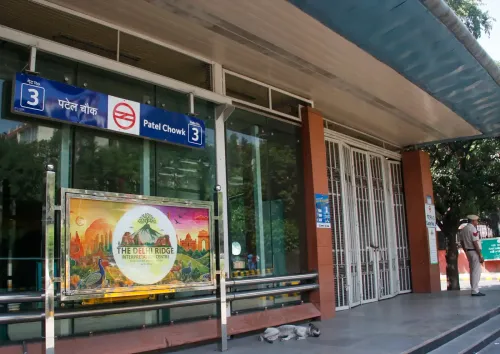
Authorities had initially proposed closing 57 Metro stations before the court intervened to reduce that number.
The Union government must file a compliance report and response to contempt petitions by Tuesday .
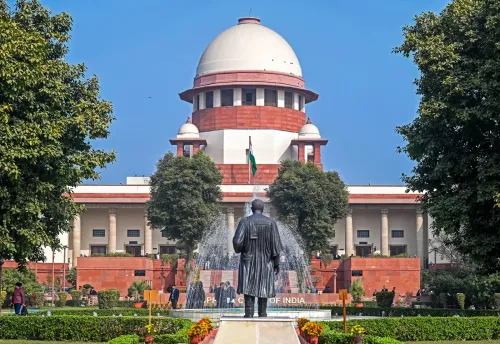
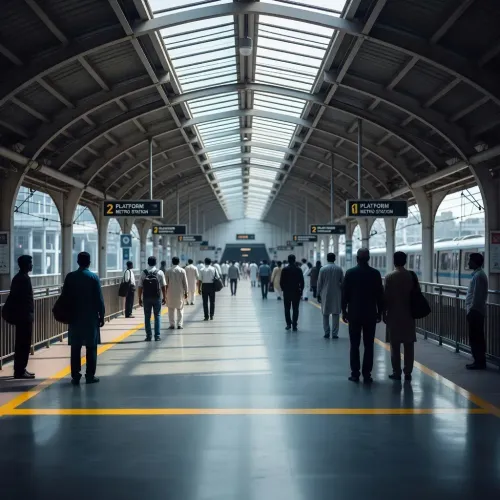
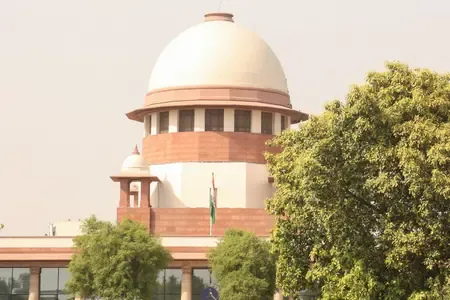
The Supreme Court on Sunday, 11 October directed authorities to ensure normal functioning of Metro and railway services, uninterrupted internet connectivity, and free movement of people across New Delhi, while making clear that lawyers must not be obstructed in discharging their professional duties. The directions came as a Bench of Justices Joymalya Bagchi and V. Mohana heard a clutch of contempt petitions alleging wilful disobedience of the court's earlier order dated 9 October, issued ahead of a proposed protest against Chief Election Commissioner (CEC) Gyanesh Kumar.
Key Directions from the Bench
The Bench directed that Metro and railway services function normally unless restrictions become necessary due to a genuine disturbance to public order. It further ordered that free movement of people in the city be permitted, subject to traffic regulations, and that the requirement of barricades be reviewed immediately keeping in mind law-and-order and traffic conditions.
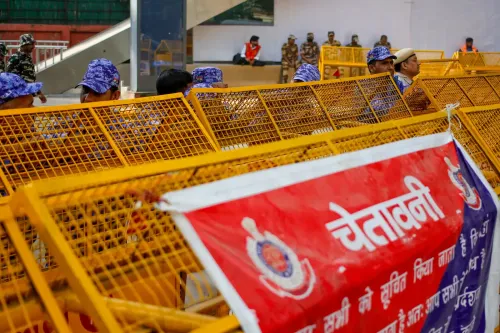
The court also directed that internet services remain undisturbed, while clarifying it was not curtailing the authorities' powers under the Information Technology Act. On detentions, the Bench ordered that no person be detained except in accordance with the procedure established by law — particularly in the case of peaceful and unarmed gatherings outside the area covered by prohibitory orders under Section 163 of the Bharatiya Nagarik Suraksha Sanhita (BNSS).
Notably, the court directed authorities to take down, if not already done, a board indicating the imposition of Section 163 restrictions around the Supreme Court premises itself.
What the Government Said
Solicitor General Tushar Mehta, the Centre's second-highest law officer, submitted before the Bench that Metro services had been normalised and internet connectivity restored as of the hearing. He gave an assurance that the facilities would continue to function normally. The Justice Bagchi-led Bench recorded that assurance on the order sheet.
Mehta acknowledged, however, that entry and exit at several Metro stations had been restricted on 10 October. He also submitted that documents and videos showed that some people detained around 2 pm had been released by 6 pm, and argued that habeas corpus pleas might not survive in view of the releases — leaving the question of legality of detentions to the court's determination.
Allegations of Mass Detentions and Curfew-Like Conditions
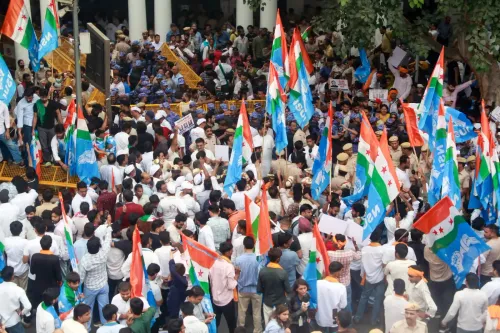
The urgent Sunday hearing was convened after petitioners alleged that the court's 9 October directions had been violated on 10 October, with Metro and railway restrictions, an internet shutdown, and widespread detentions creating a curfew-like situation across the national capital.
Senior advocate Menaka Guruswamy, appearing in a separate plea challenging preventive detention of opposition leaders, alleged that more than 7,000 people — including student leaders, journalists, and political figures — had been detained. She argued that preventive detention could not be used to suppress the fundamental right to peaceful protest.
Other senior advocates, including Kapil Sibal, Gopal Sankaranarayanan, and Sanjay Hegde, raised concerns over alleged restrictions on lawyers and detentions of people beyond the area covered by prohibitory orders. The Bench was also informed that around 150 lawyers had been detained after assembling outside the Supreme Court premises, and that some police personnel were not wearing visible identification badges.
Senior advocates appearing for petitioners claimed that Metro stations including GTB Nagar and Vishwavidyalaya had remained inaccessible, and that lawyers, journalists, students, and political leaders had been detained despite the top court's earlier directions.
Background: The October 9 Order and Friday's Hearing
On Friday, 10 October, a Bench led by Chief Justice of India (CJI) Surya Kant, along with Justices Bagchi and Mohana, had directed that there should be no complete prohibition on Metro train movement ahead of the proposed protest against CEC Gyanesh Kumar. The court had asked authorities to ensure Metro and railway services operated in a suitably regulated manner to minimise public inconvenience, and directed the issuance of adequate traffic advisories.
The Delhi Police had denied permission for the proposed demonstration, citing concerns over public safety, traffic management, and law and order, and stating that prohibitory orders under Section 163 of the BNSS were already in force in the New Delhi area. The apex court was also informed that authorities had initially proposed closing 57 Metro stations before the number was reduced following judicial intervention.
What Happens Next
The Delhi Metro Rail Corporation (DMRC) has been asked to file an affidavit clarifying the status of affected stations. The Union government must file its response to the contempt petitions, along with a compliance report, by Tuesday. The alleged contemnors have been directed to file affidavits responding to the contempt petition. Other unlisted petitions are to be served on the office of the Solicitor General and tagged with the pending contempt proceedings and writ petition. The Supreme Court's close scrutiny of executive compliance signals that the proceedings are far from over.
Point of View
Promptly ignored, and then enforced only under further judicial pressure. The allegation of over 7,000 detentions — if borne out by the affidavits the Bench has now demanded — would represent one of the most significant uses of preventive detention in Delhi in recent memory. The framing of a protest against the Chief Election Commissioner as a public order threat itself raises hard constitutional questions that the contempt proceedings have not yet squarely addressed. Mainstream coverage is focused on the Metro disruption, but the deeper story is whether the executive believes the right to peaceful protest is negotiable when the target is an election authority.
NationPress
11 Oct 2026
Frequently Asked Questions
What did the Supreme Court order on 11 October regarding Delhi Metro and internet?
The Supreme Court directed authorities to ensure that Delhi Metro and railway services function normally, that internet connectivity remain uninterrupted, and that people enjoy free movement across the city, subject to traffic regulations. The Bench also ordered that no detentions occur except in accordance with the procedure established by law.
Why was an emergency Sunday hearing held at the Supreme Court?
Petitioners alleged that the court's earlier order of 9 October had been violated on 10 October, with restrictions on Metro services, an internet shutdown, and widespread detentions creating curfew-like conditions in New Delhi. The urgent hearing was convened to address these alleged violations through contempt proceedings.
How many people were reportedly detained in Delhi ahead of the CEC protest?
Senior advocate Menaka Guruswamy alleged before the Supreme Court that more than 7,000 people — including student leaders, journalists, and political figures — had been detained. Separately, around 150 lawyers were reportedly detained after assembling outside the Supreme Court premises.
What is the proposed protest that triggered the Delhi restrictions?
The protest was directed against Chief Election Commissioner (CEC) Gyanesh Kumar. Delhi Police denied permission for the demonstration, citing public safety, traffic management, and law-and-order concerns, and citing prohibitory orders under Section 163 of the Bharatiya Nagarik Suraksha Sanhita (BNSS) in force in the New Delhi area.
What happens next in the Supreme Court contempt proceedings?
The Union government must file its response to the contempt petitions along with a compliance report by Tuesday. The Delhi Metro Rail Corporation (DMRC) must also submit an affidavit clarifying the status of affected Metro stations. The alleged contemnors are required to file their own affidavits responding to the contempt petition.