Protest vs public convenience: Delhi Metro, trains hit amid CEC row
Synopsis
A campaign against Chief Election Commissioner Gyanesh Kumar has shut Metro gates at 57 Delhi stations and forced train cancellations — putting the constitutional tension between the right to protest and the right to public convenience back under the spotlight, with no easy resolution in sight.
Key Takeaways
The Opposition has intensified protests against CEC Gyanesh Kumar , alleging irregularities in electoral roll revisions that allegedly favoured the BJP .
Delhi Police recommended closure of entry and exit gates at 57 Metro stations from Friday night ahead of anticipated demonstrations.
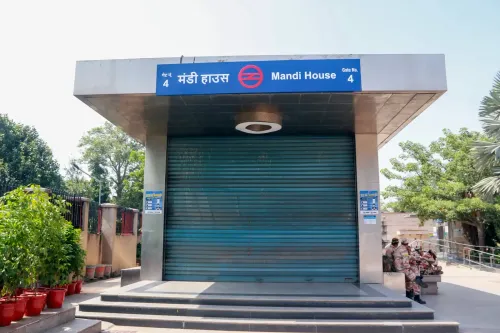
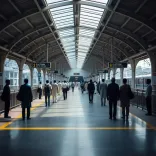
Earlier protests forced shutdowns at Rajiv Chowk , Central Secretariat , Janpath , and New Delhi Metro stations, with thousands of commuters reportedly stranded.
Railways announced train cancellations as a precaution against congestion around Delhi's railway hubs.
The episode revives a recurring constitutional question: how the right to peaceful assembly can coexist with citizens' right to unimpeded daily life.
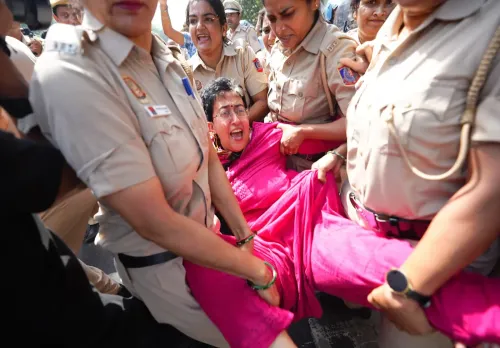
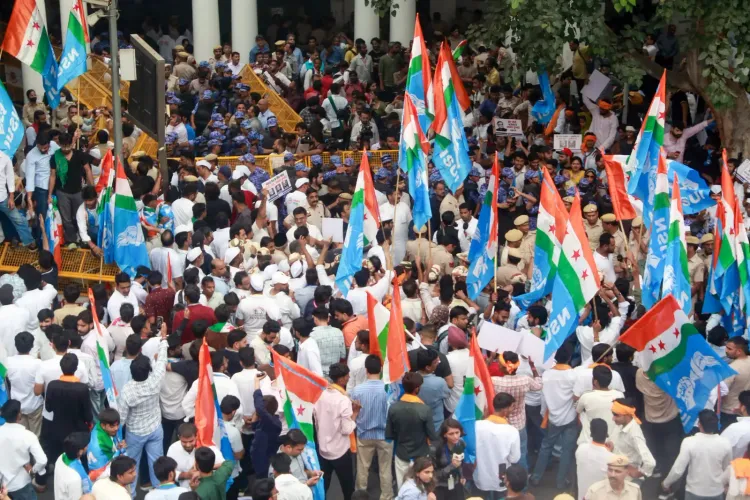
The Opposition's escalating campaign against Chief Election Commissioner (CEC) Gyanesh Kumar — centred on allegations of irregularities in electoral roll revisions and claims that the process has disproportionately favoured the ruling Bharatiya Janata Party (BJP) — has reignited a long-standing constitutional question: can the right to protest coexist with the right of ordinary citizens to go about their daily lives undisrupted?
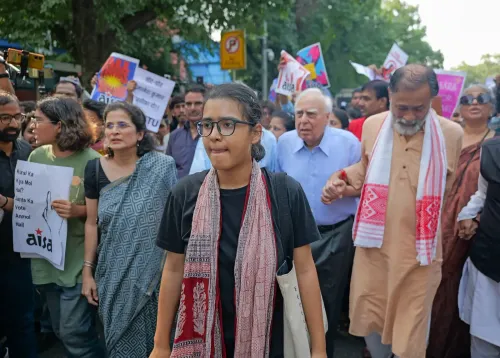
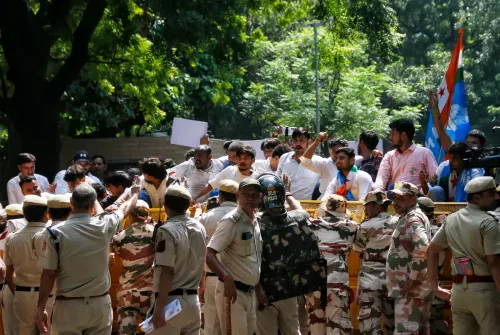
The agitation, which has drawn Opposition leaders, activists, student organisations, and the Cockroach Janta Party (CJP) onto the streets, has spread across several cities and triggered sweeping security and transport curbs in the capital.
Transport Disruptions Across Delhi
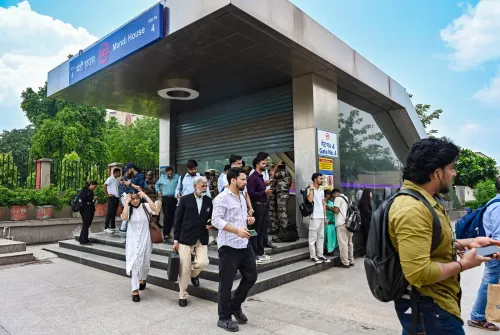
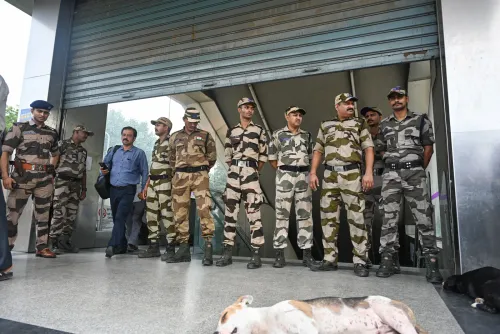
Earlier rounds of protest in central Delhi resulted in the closure of several key Metro stations — including Rajiv Chowk, Central Secretariat, Janpath, and New Delhi — while large swathes of the city faced traffic restrictions and barricading. Thousands of passengers reportedly struggled to reach stations as road blockades and crowding compounded delays.
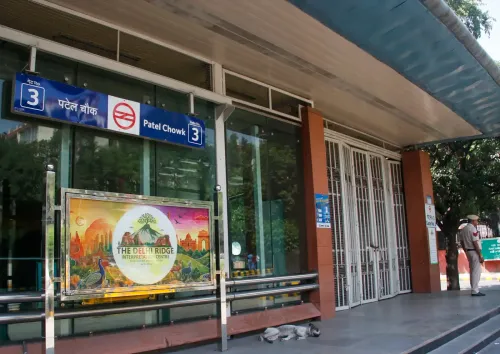
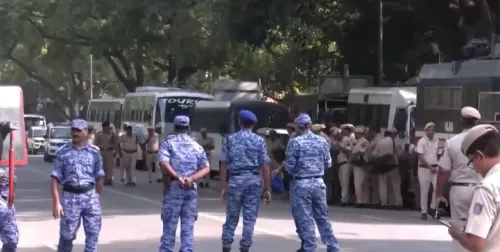
Ahead of anticipated demonstrations over Friday and Saturday, security agencies proposed a significant escalation of restrictions. Delhi Police recommended the closure of entry and exit gates at 57 Metro stations beginning Friday night, citing concerns over crowd mobilisation and attempts to breach high-security zones. Train frequency at affected stations was also proposed to be reduced. Separately, Railways announced the cancellation of trains as a precaution against anticipated congestion around the capital's railway hubs.
The Democratic Case for Protest
In a constitutional democracy, citizens and political parties hold the right to assemble peacefully and to challenge the conduct of public institutions. Protesters contend that raising concerns over how elections are administered is not merely a political act — it is a democratic obligation.
Historical precedent lends weight to this view. Several landmark reforms in India have followed sustained pressure from civil society movements, parliamentary resistance, judicial intervention, and street-level demonstrations. Protest organisers further argue that authorities rarely act on peaceful petitions or symbolic gestures; governments, they contend, respond only when the political cost of inaction rises too high.
The Counterargument: Civic Responsibility
Critics of the disruptions offer an equally compelling counter. Rights and duties, in constitutional theory, are inseparable. The right to assemble peacefully coexists with the duty not to encroach upon the rights of fellow citizens. Freedom of expression does not dissolve civic responsibility.
When a demonstration shuts down public transport, prevents workers and students from commuting, or imposes avoidable costs on people who bear no direct stake in the dispute, the equilibrium between democratic dissent and public order is strained. Notably, even when disruptions stem from security restrictions imposed by authorities — rather than from the protesters themselves — the burden falls on the ordinary commuter either way.
What the Confrontation Reveals
The dispute over CEC Gyanesh Kumar and alleged electoral roll manipulation is politically charged and unlikely to de-escalate quickly. This is not the first time that agitations over the Election Commission of India (ECI)'s conduct have spilled onto the streets; concerns about the institution's independence have surfaced periodically since the early 2000s, making the current episode part of a recurring pattern rather than an aberration.
The challenge is not to choose between the right to protest and the right to unimpeded daily life — it is to find methods of dissent that preserve both. Protest organisers, analysts argue, must weigh the intensity of demonstration against the breadth of public inconvenience caused, while governments must resist the temptation to dismiss legitimate grievances until demonstrations become impossible to ignore.
As the stand-off over the Election Commission's conduct continues, the question of how democracies balance dissent with public convenience is likely to stay at the centre of the political debate.
Point of View
Which pushes organisers toward tactics that maximise visibility — inevitably at public expense. The irony here is that a protest ostensibly about democratic integrity undermines public trust in another way, by making the commuter collateral damage. The Election Commission controversy itself deserves scrutiny on its merits; conflating it with transit chaos risks drowning out the substantive allegations against the CEC in a noise of inconvenience politics.
NationPress
9 Oct 2026
Frequently Asked Questions
Why are Opposition parties protesting against CEC Gyanesh Kumar?
Opposition parties allege that electoral roll revisions overseen by Chief Election Commissioner Gyanesh Kumar contain irregularities and have disproportionately benefited the ruling BJP . The protesters argue that the integrity of voter rolls is a foundational democratic concern, making the campaign more than a routine political dispute.
Which Delhi Metro stations were closed due to the protests?
During earlier rounds of protest, Rajiv Chowk , Central Secretariat , Janpath , and New Delhi Metro stations were shut. Ahead of fresh demonstrations, Delhi Police recommended closing gates at 57 Metro stations from Friday night , with reduced train frequency at affected stops.
Are trains being cancelled because of the protests in Delhi?
Yes. Railways announced train cancellations as a precautionary measure against anticipated congestion or disruption around Delhi 's major railway hubs. Authorities cited earlier incidents in which thousands of passengers struggled to reach stations due to road blockades.
Is disrupting public transport a legitimate form of protest in India?
Legally, citizens have a constitutional right to peaceful assembly, but that right does not extend to deliberately blocking public infrastructure. In practice, many large-scale protests in India have caused incidental disruption, with courts repeatedly affirming that both the right to protest and the right of others to go about their lives carry equal constitutional weight.
What happens next in the stand-off over the Election Commission?
The confrontation is likely to remain politically charged in the near term, with further demonstrations anticipated over the coming days. The broader dispute over the Election Commission of India's conduct and electoral roll integrity is expected to continue, potentially reaching judicial forums if the Opposition escalates its legal challenge.