Supreme Court bars complete Delhi Metro shutdown ahead of Oct 10 protest
Synopsis
With 57 Delhi Metro stations set to shut and trains cancelled before a single protest rally, the Supreme Court stepped in — invoking the principle of proportionality and forcing the Centre to roll back blanket restrictions. The ruling draws a constitutional line between regulating and prohibiting public services during demonstrations, with implications for how authorities pre-empt protest-related disruptions across India.
Key Takeaways
The Supreme Court on 9 October 2026 ordered that there shall be no complete shutdown of Delhi Metro services ahead of the 10 October protest.
A Bench of CJI Surya Kant , Justice Joymalya Bagchi , and Justice V.
Mohana invoked the principle of proportionality against blanket preventive restrictions.
Solicitor General Tushar Mehta assured the court that authorities would reconsider restrictions and allow regulated Metro and railway operations.
The proposed protest was called by the Cockroach Janta Party (CJP) demanding accountability from Chief Election Commissioner Gyanesh Kumar .
Delhi Police had denied permission citing safety concerns and invoked Section 163 of the BNSS in the New Delhi area.
The court granted protest organisers liberty to file an urgent petition and directed publication of a traffic advisory for commuters.
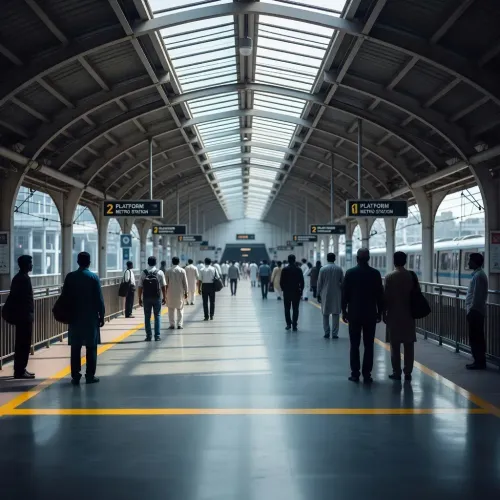
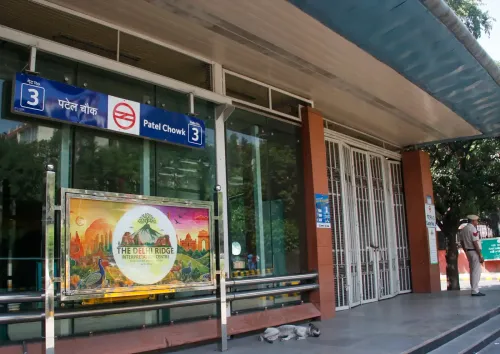
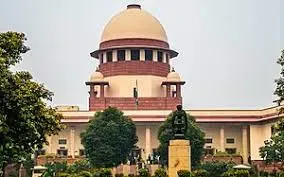
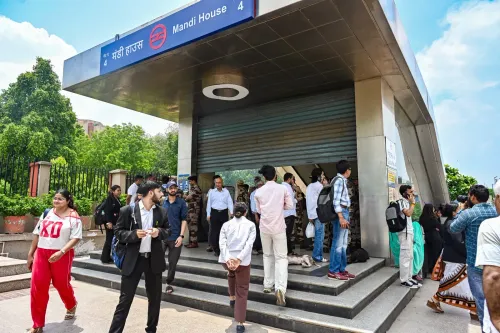
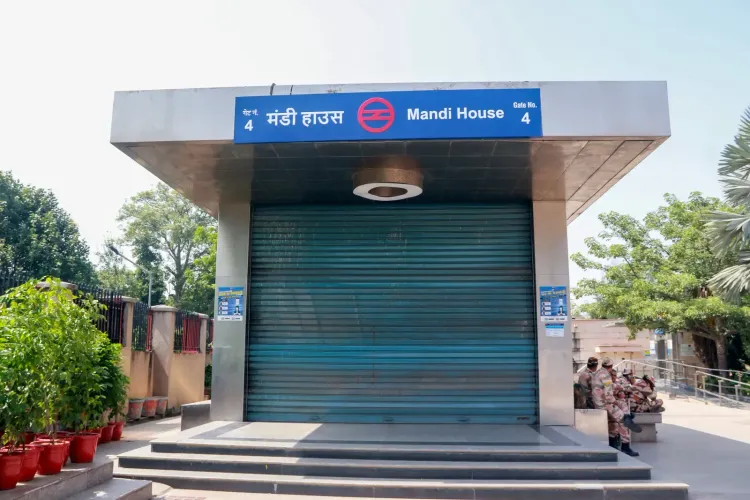
The Supreme Court on Friday, 9 October 2026, ruled out a complete shutdown of Delhi Metro services ahead of a planned protest in the national capital on Saturday, 10 October, directing the Centre to ensure that Metro and other railway services operate in a regulated manner to minimise public inconvenience. The order came in response to concerns over the proposed closure of 57 Metro stations and the cancellation or rescheduling of several trains at New Delhi and Hazrat Nizamuddin railway stations.
What the Supreme Court Ordered
A Bench led by Chief Justice of India (CJI) Surya Kant, along with Justices Joymalya Bagchi and V. Mohana, drew a clear distinction between completely prohibiting movement and regulating services. The Bench stated that authorities must keep the principle of proportionality in mind when imposing preventive restrictions.
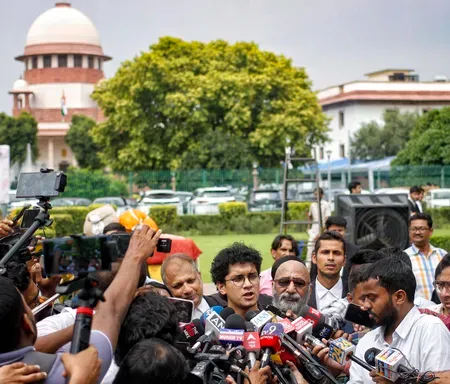
'In terms of that assurance, we make it clear that there shall be no complete prohibition on the movement of metro trains,' the Supreme Court said in its order. The court also directed authorities to give wide publicity to their final decision on regulated Metro operations so that commuters were not subjected to further inconvenience.
Centre's Assurance and the Solicitor General's Role
Solicitor General Tushar Mehta, the Centre's second-highest law officer, assured the apex court that authorities would reconsider the restrictions and allow Metro trains and other railway services to run in a regulated manner. Mehta also agreed to consider identifying an alternative venue equipped with the necessary amenities for holding peaceful and lawful protests, a suggestion raised during the hearing.
The CJI-led Bench asked the Centre to take an appropriate decision on designating a suitable protest venue. The court further directed that a traffic advisory be published to help commuters travelling within the national capital avoid unnecessary hardship.
The Proposed Protest and Background
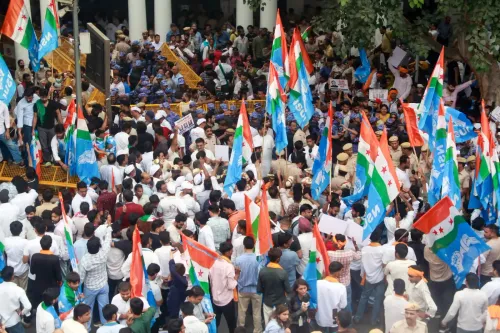
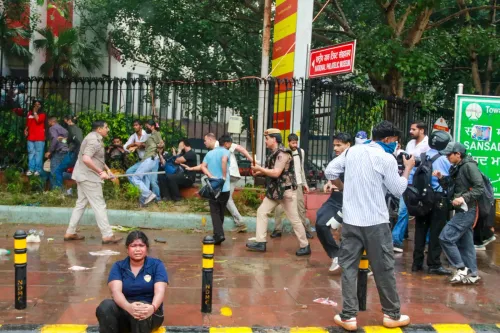
The demonstration was proposed by the Cockroach Janta Party (CJP), which sought accountability from Chief Election Commissioner Gyanesh Kumar. Delhi Police denied permission for the protest, citing concerns over public safety, traffic regulation, and law and order. It also noted that Section 163 of the Bharatiya Nagarik Suraksha Sanhita (BNSS) was in force in the New Delhi area.
The scale of the pre-emptive restrictions — affecting 57 Metro stations and multiple long-distance train services — drew scrutiny from the court as a potentially disproportionate response to a single scheduled demonstration.
Liberty Granted to Protest Organisers
The Supreme Court also granted liberty to the organisers of the proposed protest to approach it through an urgent petition, observing that no such petition had been filed thus far. This leaves open a legal avenue for the CJP to seek formal relief on the denial of permission for the demonstration.
The court's intervention marks a significant assertion of the proportionality principle in cases involving preventive restrictions on public services. How authorities implement the regulated Metro schedule — and whether an alternative protest venue is designated — will determine whether Saturday's events proceed without major disruption.
Point of View
Blanket disruption of public infrastructure has become a default tool for crowd management, and Friday's order signals the judiciary's impatience with that approach. Shutting 57 Metro stations for a single rally is not security planning — it is disproportionate inconvenience transferred from a potential crowd to lakhs of daily commuters. The proportionality doctrine the CJI invoked is not new, but its application to Metro shutdowns sets a precedent that Delhi Police and other forces cannot easily ignore in future. The unanswered question is enforcement: an assurance from the Solicitor General is not the same as a compliance mechanism, and the court will need to watch Saturday's events closely to see whether regulated service actually materialised.
NationPress
9 Oct 2026
Frequently Asked Questions
Why did the Supreme Court intervene in the Delhi Metro shutdown?
The Supreme Court intervened because authorities had proposed closing 57 Delhi Metro stations and cancelling trains ahead of a protest on 10 October, a measure the court found potentially disproportionate. The CJI-led Bench ruled that a complete prohibition on Metro movement was not a proportionate restriction and directed regulated operation instead.
What is the CJP protest on 10 October 2026 about?
The protest was called by the Cockroach Janta Party (CJP) to demand accountability from Chief Election Commissioner Gyanesh Kumar. Delhi Police denied permission for the demonstration, citing public safety, traffic, and law and order concerns, and noted that Section 163 of the BNSS was in force in the New Delhi area.
What did the Supreme Court direct authorities to do?
The court directed that Metro and railway services operate in a suitably regulated manner, that authorities give wide publicity to their decision on service schedules, and that a traffic advisory be issued for commuters. It also asked the Centre to consider designating a suitable alternative venue for peaceful protests.
Can the protest organisers still seek court relief?
Yes. The Supreme Court granted the organisers of the proposed protest liberty to approach it through an urgent petition. As of the Friday hearing, no such petition had been filed by the CJP.
What is the principle of proportionality the Supreme Court cited?
The principle of proportionality requires that restrictions imposed by authorities must be no more than necessary to achieve a legitimate aim. The court applied it here to hold that a complete Metro shutdown — affecting lakhs of daily commuters — went beyond what was needed to manage a single protest event.