DMRC tells Supreme Court all 4,157 Metro trips ran on Oct 10 despite station curbs
Synopsis
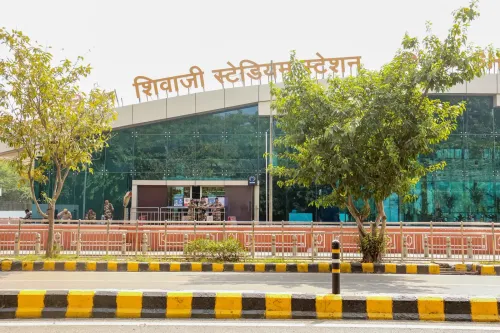
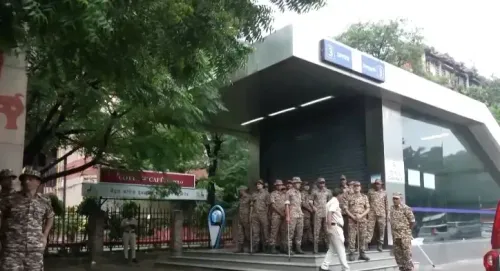
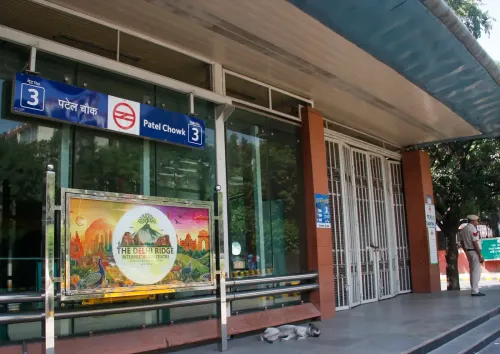
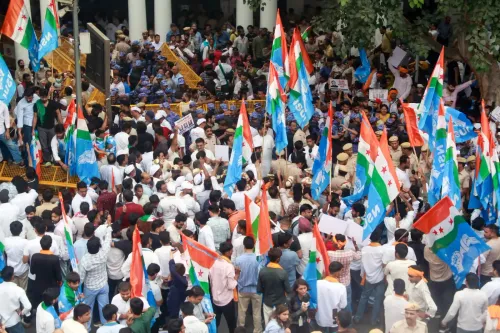
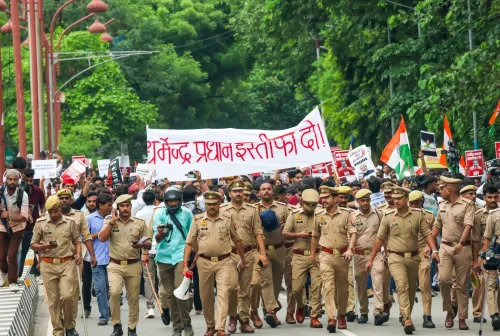
The DMRC has told the Supreme Court that every single one of its 4,157 scheduled Metro trips ran on 10 October, even as Delhi Police shut entry and exit at 45 stations ahead of a protest against the Chief Election Commissioner. Ridership still plunged nearly 45% — not because trains were cut, but because commuters themselves stayed home.
Key Takeaways
The DMRC confirmed all 4,157 scheduled train trips were operated on 10 October 2026 , with 271 trains inducted into service.
Delhi Police initially ordered closure of entry/exit gates at 57 stations ; following Supreme Court intervention, this was reduced to 45 stations (about 15% of the network).
14 key interchange stations including Rajiv Chowk and Kashmere Gate continued to provide uninterrupted line-interchange facilities.
Ridership on 10 October fell to approximately 32 lakh , against around 58 lakh on a normal second Saturday — a drop of nearly 45% .
All station restrictions were lifted from 10 pm on 10 October ; fresh closures at six stations were imposed on 12 October between 6 am and 5 pm .
The matter is before the Supreme Court amid contempt petitions alleging wilful disobedience of the court's 9 October directions.
The Delhi Metro Rail Corporation (DMRC) has informed the Supreme Court that no Metro train trips were cancelled on 10 October 2026, even as entry and exit restrictions were imposed at dozens of stations ahead of a proposed protest against Chief Election Commissioner (CEC) Gyanesh Kumar. In a compliance affidavit filed before the apex court, the DMRC confirmed that all 4,157 scheduled train trips were operated across the network, maintaining the standard Saturday schedule.
What the Compliance Affidavit Says
The affidavit, filed by DMRC General Manager (Legal) Group Captain Sanjay Vinayakrao Kute (Retd.), stated that 271 trains were inducted into service on 10 October. It was submitted in compliance with the Supreme Court's 9 October order directing the DMRC, railway authorities, and Delhi Police (Traffic) to file reports on the operation of public transport services in the national capital.
The DMRC noted that the Delhi Police had initially directed the closure of entry and exit gates at 57 stations out of the total 303 stations in the Delhi-NCR Metro network. Following the Supreme Court's intervention, that number was reduced to 45 stations through a modified communication issued on 9 October.
'The notification dated 08.10.2026 did not impose a complete ban on public transportation. It merely directed the closure of 57 out of the 303 stations for entry and exit purposes,' the compliance report stated. Restrictions on entry and exit were thus confined to around 15 per cent of the network, while the remaining 258 stations — over 85 per cent — continued to remain fully operational and accessible to commuters.
Key Interchange Stations Remained Functional
The affidavit specifically noted that 14 key interchange stations among those affected — including Rajiv Chowk, Kashmere Gate, Central Secretariat, Mandi House, Hauz Khas, Dilli Haat-INA, and Netaji Subhash Place — continued to provide uninterrupted line-interchange facilities. Commuters were able to change Metro corridors without disruption, and alternative stations remained open to minimise inconvenience.
On the functioning of stations such as GTB Nagar and Vishwavidyalaya, the DMRC said there was no complete prohibition on passenger movement. Exit gates at Vishwavidyalaya Metro Station remained operational, while passenger movement at GTB Nagar was regulated by deployed personnel, with Gate No. 3 kept open to facilitate outgoing passengers.
Ridership Fell Sharply — but Not Due to Train Cuts
The affidavit disclosed that approximately 32 lakh passengers travelled on the Metro network on 10 October, compared to around 58 lakh passengers on a normal second Saturday — a drop of nearly 45 per cent. The DMRC attributed the lower ridership to the proposed protest, which reportedly prompted many commuters to avoid travelling and refrain from usual daily activities such as attending work or conducting business.
Restrictions at all 45 affected stations were lifted from 10 pm on 10 October after the DMRC received directions from the Delhi Police to reopen them. However, fresh communications were issued on 12 October directing the closure of entry and exit facilities at six Metro stations between 6 am and 4 pm, a period subsequently extended to 5 pm on the same day.
Supreme Court's Earlier Directions
The development comes amid contempt petitions alleging wilful disobedience of the apex court's 9 October directions. A Bench led by Chief Justice of India (CJI) Surya Kant had observed on 9 October that the restrictions appeared to be 'overreaching' and clarified that there should be no outright prohibition on Metro train movement. The court directed authorities to permit Metro and railway services to operate in a suitably regulated manner, in accordance with the principle of proportionality.
Subsequently, on 11 October, a Bench of Justices Joymalya Bagchi and V. Mohana, hearing a clutch of contempt petitions, directed that Metro and railway services should function normally unless restrictions became necessary due to a disturbance to public order. The court also sought details of affected stations and directed authorities to file compliance reports.
Steps Taken to Inform Commuters
The DMRC detailed the measures taken to disseminate information about the restrictions: regular updates on its official social media handles, announcements through the Operations Control Centre and train operators, advisory signages at station gates, and updates on its website and the DMRC Sarthi app. Additional staff and ground marshals were deployed at major interchange stations to guide commuters and manage passenger flows. The network was monitored in real time in coordination with police authorities.
The DMRC said it would continue to act in accordance with security assessments and directions issued by law enforcement agencies, while ensuring the smooth functioning of the Metro network subject to law-and-order requirements. The Supreme Court is expected to examine the compliance reports and assess whether authorities adequately upheld commuter rights during the restrictions.
Point of View
Technically satisfying the Supreme Court's directive against outright cancellation. But the real story is the 45% ridership collapse: when nearly half of regular commuters stay off the Metro on a Saturday, the distinction between 'trains ran' and 'the network functioned normally' becomes legally safe but operationally hollow. The closure of 45 stations — including some of the busiest interchange hubs in the network — effectively discouraged access even without formally stopping services, a distinction the contempt petitioners will likely press. The court's framing of 'proportionality' will be the test: not whether trains moved, but whether commuters could reasonably access them.
NationPress
14 Oct 2026
Frequently Asked Questions
Did Delhi Metro cut train services on October 10, 2026?
No. The DMRC has told the Supreme Court that all 4,157 scheduled train trips were operated on 10 October, with 271 trains inducted into service, maintaining the standard Saturday schedule. No trips were cancelled despite entry and exit restrictions at 45 stations.
Why were Delhi Metro stations restricted on October 10?
Delhi Police imposed entry and exit restrictions ahead of a proposed protest against Chief Election Commissioner Gyanesh Kumar, citing concerns over public safety, traffic management, and law and order. Initially 57 stations were affected; following Supreme Court intervention, this was reduced to 45 stations.
Why did Metro ridership fall sharply on October 10?
Ridership dropped to approximately 32 lakh passengers against a normal second-Saturday figure of around 58 lakh — a fall of nearly 45%. The DMRC attributed this to the proposed protest, which reportedly prompted many commuters to avoid travelling and refrain from usual daily activities.
What did the Supreme Court direct regarding Metro services?
On 9 October, a Bench led by Chief Justice of India Surya Kant observed that restrictions appeared 'overreaching' and ordered that there should be no outright prohibition on Metro train movement, directing services to operate in a proportionate, regulated manner. On 11 October, Justices Joymalya Bagchi and V. Mohana further directed that Metro and railway services should function normally unless a disturbance to public order made restrictions necessary.
What is the current status of the contempt petitions against Delhi authorities?
Contempt petitions alleging wilful disobedience of the Supreme Court's 9 October directions are pending before the court. The DMRC and other authorities have filed compliance reports, and the court is expected to assess whether they adequately upheld commuter rights during the restrictions.