Is Delhi-NCR Ready for a Winter Rain Spell Amid Poor AQI?
Synopsis
As Delhi-NCR prepares for a rain spell, the air quality has taken a turn for the worse, once again falling into the 'poor' category. With the IMD's yellow alert in place, residents should brace for potential thunderstorms and gusty winds. Will this rainfall provide the relief needed from persistent pollution?
Key Takeaways
Delhi-NCR is under a yellow alert for rain and thunderstorms.
The AQI has deteriorated to the 'poor' category at 281.
High pollution levels recorded in several areas.
Expect strong winds and possible hail on Tuesday.
Stage III pollution control measures have been lifted.
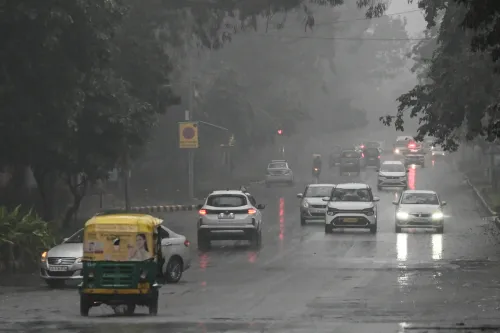
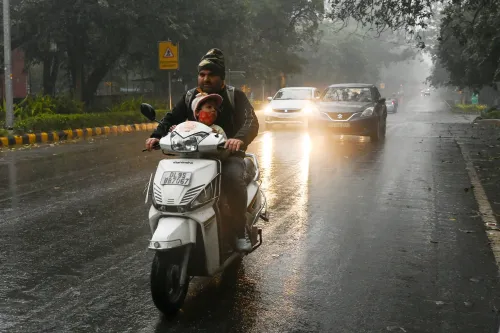
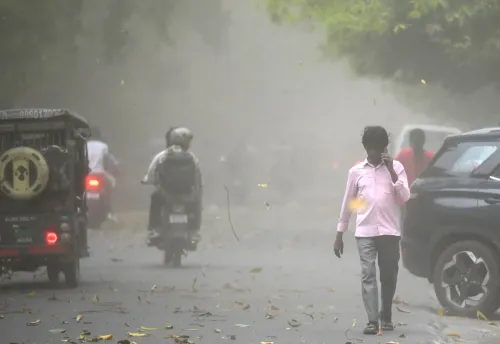
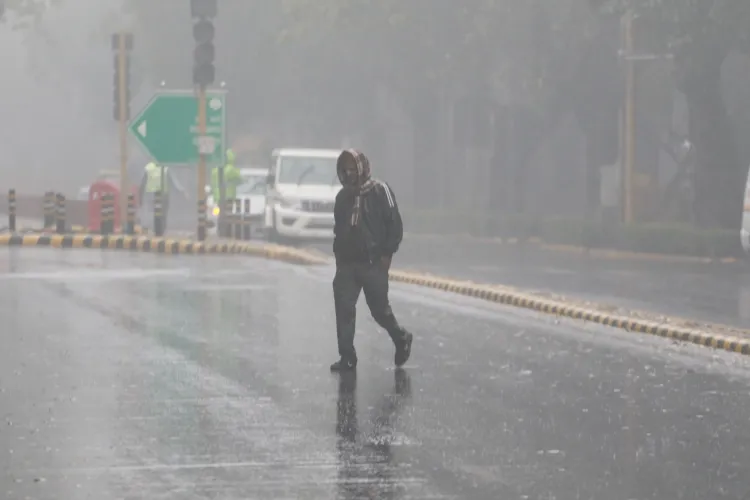
New Delhi, Jan 27 (NationPress) The Delhi-NCR region is preparing for a rainy spell on Tuesday, as the India Meteorological Department (IMD) has issued a yellow alert for potential rain and thunderstorms throughout the area.
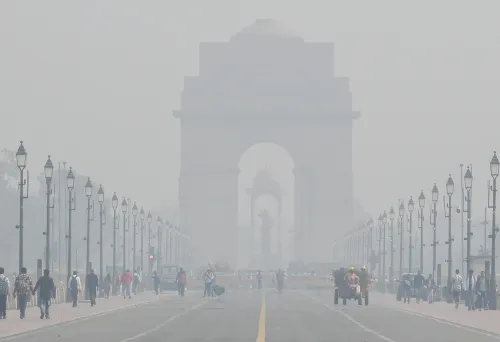
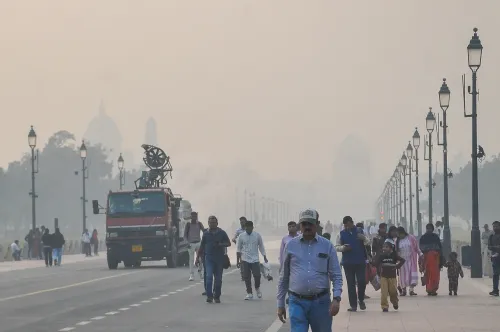
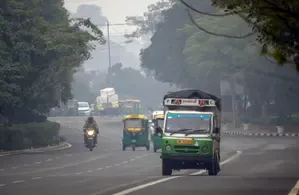
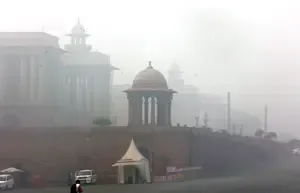
Following a brief period of improved air quality, pollution levels have surged once again, with the Air Quality Index (AQI) hitting 281 at 7:30 a.m., categorizing it as ‘poor’.
As per the Central Pollution Control Board (CPCB), various locations in the capital are experiencing troubling pollution levels. Notably, Anand Vihar recorded an AQI of 368, with Rohini at 370, Bawana at 344, Sonia Vihar at 337, Chandni Chowk at 325, DTU at 322, ITO at 321, Patparganj at 317, Dwarka Sector-8 at 314, North Campus at 291, and Narela at 288.
Delhi faced a chilly start to Republic Day on Monday, with temperatures gradually increasing throughout the day. However, air quality declined, reverting to the ‘poor’ classification. The IMD has issued a yellow alert for thunderstorms, with rainfall anticipated on Tuesday, along with warnings of strong winds across the region.
Previously, the capital had a noticeable improvement in air quality post-winter rain on Sunday, where the AQI was recorded at 150, classified as 'moderate' according to the CPCB. While the rainfall contributed to the cold weather, it also provided necessary relief from ongoing pollution levels.
According to AQI standards, readings from 0 to 50 are deemed ‘good’, 51 to 100 ‘satisfactory’, 101 to 200 ‘moderate’, 201 to 300 ‘poor’, 301 to 400 ‘very poor’, and 401 to 500 ‘severe’.
Meanwhile, the Sub-Committee on the Graded Response Action Plan (GRAP) under the Commission for Air Quality Management (CAQM) lifted all Stage III measures across Delhi-NCR as of January 22, citing better air quality and favorable weather forecasts.
On Monday, temperatures continued to show a gradual rise, while the 24-hour average AQI was noted at 241, keeping it within the ‘poor’ classification, according to IMD data. The weather department has cautioned of rain, thunderstorms, lightning, and hail on Tuesday, with wind speeds expected to reach between 40-50 kmph and gusts up to 60 kmph.
Temperatures across Delhi on Monday evening exhibited mixed trends, with noticeably warmer days but persistently cold nights.
Point of View
It is vital to ensure that the public is informed about the ongoing weather changes and their implications on air quality. The recent rains have shown a temporary positive effect on pollution levels, but the forecasted thunderstorms signal a need for citizens to remain vigilant. Our commitment remains clear: to provide accurate and timely information for the safety and well-being of the community.
NationPress
10 Sept 2026
Frequently Asked Questions
What is the current AQI in Delhi-NCR?
As of 7:30 a.m., the AQI in Delhi-NCR is recorded at 281, which falls under the 'poor' category.
What areas in Delhi are most affected by pollution?
Areas such as Anand Vihar, Rohini, and Bawana are experiencing alarming AQI levels, with readings above 340.
What should residents expect from the weather on Tuesday?
Residents can expect rain, thunderstorms, and gusty winds, with wind speeds reaching up to 60 kmph.
How does the AQI classification work?
AQI readings from 0-50 are 'good', 51-100 'satisfactory', 101-200 'moderate', 201-300 'poor', 301-400 'very poor', and 401-500 'severe'.
Have any pollution control measures been lifted?
Yes, the Graded Response Action Plan has revoked all Stage III measures due to improved air quality.