Did Rain Affect the Weather in Delhi-NCR?
Synopsis
Delhi-NCR is experiencing a wave of winter chill due to moderate rainfall, raising concerns over air quality as pollution levels surge. Stay updated on the latest weather forecasts and their impact on air quality in the region.
Key Takeaways
Delhi-NCR experienced moderate rainfall on Tuesday morning.
The IMD has issued a yellow alert due to a Western Disturbance.
Pollution levels have worsened, with an AQI of 281 recorded.
Cloudy weather and fog are expected in the coming days.
Rainfall provides temporary relief from pollution but raises concerns about air quality.
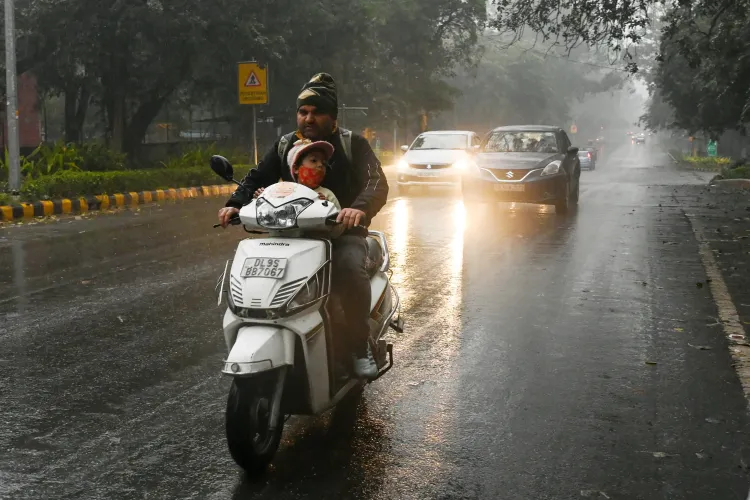
New Delhi, Jan 27 (NationPress) – The Delhi-NCR area was hit by moderate rainfall on Tuesday morning, ushering in a fresh wave of winter chill. The India Meteorological Department (IMD) has issued a yellow alert for the city due to the impact of a Western Disturbance.
According to the IMD, light rain accompanied by thunderstorms and gusty winds reaching speeds of 30–40 km/h are anticipated during the morning hours, with further rain expected from the afternoon into the evening.
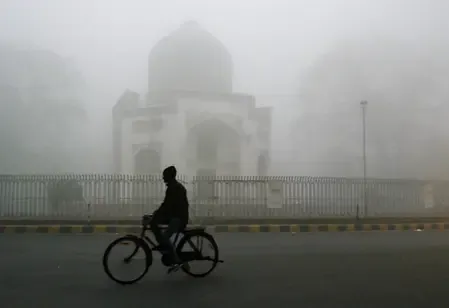
The forecast indicates that the sky will remain predominantly cloudy over the next seven days, with partial cloud cover expected on January 29 and 31. Additionally, shallow to moderate fog is likely during the mornings from January 28 to February 2.
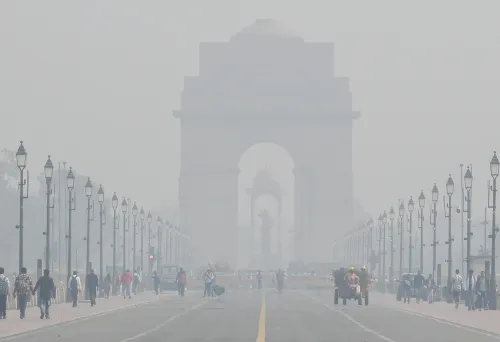
In the meantime, just as air quality improved briefly, pollution levels have escalated once more. The Air Quality Index (AQI) has been recorded at 281, categorizing it as 'poor'.
The Central Pollution Control Board (CPCB) reported that various locations in the national capital have alarming pollution readings. For instance, Anand Vihar recorded an AQI of 368, followed by Rohini at 370, Bawana at 344, and Sonia Vihar at 337. Other areas like Chandni Chowk, DTU, ITO, and Patparganj also reported concerning AQI levels.
Previously, Delhi saw a significant improvement in air quality after the winter rain on Sunday, with the AQI at 150, which is classified as 'moderate'. While the rainfall contributed to the city’s chilly atmosphere, it also provided crucial relief from ongoing pollution issues.
On Monday, temperatures began to rise gradually, with the 24-hour average AQI settling at 241, still in the 'poor' category. The weather department has issued warnings of rain, thunderstorms, lightning, and hail on Tuesday, with wind speeds predicted to reach 40-50 km/h and gusts potentially hitting 60 km/h.
Temperature trends across Delhi on Monday evening varied, showing warmer days but consistently cold nights.
The AQI classification indicates that a score between 0 and 50 is 'good', 51 to 100 is 'satisfactory', 101 to 200 is 'moderate', 201 to 300 is 'poor', 301 to 400 is 'very poor', and readings from 401 to 500 are 'severe'.
Point of View
It is crucial to remain connected with the citizens while providing accurate updates on the weather and air quality in Delhi-NCR. The recent rainfall brings both relief and challenges, highlighting the need for ongoing awareness in these critical areas.
NationPress
30 Sept 2026
Frequently Asked Questions
What is the current air quality in Delhi-NCR?
The current Air Quality Index (AQI) in Delhi-NCR is recorded at 281, categorizing it as 'poor'.
What weather changes can we expect in the coming days?
Moderate rainfall is expected to continue with cloudy skies and potential fog in the mornings until February 2.
How does the AQI classification work?
The AQI is classified as: 0-50 'good', 51-100 'satisfactory', 101-200 'moderate', 201-300 'poor', 301-400 'very poor', and 401-500 'severe'.