Is Delhi-NCR Experiencing a Temperature Rise While Air Quality Remains Poor?
Synopsis
As Delhi-NCR welcomes rising temperatures amidst sunny skies, residents face the ongoing challenge of poor air quality. The government’s proactive steps towards enhancing urban transport may help alleviate some of these concerns. Discover more about the current weather and air quality status in the region.
Key Takeaways
The temperature in Delhi-NCR is on the rise.
Air quality remains a significant concern.
The government is working on improving urban transport.
Weather conditions are predicted to remain stable.
Residents are encouraged to stay informed about air quality levels.
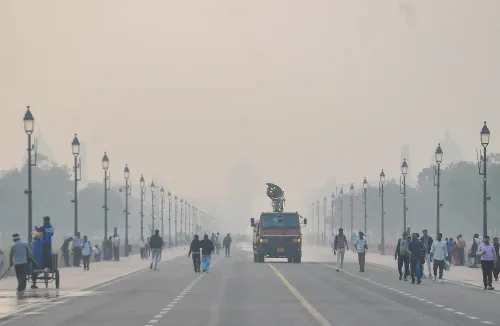
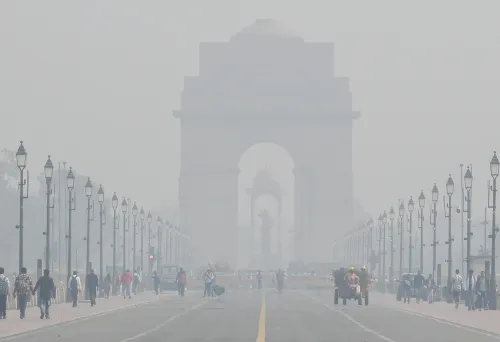
New Delhi, Feb 7 (NationPress) The Delhi-NCR region has experienced a notable increase in temperature as residents enjoyed a sunny Saturday, though the area’s air quality persisted in the 'poor' category.
Daytime temperatures in the national capital have been gradually rising due to clear and sunny weather conditions.
On Friday, the maximum temperature in Delhi was recorded at 1.5 degrees Celsius above the seasonal average, signaling a shift in weather patterns, based on data from the India Meteorological Department (IMD).
The weather bureau has forecasted similar conditions to continue on Saturday, with wind speeds anticipated to be between 15 and 25 kilometers per hour throughout the day.
Maximum temperatures are expected to range between 23 and 25 degrees Celsius, while minimum temperatures could vary between 9 and 11 degrees Celsius.
The IMD has also suggested that morning haze will likely persist, but is expected to clear as the day advances, allowing for ample sunshine to return.
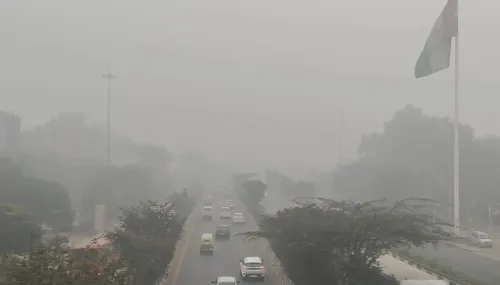
Despite the favorable daytime weather, air quality in Delhi remains a pressing issue, with the overall Air Quality Index (AQI) recorded at 260, categorizing it as 'poor'.
Specific areas reported concerning AQI levels: Burari at 202, Anand Vihar at 260, Chandni Chowk at 232, DTU at 204, Dwarka Sector-8 at 243, ITO at 223, and Okhla Phase-2 at 228, all indicating deteriorating air quality.
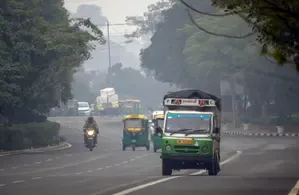
In a bid to enhance urban mobility in the national capital, the Delhi government has established a task force to draft legislation for creating the Delhi Unified Metropolitan Transport Authority (DUMTA), alongside the establishment of a dedicated Delhi Urban Transport Fund (DUTF).
According to a statement from Chief Minister Rekha Gupta’s office, the proposed Bill aims to streamline, integrate, and coordinate Delhi’s fragmented transport network under a unified planning and governance framework.
This initiative is viewed as a pivotal step towards fulfilling the government’s broader vision of constructing a modern, efficient, people-centric, and environmentally sustainable transport system for the national capital.
Point of View
It is crucial to highlight that while the rise in temperatures may offer a welcome change for residents in Delhi-NCR, the persistent air quality issues must not be overlooked. The government's initiative towards an integrated transport system represents a forward-thinking approach that may address some of these environmental challenges. NationPress remains committed to delivering factual and timely updates on these pressing matters.
NationPress
20 Sept 2026
Frequently Asked Questions
What is the current air quality index in Delhi?
The overall Air Quality Index (AQI) in Delhi is recorded at 260, which is categorized as poor.
What are the expected temperatures in Delhi today?
Maximum temperatures are expected to be between 23 and 25 degrees Celsius, while minimum temperatures may range from 9 to 11 degrees Celsius.
Is there any initiative by the Delhi government to improve transport?
Yes, the Delhi government has formed a task force to draft a Bill for the establishment of the Delhi Unified Metropolitan Transport Authority (DUMTA) and a dedicated Delhi Urban Transport Fund (DUTF).