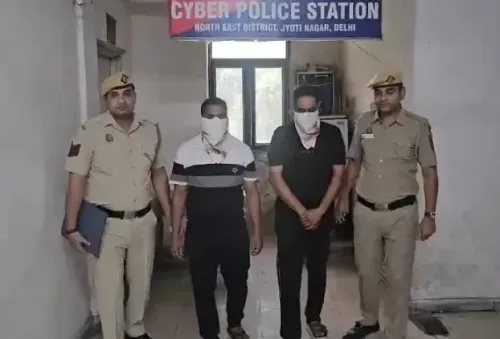
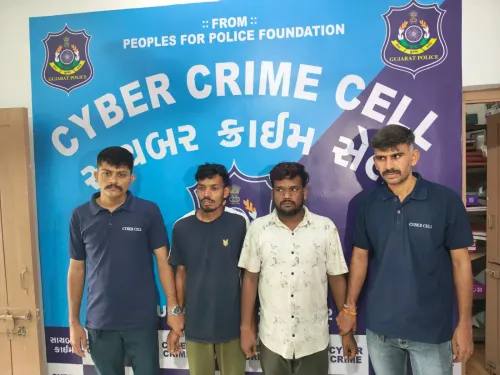
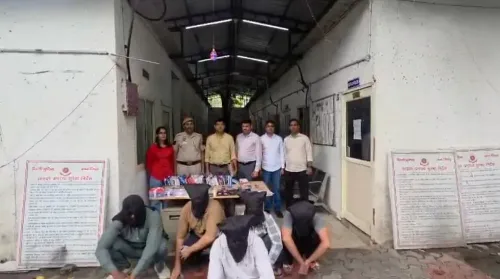
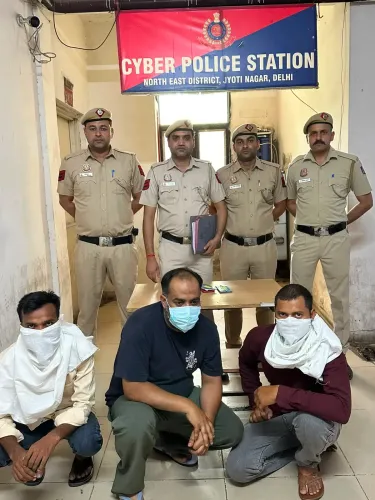
Delhi Police arrests four in mule bank account cyber-fraud probe, seizes 5 phones
Synopsis
Delhi's East District Cyber Police have unravelled a four-person mule bank account chain — where a single account holder's credentials passed through three hands before being used in a Tamil Nadu-originating cyber fraud worth ₹44,000. The arrests expose how commission-driven account-sharing networks silently power India's online fraud ecosystem.
Key Takeaways
Delhi Police arrested four individuals on 28 October 2026 for facilitating a suspected mule bank account linked to cyber fraud.
Suspicious transactions worth ₹44,000 were traced to a Kotak Mahindra Bank account held by Ashwani of Trilokpuri, Delhi .
The fraud originated from a complaint at Kallakurichi Police Station, Tamil Nadu ; complainant Vignesh reported a loss of ₹44,000 , including ₹21,000 of personal funds.
Account details passed through a chain — Ashwani → Aditya → Ram Kumar alias Annu → Vikrant alias Vicky — reportedly in exchange for a commission.
Five mobile phones have been seized and are under forensic examination for digital evidence.
The case was registered as FIR No.
84/2026 on 23 October under Sections 112(2) and 318(4) of the BNS .
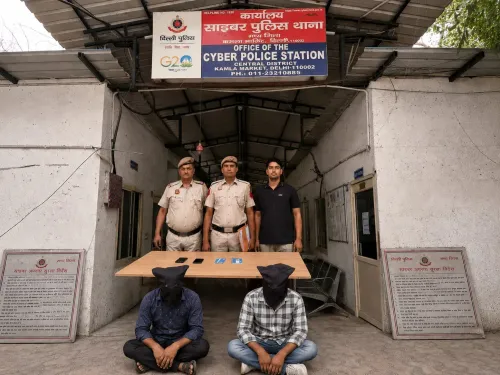
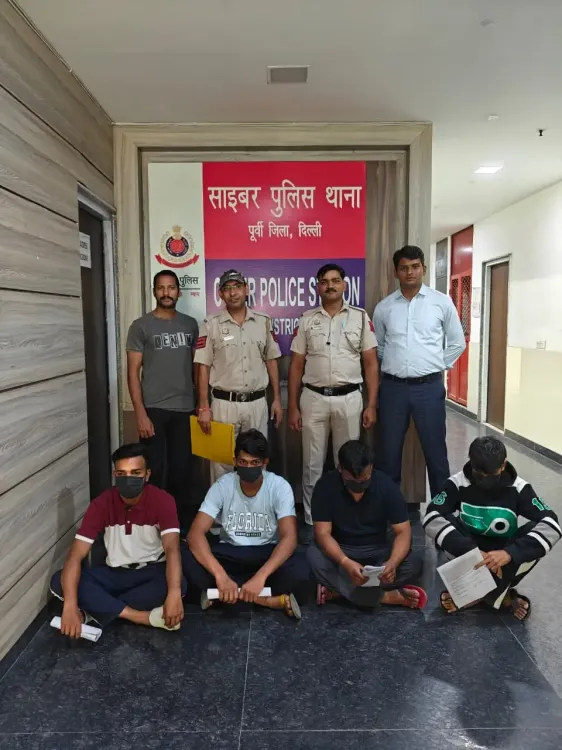
Delhi Police's Cyber Police Station, East District, has arrested four individuals for allegedly sharing and facilitating the use of a suspected mule bank account linked to a cyber-fraud investigation, the force announced on Wednesday, 28 October 2026. Suspicious financial transactions totalling ₹44,000 were traced through an analysis of complaints on the National Cyber Crime Reporting Portal (NCRP) and banking records. Five mobile phones have also been seized for digital evidence examination.
How the Fraud Chain Was Uncovered
Investigators zeroed in on a Kotak Mahindra Bank account allegedly linked to Ashwani, a resident of Trilokpuri, Delhi, after scrutinising NCRP complaints and financial transaction trails. A suspicious credit of ₹44,000 was reportedly deposited into this account on 2 August, connected to a cyber-fraud complaint filed at Kallakurichi Police Station in Tamil Nadu under NCRP Acknowledgement No. 22908260073953.
The case was formally registered as FIR No. 84/2026 on 23 October under Sections 112(2) and 318(4) of the Bharatiya Nyaya Sanhita (BNS). According to police, the investigation was conducted under the supervision of Inspector Pawan Yadav, SHO of Cyber Police Station, East District, with a team comprising SI Rinki Rani, Head Constable Harish, and Constables Neeraj and Amrit Lal.
The Complainant's Account
The original complainant, Vignesh, told police that an amount was transferred from his Indian Bank account to his State Bank of India (SBI) account through what he claimed was an unauthorised self-transfer on 2 August. He further alleged that ₹23,000 was subsequently credited to his SBI account from an unknown source, after which unidentified persons conducted online transactions without his knowledge or consent.
Vignesh reported a total financial loss of ₹44,000 — including ₹21,000 of his own funds — and sought police action and recovery of the money. Bank statements and transaction records are still being examined to establish the full sequence of events and confirm the link between the loss and the suspected beneficiary account.
How the Account Was Shared — The Four Accused
During interrogation, Ashwani disclosed that he had shared his bank account credentials with his friend Aditya on the pretext of receiving a loan. Aditya allegedly passed the details to Ram Kumar alias Annu, who then forwarded them to Vikrant alias Vicky, who reportedly shared the account information further in connection with a proposed commission arrangement.
Based on these disclosures, police arrested all four accused. They have been identified as Ashwani, 24, and Aditya, 24, both residents of Trilokpuri; Ram Kumar alias Annu, 22, a resident of Raj Nagar-II, Palam; and Vikrant alias Vicky, 31, a resident of Kakrola.
Digital Evidence and Next Steps
The five recovered mobile phones are being forensically examined for communications and digital evidence to establish the alleged chain of account sharing and determine individual roles. This case is part of a broader pattern of mule account networks — where individuals knowingly or unwittingly lend their bank credentials to cyber-fraudsters — that law enforcement agencies across India have been targeting with increasing urgency.
Notably, mule account networks have emerged as a critical enabler of online financial fraud in India, allowing criminal proceeds to be dispersed across multiple accounts to evade detection. Further investigation is underway, with more arrests possible as the digital trail is analysed.
Point of View
000 at the centre of this case is a modest sum, but the architecture it exposes is not. A four-person chain passing a single bank account across Delhi neighbourhoods for a commission is a microcosm of how India's cyber-fraud underground operates at scale — with unwitting or incentive-driven mule holders providing the laundering layer that shields actual fraudsters from detection. Law enforcement is catching the weakest links in the chain; the harder challenge is reaching those who design and monetise these networks. Until penalties for account-sharing are widely understood and enforcement reaches beyond street-level participants, mule networks will remain cheap and abundant.
NationPress
28 Oct 2026
Frequently Asked Questions
What is a mule bank account in cyber fraud?
A mule bank account is a legitimate bank account whose holder allows or is coerced into letting fraudsters route stolen funds through it, obscuring the money trail. In this Delhi case, the original account holder allegedly shared his credentials with a friend under the pretext of receiving a loan, and those details were then passed along a chain of four individuals.
Who are the four accused arrested by Delhi Police?
The four arrested are Ashwani (24) and Aditya (24), both from Trilokpuri; Ram Kumar alias Annu (22) from Raj Nagar-II, Palam; and Vikrant alias Vicky (31) from Kakrola. All are accused of sharing and facilitating the use of a mule bank account linked to a ₹44,000 cyber-fraud complaint.
What sections of law were invoked in this case?
The case was registered as FIR No. 84/2026 on 23 October 2026 under Sections 112(2) and 318(4) of the Bharatiya Nyaya Sanhita (BNS), which relate to organised fraudulent activity and cheating causing harm.
Where did the original cyber-fraud complaint come from?
The complaint originated from Vignesh, who filed it at Kallakurichi Police Station in Tamil Nadu via the National Cyber Crime Reporting Portal (NCRP). He alleged an unauthorised transfer of ₹44,000 — including ₹21,000 of his own money — from his accounts on 2 August.
What happens next in the investigation?
Five seized mobile phones are being forensically examined for communications that could establish the chain of account sharing and each accused's role. Police are also analysing bank statements to map the full transaction sequence, and further arrests have not been ruled out.