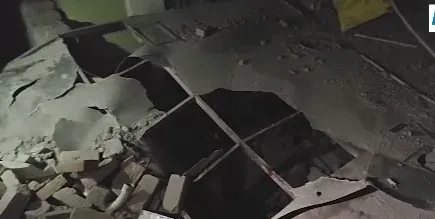
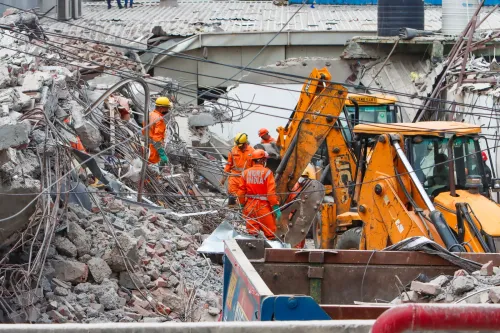
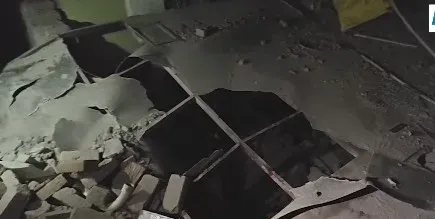
Delhi minister orders magisterial probe into New Seemapuri building collapse that killed 4
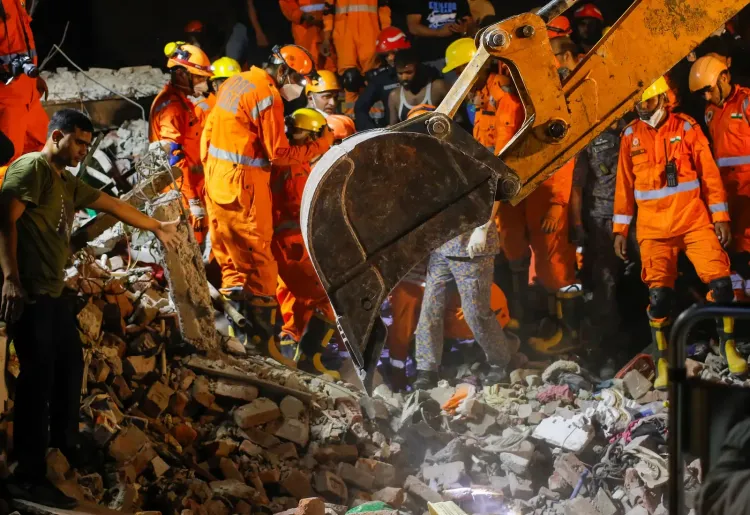
Synopsis
Four people died when a five-storey building on a 20–25 square yard plot crumbled in New Seemapuri on 7 October — possibly triggered by vibration from demolition machinery next door. Three weeks on, Delhi's Home and Urban Development Minister has ordered a magisterial enquiry with teeth: it can recommend legal action against officials, owners, and civic agencies alike.
Key Takeaways
Delhi Minister Ashish Sood ordered a magisterial enquiry on 30 October into the New Seemapuri building collapse.
The collapse at House No.
E-402 on 7 October killed four people and damaged three adjacent structures.
The District Magistrate (North-East) will head the probe, which covers government agency lapses and building rule violations.
Initial enquiries point to heavy demolition machinery on a nearby unauthorised construction site as a possible trigger.
Three neighbouring buildings were declared unsafe by the MCD and evacuated after the collapse.
The enquiry is also mandated to review implementation of the National Disaster Management Act, 2005 and recommend preventive measures.
Delhi Home and Urban Development Minister Ashish Sood on Friday, 30 October ordered a magisterial enquiry into the collapse of a five-storey residential building in New Seemapuri that claimed four lives on 7 October. The enquiry will be headed by the District Magistrate (North-East) and is mandated to fix accountability — including lapses by government agencies and officials.
What Collapsed and When
A five-storey residential structure at House No. E-402, New Seemapuri, built on a plot of approximately 20–25 square yards, came down around 3 pm on 7 October. Three adjacent buildings sustained major structural damage, were declared unsafe by the Municipal Corporation of Delhi (MCD), and were subsequently evacuated. Nearby structures were also found to be weak, having been constructed on tiny plots without proper columns or beams.
What Triggered the Collapse
Initial local enquiries suggest that demolition work using heavy, vibration-causing machinery on an adjacent unauthorised construction site may have set off the collapse. According to officials, the surrounding area is characterised by densely packed, structurally deficient buildings on sub-standard plots — a pattern that amplifies the risk of cascading damage. Authorities have not yet issued a final determination on the precise cause, pending the enquiry.
What the Enquiry Will Investigate
The magisterial enquiry carries a broad mandate. It will ascertain the exact facts, root causes, and circumstances of the collapse, identify violations of building rules and safety laws by owners, tenants, or private individuals, and scrutinise possible omissions by government departments and civic agencies. The probe will also examine implementation of the National Disaster Management Act, 2005 and recommend preventive measures. Crucially, it is empowered to suggest strict legal action against all erring individuals, agencies, or officials found responsible.
What the Minister Said
Minister Ashish Sood described the incident as 'a deeply tragic incident that has cost precious lives,' adding, 'We have ordered a magisterial enquiry to investigate every single aspect of this collapse. No guilty person or lax official will be spared.' He further stated that while the immediate priority is supporting the affected families, the long-term aim is to 'enforce strict structural safety rules so that such an accident never happens again in Delhi.'
Broader Context
Building collapses in Delhi's unauthorised or semi-regularised colonies are not isolated events. The capital's densely built peripheral localities — including parts of North-East Delhi — have long seen rapid, largely unregulated construction on small plots, often without structural engineers or formal approvals. This incident is among several in recent years to prompt demands for stricter enforcement from the MCD and urban development authorities. Whether this enquiry translates into systemic action or remains a procedural response will be closely watched by residents and safety advocates alike.
Point of View
Often without columns, beams, or approved plans. The MCD has faced repeated criticism for inconsistent enforcement, and the inclusion of 'lapses by civic agencies' in the enquiry's scope is notable — but accountability of this kind rarely reaches frontline officers. Unless the probe's recommendations are time-bound, publicly disclosed, and tracked, this risks being yet another report filed and forgotten.
NationPress
30 Oct 2026
Frequently Asked Questions
What happened in the New Seemapuri building collapse?
A five-storey residential building at House No. E-402, New Seemapuri, Delhi, collapsed on 7 October around 3 pm, killing four people and causing major damage to three adjacent structures. The building was constructed on a plot of approximately 20–25 square yards, and preliminary enquiries suggest vibrations from demolition machinery at a nearby unauthorised construction site may have triggered the collapse.
Who ordered the magisterial enquiry and who will lead it?
Delhi Home and Urban Development Minister Ashish Sood ordered the magisterial enquiry on 30 October. It will be led by the District Magistrate (North-East) and is empowered to fix accountability across both private individuals and government agencies.
What is the scope of the magisterial enquiry?
The enquiry will investigate the root causes and circumstances of the collapse, identify violations of building rules and safety laws, examine potential lapses by government departments and the MCD, and recommend legal action against all erring parties. It will also review implementation of the National Disaster Management Act, 2005, and suggest permanent preventive measures.
What happened to residents of nearby buildings after the collapse?
Three buildings adjacent to the collapsed structure sustained major damage and were declared unsafe by the Municipal Corporation of Delhi (MCD). Residents were evacuated as a precautionary measure. Other nearby structures were also identified as structurally weak.
Why are building collapses common in areas like New Seemapuri?
Areas like New Seemapuri are characterised by densely packed buildings constructed on very small plots — often 20–25 square yards — without proper structural columns, beams, or approved plans. Rapid, largely unregulated construction in such localities, combined with inconsistent enforcement by civic bodies like the MCD, makes these structures particularly vulnerable to collapse, especially when subjected to additional stress such as nearby demolition work.