Delhi Speaker Vijender Gupta targets 10,000 trees in Rohini plantation drive
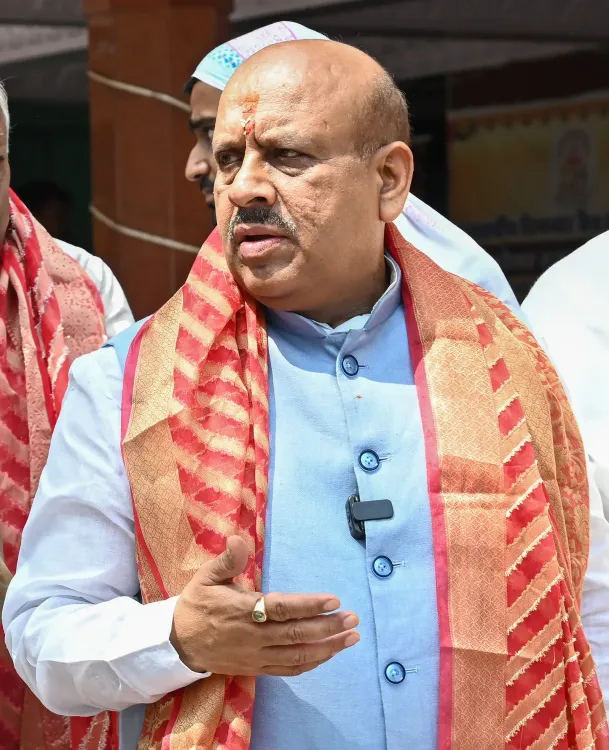
Synopsis
Delhi Assembly Speaker Vijender Gupta has set a 10,000-tree target for Rohini and is pushing to expand the Assembly's solar capacity from 500 kW to 800 kW — framing environmental action as both a civic duty and a legislative responsibility. His Ladakh visit, where he exchanged notes with LG Vinai Kumar Saxena on governance and connectivity, adds a national dimension to what is otherwise a constituency-level green push.
Key Takeaways
Delhi Assembly Speaker Vijender Gupta announced a target of planting 10,000 trees in Rohini constituency during 2026 .
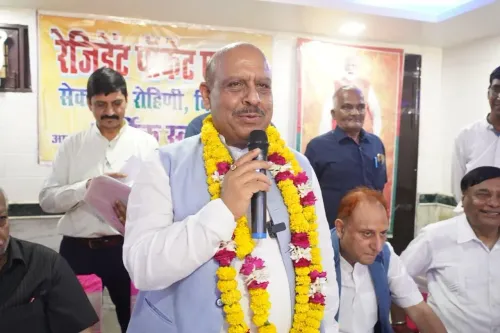
He addressed residents at the Maharana Pratap Community Centre, Rohini on 27 June 2026 during the Bal Sanskar Shivir–2026 valedictory function.
The Delhi Legislative Assembly has installed a 500 kW solar power system ; plans are underway to add 300 kW more, targeting near energy self-sufficiency.
The National e-Vidhan Application (NeVA) has reduced paper consumption and improved legislative efficiency at the Assembly.
During a study tour to Ladakh , Gupta met LG Vinai Kumar Saxena and discussed governance, infrastructure, and sustainability; Ladakh's districts have expanded from 2 to 7 since becoming a Union Territory.
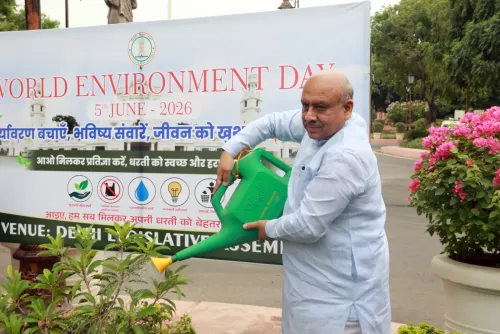
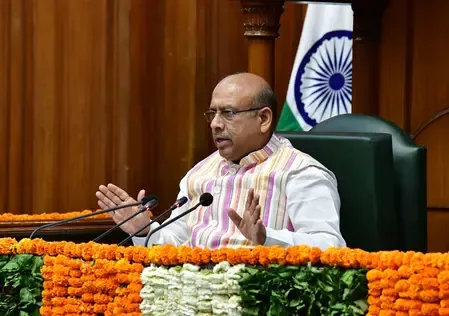
Delhi Legislative Assembly Speaker Vijender Gupta on Saturday, 27 June 2026, called on citizens to transform environmental conservation into a broad public movement, announcing a target of planting 10,000 trees across his Rohini constituency within the year. Addressing residents at the Maharana Pratap Community Centre in Rohini, Gupta urged every individual to not only participate in plantation drives but to take personal responsibility for nurturing each sapling to full maturity.
The Plantation Pledge
Speaking at the Valedictory Function of Bal Sanskar Shivir–2026, the Sampurna Mahila Haat, and the introduction and review programme of Dr. Shobha Vijender's book Shatayu Sangh aur Mahila Sehbhagita — organised by Sampurna — Gupta framed the tree-planting initiative as a legacy exercise. He said that as saplings grow into flowering and fruit-bearing trees, residents would be reminded that these trees were planted by their own hands. The event brought together community members, legislators, and cultural organisations under a shared sustainability agenda.
Ladakh Study Tour and LG Meeting
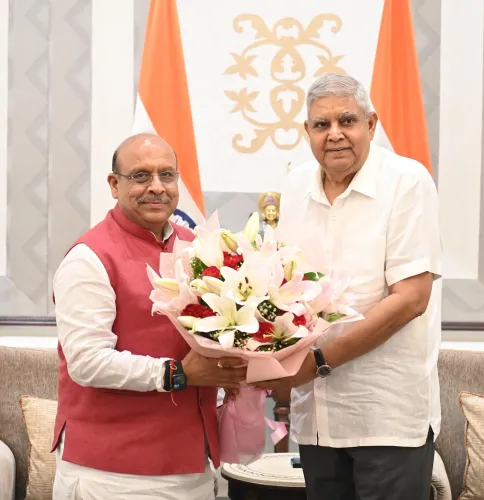
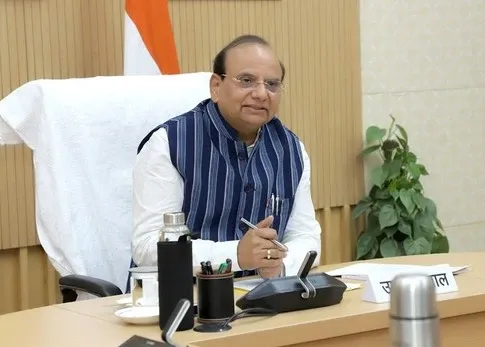
Earlier in the week, Gupta undertook a study tour to Ladakh, where he paid a courtesy call on Lieutenant Governor Vinai Kumar Saxena. He was accompanied by Delhi Legislative Assembly members Surya Prakash Khatri, Sanjay Goyal, and Aahir Deepak Chaudhary.
According to a statement issued by the Speaker's office, the meeting facilitated a substantive exchange on governance, development, sustainability, and the environmental challenges specific to the region. The Lieutenant Governor briefed the delegation on Ladakh's administrative expansion — notably, the number of districts has grown from two to seven since its transition to a Union Territory, enabling broader administrative outreach and faster development delivery.
Saxena also highlighted major infrastructure projects underway, including the construction of strategic tunnels and all-weather connectivity corridors expected to boost economic activity and improve residents' quality of life.
Delhi Assembly's Green and Digital Initiatives
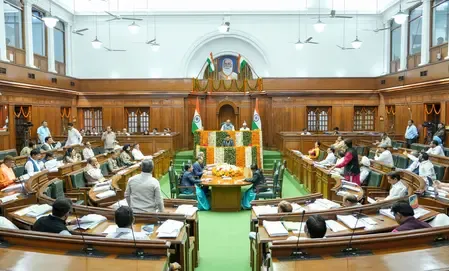
During the Ladakh interaction, Gupta briefed the Lieutenant Governor on the Delhi Legislative Assembly's own sustainability and digital governance milestones. He cited the successful rollout of the National e-Vidhan Application (NeVA), which has significantly reduced paper consumption within the Assembly and improved legislative efficiency — a step that, he noted, has indirectly contributed to tree conservation.
Gupta also highlighted the Assembly's installation of a 500 kW solar power system, which has delivered measurable savings in electricity consumption. Plans are underway to expand solar capacity by an additional 300 kW, a move that is expected to make the Assembly virtually self-sufficient in electricity and substantially cut energy costs.
What Comes Next
The 10,000-tree plantation target for Rohini is to be achieved over the course of the current year, with community participation at its core. The proposed 300 kW solar expansion at the Delhi Legislative Assembly is also in the pipeline. Together, these initiatives signal a sustained push by the Speaker's office to embed environmental accountability into both legislative practice and constituency-level civic action.
Point of View
000-tree target is ambitious for a single urban constituency, but urban plantation drives in Delhi have historically struggled with sapling survival rates; the real measure will be how many trees actually reach maturity, not how many are planted. The Ladakh visit, while framed as a study tour, also carries political signalling: engagement with LG Saxena in a BJP-governed Union Territory reflects the broader recalibration underway in Delhi's post-AAP political landscape.
NationPress
27 Jun 2026
Frequently Asked Questions
What is Delhi Assembly Speaker Vijender Gupta's plantation target for Rohini?
Speaker Vijender Gupta has announced a target of planting 10,000 trees across his Rohini constituency during 2026. He urged residents to personally nurture each sapling until it grows into a full-grown tree.
What solar initiative has the Delhi Legislative Assembly undertaken?
The Delhi Legislative Assembly has installed a 500 kW solar power system, which has already generated significant electricity savings. Plans are in progress to add another 300 kW of capacity, which is expected to make the Assembly nearly self-sufficient in meeting its electricity needs.
What is the National e-Vidhan Application (NeVA) and how is Delhi using it?
NeVA is a digital governance platform that digitises legislative processes, reducing reliance on paper. The Delhi Legislative Assembly has implemented it successfully, cutting paper consumption and improving efficiency — which Speaker Gupta highlighted as an indirect contribution to environmental conservation.
Why did Speaker Vijender Gupta visit Ladakh?
Gupta undertook a study tour to Ladakh, during which he met Lieutenant Governor Vinai Kumar Saxena. The visit focused on exchanging views on governance, development, sustainability, and environmental challenges. He was accompanied by three Delhi Assembly members.
How has Ladakh's administrative structure changed since becoming a Union Territory?
According to LG Vinai Kumar Saxena, the number of districts in Ladakh has increased from two to seven since the region became a Union Territory. This expansion is aimed at improving administrative outreach and accelerating development across the region.