What Should Delhi University Students and Faculty Do After Recent UGC Regulations Tensions?

Synopsis
Tensions rise at Delhi University following UGC regulations and an alleged assault on a social media influencer. Vice Chancellor Yogesh Singh urges for unity and patience as the Supreme Court reviews the regulations, highlighting the importance of social harmony in a diverse educational environment.
Key Takeaways
Vice Chancellor urges unity among students and faculty.
Recent tensions due to UGC regulations and an alleged assault.
Importance of social harmony in diverse educational settings.
UGC regulations are under Supreme Court review .
Call for trust in the Government of India.
New Delhi, Feb 14 (NationPress) Following a recent incident at Delhi University concerning the UGC’s Equity Regulations and an alleged attack on a female social media influencer, Vice Chancellor Yogesh Singh has called on both faculty and students to foster peaceful coexistence on campus. “I urge all teachers and students to promote unity and avoid any actions that may lead to discord or tarnish the reputation of our nation and university,” the VC stated.
“The events that transpired yesterday are troubling. Students from diverse states and communities are represented at our university. Ensuring social harmony is paramount; it is our collective responsibility,” he emphasized.
The Vice Chancellor mentioned that he had engaged in discussions with various student and teacher organizations, as well as the police, to safeguard against future incidents that could disrupt harmony.
He also pointed out that the new UGC rules are currently under judicial review by the Supreme Court and encouraged the university community to retain their faith in the Government of India while awaiting the court's ruling.
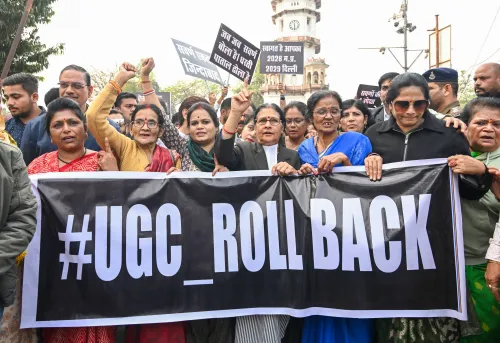
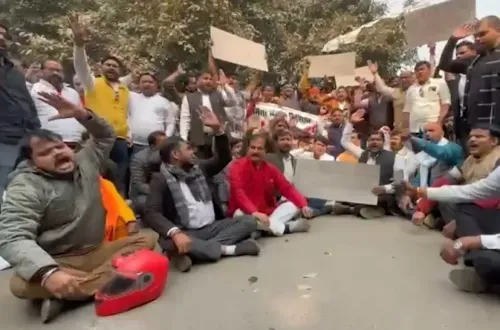
On Friday, a protest at the Delhi University Faculty of Arts advocating for the UGC’s equity regulations, which aim to bolster protections against caste discrimination in educational settings, escalated into a conflict between opposing student factions.
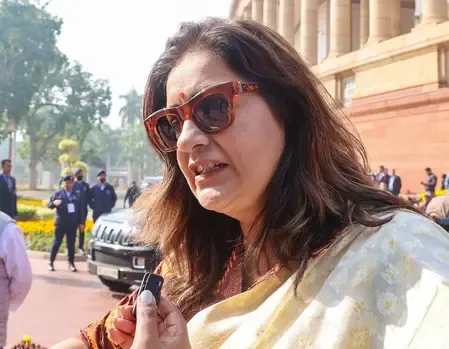
During this protest supporting the UGC Equity Regulations 2026, a female influencer was reportedly assaulted by some participants.
In response, another group of students later rallied outside the Maurice Nagar Police Station in North Delhi, demanding accountability for the influencer.
The UGC 2026 regulations, intended to promote equity in higher education, have faced ongoing academic critique for their perceived vagueness and significant internal inconsistencies that could potentially marginalize the very groups they aim to assist.
Experts have voiced concerns over the regulations, particularly regarding their ambiguous treatment of the Economically Weaker Sections (EWS).
Point of View
It is crucial for educational institutions to prioritize dialogue and unity. The challenges posed by new regulations must be addressed collaboratively, ensuring that all voices are heard while maintaining the integrity of the university community. As a national editor, I believe that fostering understanding and cooperation is key to navigating these complexities.
NationPress
19 Sept 2026
Frequently Asked Questions
What events led to the Vice Chancellor's statement?
The Vice Chancellor's statement followed a protest at Delhi University regarding UGC's Equity Regulations, which escalated into a confrontation and an alleged assault on a woman influencer.
What are the UGC's Equity Regulations aimed at?
The UGC's Equity Regulations are designed to enhance protections against caste discrimination and promote equity in higher education.
What did the Vice Chancellor say about maintaining harmony?
The Vice Chancellor urged all members of the university community to avoid actions that could lead to discord and to focus on maintaining social harmony.