Congress Raises Alarm Over Delhi's Alarming Air Quality Crisis
Synopsis
On April 11, Ajay Maken of the Congress party criticized the Delhi government's approach to air pollution, highlighting alarming PM2.5 levels. He proposed immediate measures to address the crisis, coinciding with the release of a new EV policy by the Delhi government.
Key Takeaways
Delhi's air pollution has reached critical levels.
Ajay Maken emphasizes the need for urgent policy changes .
Proposed actions include a shift to electric public transport .
The Delhi government is soliciting public feedback on its new EV policy .
Significant funds have been allocated for environmental initiatives .
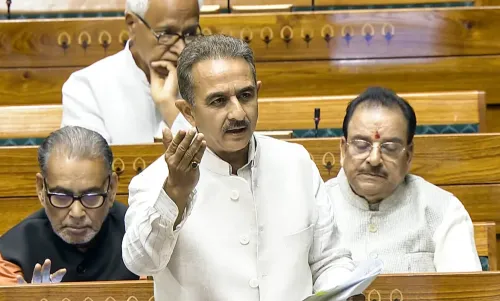
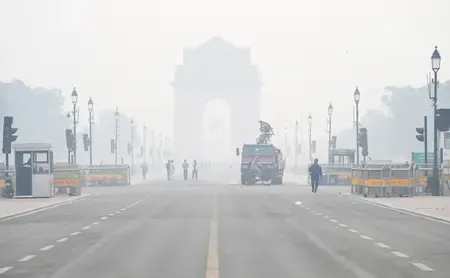
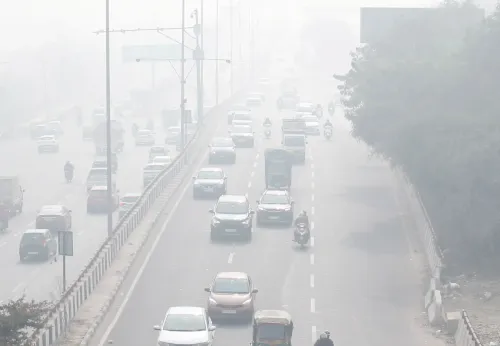
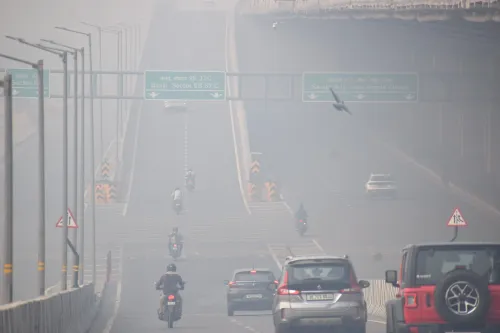
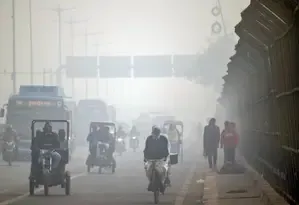
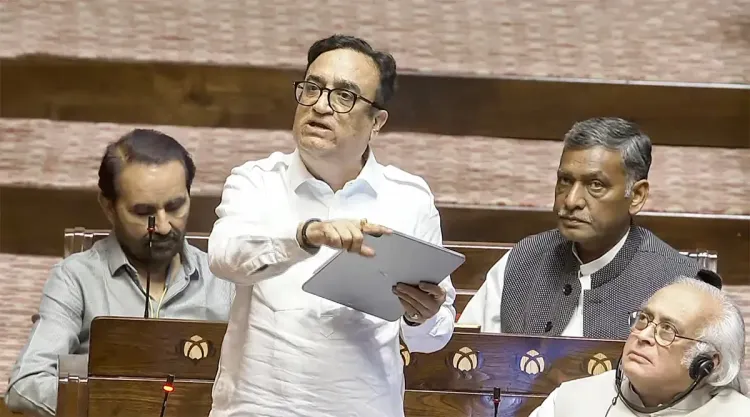
New Delhi, April 11 (NationPress) Ajay Maken, Treasurer of the All India Congress Committee (AICC) and former Speaker of the Delhi Assembly, voiced concerns on Friday regarding a significant policy failure in the National Capital, asserting that air pollution has surged to dangerous levels.
In a post on social media, Maken referenced statistics from the Central Pollution Control Board (CPCB), indicating that the PM2.5 concentration in Delhi on Friday was nearly four times the WHO recommended safe limit of 15 µg/m³.
The senior Congress figure expressed alarm over the deteriorating air quality, noting that the PM2.5 levels had reached 54 µg/m³ on that day.
He highlighted a study from the Lancet, which revealed that elevated PM2.5 levels in North India could reduce life expectancy by over 5 years.
In a dynamic video message shared on social media, Maken pointed out that all 35 weather monitoring stations across Delhi documented PM2.5 levels exceeding the WHO's 24-hour safety guideline of 15 µg/m³ on April 10.
“Out of the 35 stations, ten reported PM2.5 levels surpassing India's own NAAQS standard of 60 µg/m³,” he remarked.
To tackle the air quality crisis, Maken proposed enhancing public transportation and raising parking fees along with road taxes for private vehicles to encourage residents to opt for public transit.
“Every new public transport vehicle, including DTC buses, cluster buses, autos, and taxis, should transition to electric by the next two years,” stated Maken, who is also a Rajya Sabha MP.
He further recommended that all CNG buses older than ten years be removed from service. “No extensions, no exceptions,” he emphasized.
Maken's remarks regarding the alarming air quality in Delhi coincided with the Delhi government's announcement of its EV policy 2.0 on Friday, aimed at gathering public input.
Earlier, Delhi Chief Minister Rekha Gupta allocated Rs 22,236 crore, approximately 21.44% of the 'Green Budget' for 2026–27, towards air quality improvement and green initiatives, including a clean Yamuna project, to ensure a pollution-free future for subsequent generations.
An official highlighted that within the total state budget of Rs 1,03,700 crore, Rs 22,236 crore has been designated for 17 departments through phased allocations to facilitate coordinated actions across various sectors.
Point of View
The alarming air quality in Delhi raises significant concerns about public health and environmental policy. The statements from political figures emphasize the urgent need for effective measures to combat pollution and protect citizens' well-being.
NationPress
20 Sept 2026
Frequently Asked Questions
What are the current PM2.5 levels in Delhi?
As of April 11, the PM2.5 level in Delhi was recorded at 54 µg/m³, significantly above the WHO's safe limit of 15 µg/m³.
What measures has Ajay Maken proposed to improve air quality?
Maken has suggested transitioning all public transport vehicles to electric within two years and increasing parking fees to discourage private vehicle use.
What does the new EV policy entail?
The Delhi government's EV policy 2.0 aims to promote electric vehicles and seeks public feedback for further improvements.
How much has been allocated for air quality improvements in Delhi's budget?
The Delhi government has allocated Rs 22,236 crore, which is around 21.44% of the 'Green Budget' for 2026–27, for air quality and green initiatives.
Why is high PM2.5 a concern?
High PM2.5 levels are linked to serious health risks, including a reduction in life expectancy, as highlighted by a Lancet study.