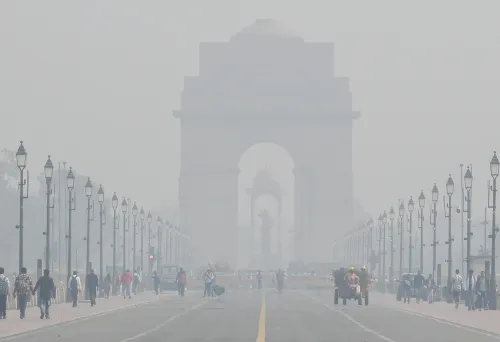
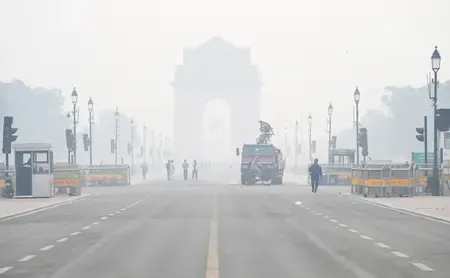
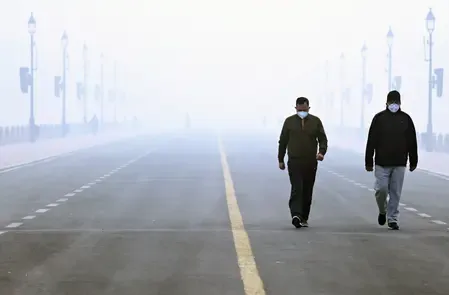
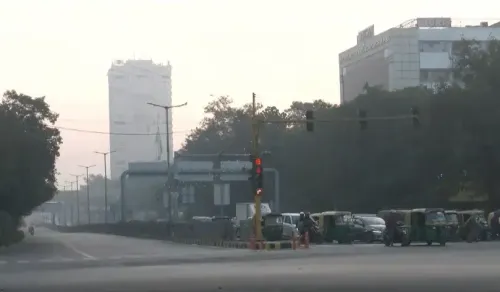
Delhi PM2.5 at 102 µg/m³ in 2025-26, nearly 3x the national standard: Govt
Synopsis
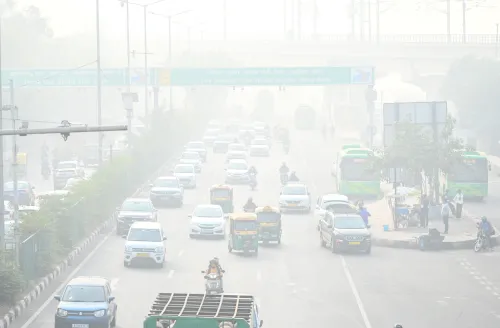
Delhi's PM2.5 averaged 102 µg/m³ in 2025-26 — nearly two-and-a-half times India's own national standard of 40 µg/m³ — even as 65 other cities cleared the benchmark. The government's own Rajya Sabha disclosure lays bare the scale of Delhi's exceptionalism: the NCAP is working for much of urban India, but the capital remains a category apart.
Key Takeaways
Delhi's PM2.5 averaged 102 µg/m³ in 2025-26 — nearly 2.5 times the NAAQS limit of 40 µg/m³ .
65 cities met the national PM2.5 standard during the same year; Pune (41) , Mumbai (33) , Surat (32) , and Hyderabad (34) all fared far better than Delhi.
108 of 130 NCAP cities recorded PM10 reductions in 2025-26 vs 2017-18 ; 72 cities cut PM10 by more than 20% .
Cities meeting the PM10 NAAQS standard rose from 6 in 2017-18 to 14 in 2025-26.
The Centre has released ₹16,423.56 crore in performance-based grants to NCAP cities between FY 2019-20 and FY 2025-26 .
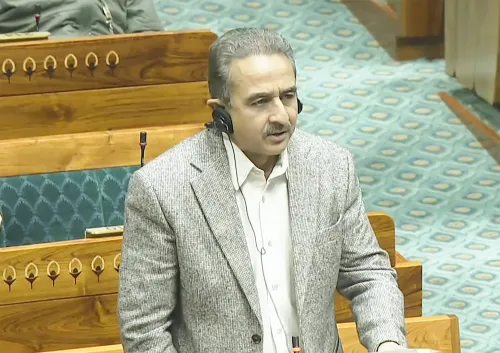
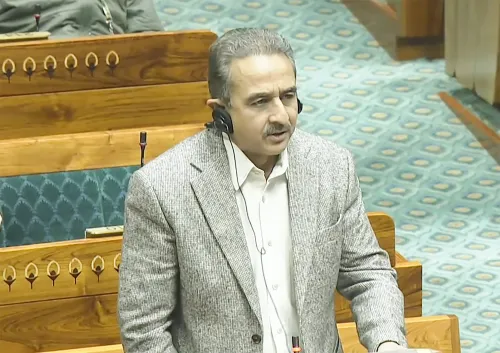
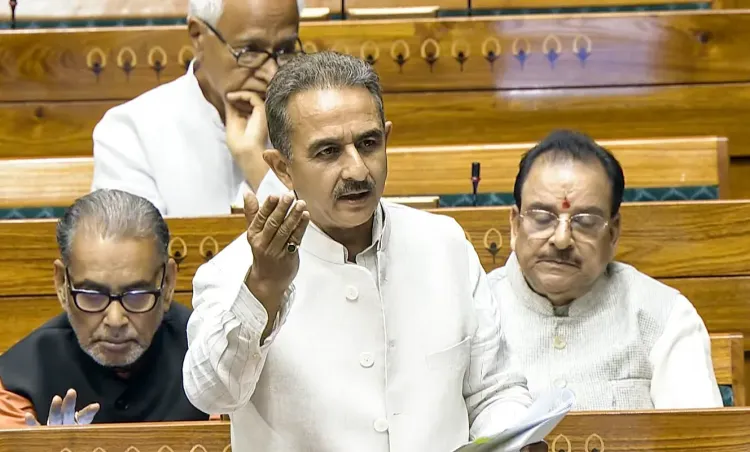
MoS Kirti Vardhan Singh made the disclosure in a written reply to the Rajya Sabha on 23 July .
Delhi's annual average PM2.5 concentration stood at 102 µg/m³ in 2025-26 — nearly two-and-a-half times the National Ambient Air Quality Standard (NAAQS) limit of 40 µg/m³ — even as 65 cities across India managed to meet that benchmark during the same period. Minister of State for Environment, Forest and Climate Change Kirti Vardhan Singh disclosed this in a written reply to the Rajya Sabha on Thursday, 23 July.
City-by-City PM2.5 Snapshot
According to the minister's statement, PM2.5 levels across major cities in 2025-26 were: Pune — 41 µg/m³, Hyderabad — 34 µg/m³, Surat — 32 µg/m³, Mumbai — 33 µg/m³, and Delhi — 102 µg/m³. Of these five cities, only Delhi exceeded the NAAQS threshold; the other four remained within or just above the permissible limit.
Notably, while Delhi's PM2.5 reading is stark, it must be read alongside PM10 data, where the national picture is more encouraging. Under the National Clean Air Programme (NCAP), 108 of the 130 targeted cities recorded reductions in annual PM10 concentrations in 2025-26 compared to the 2017-18 baseline. Of these, 72 cities achieved reductions of more than 20% and 26 cities exceeded the 40% reduction mark.
Progress Under the National Clean Air Programme
The NCAP, launched in 2019, covers 130 cities in a mission-mode approach to urban air quality. The programme has delivered measurable gains on PM10: cities meeting the NAAQS for PM10 (≤ 60 µg/m³) rose from 6 cities in 2017-18 to 14 cities in 2025-26.
To fund these improvements, an air quality performance-based incentive grant of ₹16,423.56 crore has been released to targeted NCAP cities between FY 2019-20 and FY 2025-26 as critical gap funding for pollution mitigation measures.
Delhi-NCR: The CAQM Framework
Addressing Delhi's chronic air quality crisis specifically, the minister noted that the Centre established the Commission for Air Quality Management (CAQM) under the Commission for Air Quality Management in NCR and Adjoining Areas Act, 2021. The CAQM holds statutory powers to issue binding directions to agencies across the National Capital Region (NCR) for protecting and improving air quality.
This comes amid persistent criticism that coordination failures between Delhi, Haryana, Punjab, and Uttar Pradesh have blunted the effectiveness of pollution controls — particularly around stubble-burning seasons. The CAQM was designed precisely to cut through that inter-state jurisdictional gridlock.
Broader Policy Architecture
The Centre has notified NAAQS for 12 air pollutants, including PM10 and PM2.5. The Air Quality Index (AQI), launched in 2015, translates these technical readings into health-risk categories accessible to the public. State-level Clean Air Action Plans prepared by states and Union Territories address both PM10 and PM2.5 through coordinated policy and enforcement measures, monitored by committees at central, state, and district levels.
With Delhi's PM2.5 still more than double the NAAQS limit despite years of intervention, the data underscores that while India's broader NCAP is delivering incremental gains, the national capital remains an outlier requiring sustained, multi-agency pressure.
Point of View
And 14 now meeting the PM10 standard versus just 6 in 2017-18 — and a glaring Delhi exception that no amount of programme-level averaging can obscure. At 102 µg/m³, Delhi's PM2.5 is not just above the NAAQS limit; it is in a different universe from Mumbai's 33 or Surat's 32. The ₹16,423.56 crore released under NCAP and the CAQM's statutory powers have not yet bent the Delhi curve. The uncomfortable question the data raises — but the written reply does not answer — is whether Delhi's air quality problem is fundamentally a governance and political-will failure rather than a funding or institutional one.
NationPress
22 Oct 2026
Frequently Asked Questions
What was Delhi's PM2.5 level in 2025-26?
Delhi's annual average PM2.5 concentration in 2025-26 was 102 µg/m³, according to a written reply submitted to the Rajya Sabha on 23 July. This is nearly two-and-a-half times the National Ambient Air Quality Standard (NAAQS) permissible limit of 40 µg/m³.
How many Indian cities met the PM2.5 national standard in 2025-26?
65 cities met the NAAQS for PM2.5 (≤ 40 µg/m³) during 2025-26, as stated by Minister of State for Environment Kirti Vardhan Singh. Among the five major cities cited — Pune, Hyderabad, Surat, Mumbai, and Delhi — only Delhi exceeded the limit.
What is the National Clean Air Programme and how many cities does it cover?
The National Clean Air Programme (NCAP) is a mission-mode initiative launched by the Centre in 2019, covering 130 cities across India. It uses performance-based incentive grants and multi-sectoral action plans to reduce PM10 and PM2.5 concentrations, with ₹16,423.56 crore released to targeted cities between FY 2019-20 and FY 2025-26.
What progress have NCAP cities shown on air pollution?
108 of 130 NCAP cities recorded reductions in annual PM10 concentrations in 2025-26 compared to the 2017-18 baseline. Of these, 72 cities achieved reductions of more than 20% and 26 cities exceeded 40% reduction. Cities meeting the PM10 NAAQS standard rose from 6 in 2017-18 to 14 in 2025-26.
What is the CAQM and what powers does it have for Delhi-NCR air quality?
The Commission for Air Quality Management (CAQM) is a statutory body established under the Commission for Air Quality Management in NCR and Adjoining Areas Act, 2021. It has powers to issue binding directions to agencies across the National Capital Region to protect and improve air quality, and coordinates research and resolution of pollution problems in Delhi-NCR.