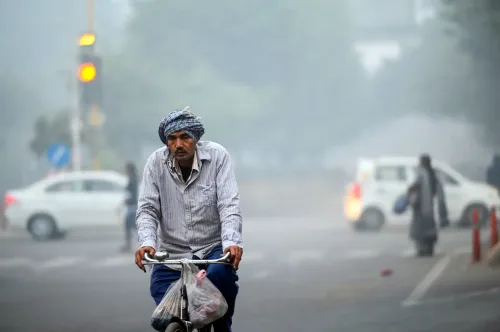
How is the Delhi government addressing winter pollution with its new action plan?
Synopsis
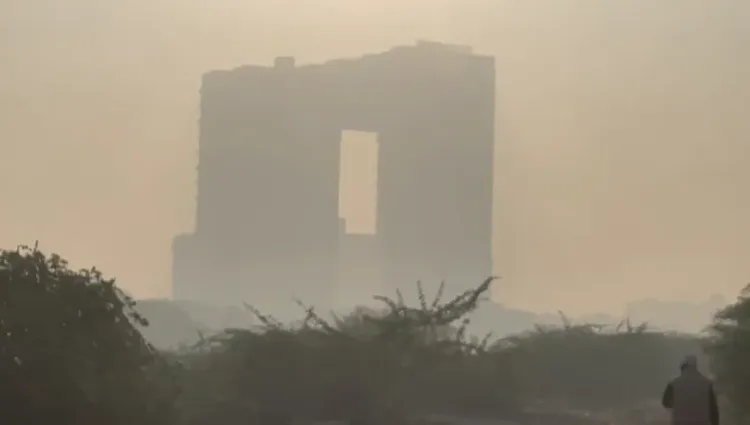
In a proactive move, the Delhi government has unveiled an extensive Winter Action Plan for 2025-26 to combat the seasonal rise in air pollution. Spanning several action points and themes, this initiative aims to engage citizens and ensure compliance while leveraging innovative strategies for a cleaner winter.
Key Takeaways
25 action points to combat seasonal air pollution.
Emphasis on citizen engagement and community involvement.
Enhanced enforcement for vehicular emissions and road dust.
Real-time monitoring through the Green War Room .
Targeted measures for waste management and open burning.
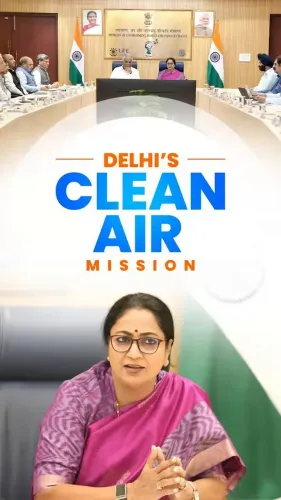
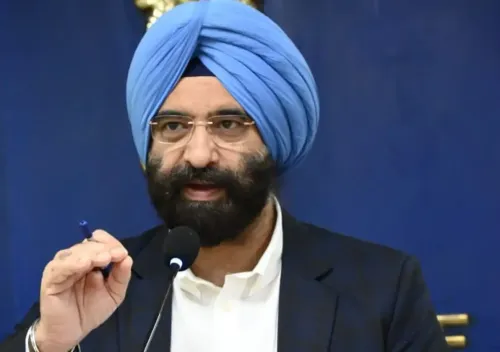
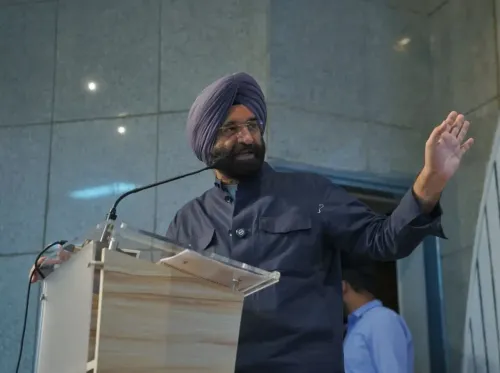
New Delhi, Oct 16 (NationPress) The Delhi government, under the leadership of Chief Minister Rekha Gupta, has launched an extensive Winter Action Plan for 2025–26 aimed at addressing the seasonal surge in air pollution that typically occurs from October to February, as announced by Environment Minister Manjinder Singh Sirsa on Thursday.
This multifaceted plan consists of 25 action points organized into seven key themes: road dust, vehicular emissions, industry and power, open burning and solid waste, citizen engagement, monitoring, and green innovation. It involves coordination with over 30 departments and agencies throughout the capital, he stated.
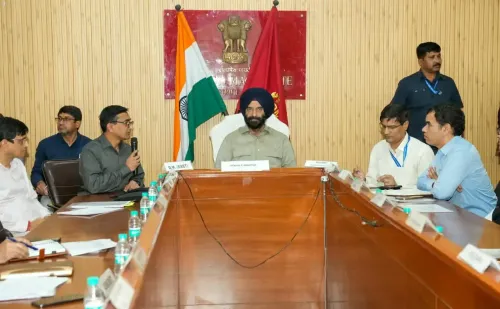
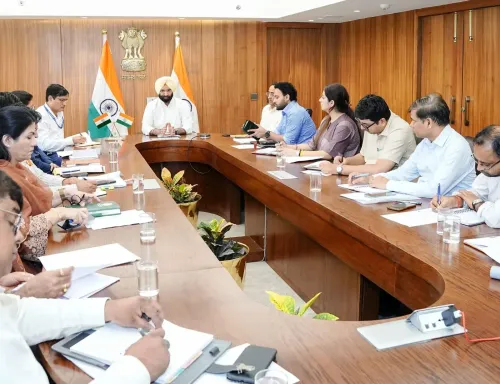
During a high-level review meeting, Sirsa instructed senior officials to guarantee the rigorous, time-sensitive enforcement of the plan, with real-time monitoring facilitated through the Green War Room. He emphasized accountability among PWD, MCD, NDMC, DSIIDC, DPCC, Transport, Delhi Police, and related bodies.
Stressing the need for readiness, he remarked: “Compliance is non-negotiable this winter; enhanced measures for dust control, construction regulations, PNG-only industrial operations, and targeted enforcement will be implemented with precision and urgency.”
The Environment Minister underscored that all 30 stakeholder agencies—including PWD, DDA, MCD, NDMC, DSIIDC, DPCC, and Delhi Police—must maintain daily communication via the Green War Room.
“Citizens are our allies—utilize the Green Delhi App, adhere to GRAP advisories, and opt for public transport and EVs as the city enhances e-mobility,” he stated.
In terms of combating road dust, he revealed that 86 Mechanical Road Sweepers, 300 water sprinklers, and 362 anti-smog guns are currently in operation citywide, with procurement underway for an additional 70 sweepers and related dust-control equipment to broaden coverage and frequency. Routes are monitored and tracked via GPS.
All major roads managed by PWD, MCD, NDMC, and DSIIDC will undergo vacuum-sweeping with added shifts; stringent 14-point construction dust norms remain obligatory, with online registration required for all projects exceeding plots of 500 sqm.
Sirsa stated that anti-smog guns are mandatory for projects larger than 3,000 sqm and for offices/institutions taller than G+5; departments are expected to ensure full compliance.
“A targeted initiative is in place for 698 km of roadside paving and 85 km of central verge greening,” he mentioned.
Regarding vehicular emissions control, he noted that enforcement has been amplified with 578 teams conducting checks on PUC, visible smoke, and idling infractions; 953 PUC centres are operational with real-time data streamed to the Transport Department dashboard.
Parking fees will be doubled under GRAP Stages III/IV to dissuade personal vehicle use during critical pollution episodes, while DMRC’s e-auto fleet will expand to 2,299, and the share of EVs in new registrations will stay above 12 percent.
Strict adherence to the directives from the Supreme Court of India and CAQM regarding the restriction of polluting goods vehicles at all borders is being enforced rigorously.
To enhance waste management and combat open burning, 443 teams are on continuous patrol to prevent burning of garbage and biomass, imposing on-the-spot fines and prosecutions for offenders.
Landfill safety has seen considerable improvement, with no landfill fires reported in 2025, bolstered by permanent watchtowers and hydrants.
To curb agricultural residue and local burning, an initiative is underway to achieve full coverage of fields with PUSA decomposer to mitigate stubble burning within the jurisdiction of NCTD.
The dedicated field vigilance includes 11-day patrols and 5-night patrols, complemented by real-time reporting through a mobile app for rapid action and response.
Additionally, a pilot cloud-seeding project in collaboration with IIT Kanpur and IMD is planned, pending meteorological clearance, to test particulate washout as an emergency response mechanism.
Point of View
Which has become a recurring challenge for urban centers. By incorporating various stakeholders and emphasizing community involvement, the Winter Action Plan aims to establish a collaborative approach to environmental health. It is essential for citizens to engage with these measures actively, as they play a pivotal role in fostering a cleaner, sustainable future.
NationPress
12 Oct 2026
Frequently Asked Questions
What is the Winter Action Plan for 2025-26?
The Winter Action Plan for 2025-26 is a comprehensive strategy implemented by the Delhi government to address the seasonal rise in air pollution, featuring 25 action points across various themes.
How can citizens participate in this initiative?
Citizens can participate by using the Green Delhi App, adhering to GRAP advisories, and opting for public transport and electric vehicles.
What measures are being taken to control vehicular emissions?
The government has intensified enforcement with teams checking PUC compliance, and plans to expand the e-auto fleet and increase parking fees during pollution episodes.
How will road dust be managed?
Road dust management includes deploying mechanical sweepers, water sprinklers, and anti-smog guns across the city, with additional equipment being procured.
What actions are being taken against open burning?
The government has set up patrol teams to monitor and prevent open burning of waste, with penalties for violators.