How Are Innovation and Efficiency Vital for India’s Manufacturing Sector?
Synopsis
In a recent address, Piyush Goyal underscored the need for innovation and efficiency in India's manufacturing sector. As India pivots towards a more sustainable and resilient manufacturing landscape, collaboration between the industry and government remains essential for economic progress.
Key Takeaways
Innovation is essential for competitiveness.
Collaboration between industry and government is crucial.
Timely payments to MSMEs improve cash flow.
Focus on sustainability enhances manufacturing.
Self-reliance is vital for economic progress.
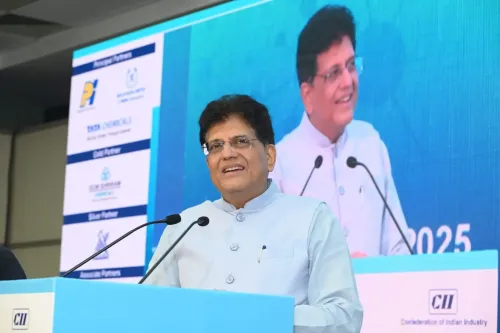
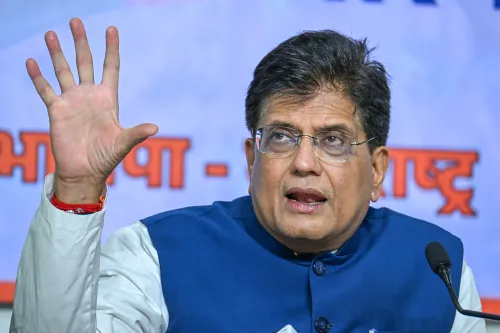
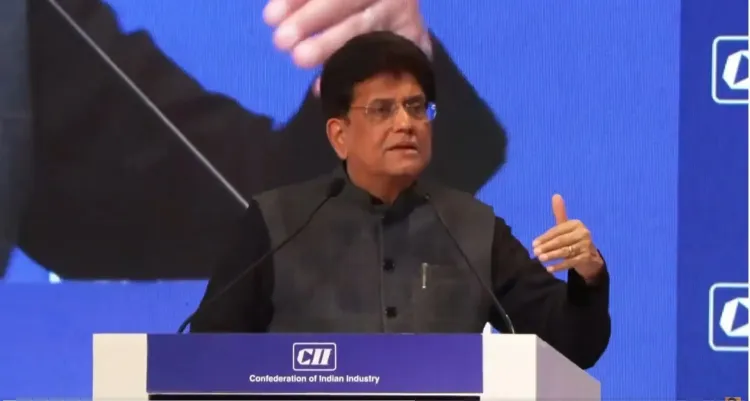
New Delhi, Dec 3 (NationPress) Union Commerce and Industry Minister Piyush Goyal emphasized on Wednesday the critical role of innovation, quality, design, sustainability, and efficiency as fundamental components for enhancing India's manufacturing competitiveness.
During his speech at the IndiaEdge event organized by the Confederation of Indian Industry (CII), the minister praised the recent upward trends in agriculture, services, and manufacturing sectors, noting that India's manufacturing output is evolving into new domains such as electronics, white goods, chemicals, and petrochemicals.
He stressed the necessity for industries to remain competitive and adaptable to global changes, stating that recent disruptions have highlighted the need for resilient supply chains. He warned against excessive reliance on specific regions and pointed out the importance of establishing areas where domestic capacity and control over supply chains are crucial.
According to Goyal, collaboration within the industry is essential for boosting manufacturing output, which in turn will catalyze growth in services. As India fortifies its footprint in international markets, it must also maintain openness to competitive practices domestically, he added.
The minister observed that numerous states, including Uttar Pradesh and Odisha, have experienced rapid development in recent years, creating more local opportunities and decreasing migration rates.
He urged the industry to present suggestions for simplifying processes, enhancing regulatory frameworks, and bolstering the manufacturing landscape.
Goyal further mentioned that the government, under Prime Minister Narendra Modi's leadership, is operating with a clear vision to advance the nation’s economic growth.
He acknowledged ongoing government initiatives aimed at easing compliance, eliminating outdated regulations, and modernizing legal frameworks, including the rollout of the four Labour Codes. He noted that 23 states have established corresponding rules, which will facilitate formalization, ensure minimum wages, and strengthen social security and workplace safety.
Moreover, the minister highlighted the significance of timely payments to MSMEs, asserting that prompt settlement of dues would greatly alleviate cash flow issues and foster MSME productivity and expansion.
He reiterated the long-standing national focus on Swadeshi and self-reliance, emphasizing their importance in enhancing domestic manufacturing capabilities.
"The collaborative efforts of both the industry and government will be crucial in realizing the vision of Atma Nirbhar Bharat and achieving the national objective of Viksit Bharat 2047," Goyal concluded.
Point of View
It is crucial to recognize the importance of innovation and collaboration in enhancing India's manufacturing capabilities. The government's proactive approach, combined with industry initiatives, showcases a vision for a resilient economy, emphasizing the need for self-reliance and sustainability.
NationPress
1 Oct 2026
Frequently Asked Questions
What are the key drivers of India's manufacturing competitiveness?
The key drivers include innovation, quality, design, sustainability, and efficiency.
How is the Indian government supporting the manufacturing sector?
The government is modernizing legal frameworks, easing compliance, and promoting self-reliance through initiatives like the four Labour Codes.
What recent trends are being observed in India's manufacturing output?
India's manufacturing output is diversifying into areas such as electronics, white goods, chemicals, and petrochemicals.
Why is collaboration within the industry important?
Collaboration is essential for expanding manufacturing output and catalyzing growth in the services sector.
What is the significance of timely payments to MSMEs?
Timely payments are crucial for easing cash flow constraints and supporting the productivity and growth of MSMEs.