Piyush Goyal at CII Summit: India's economy resilient amid global crisis
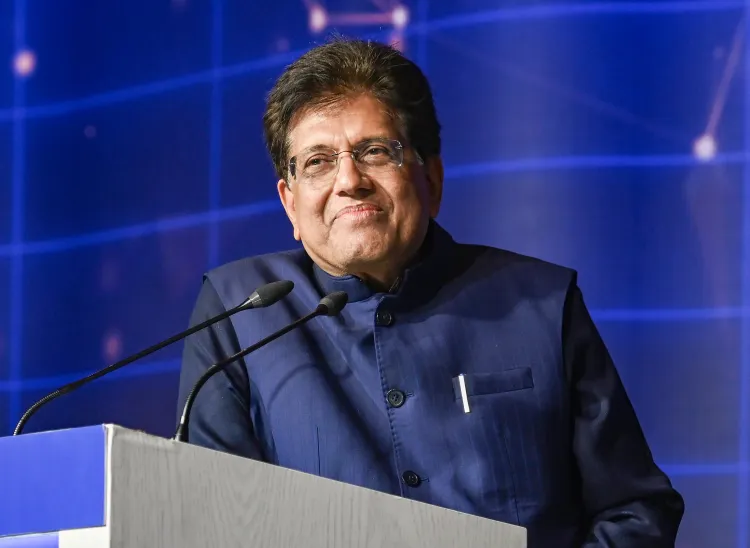
Synopsis
Commerce Minister Piyush Goyal used the CII Annual Business Summit 2026 to deliver a blunt message: Indian industry can no longer afford to be "myopic". With global supply chains under strain, he urged companies to back domestic suppliers and adopt Japan-South Korea-style industrial cooperation — framing it not as a government directive, but as a corporate imperative.
Key Takeaways
Commerce Minister Piyush Goyal addressed the CII Annual Business Summit 2026 in New Delhi on 12 May 2026 .
He called on Indian companies to prioritise domestic suppliers over overseas sourcing, describing it as an "imperative".
Goyal drew comparisons with Japan and South Korea 's industrial cooperation models as examples for Indian industry to follow.
He invoked PM Modi's calls for economic discipline and self-reliance, framing the moment as a "wake-up call" for corporate India.
The remarks come amid rising global focus on supply-chain resilience and strategic trade dependencies.
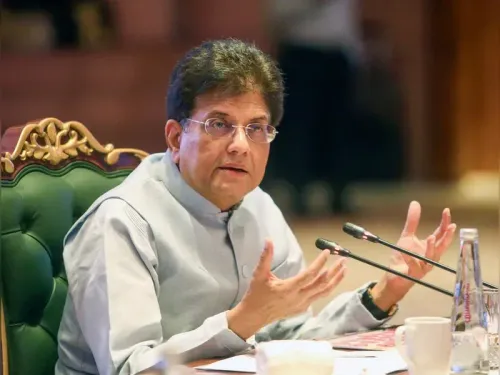
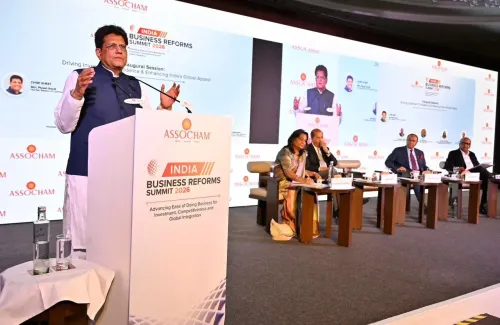
Union Minister of Commerce and Industry Piyush Goyal on Tuesday, 12 May 2026 said the Indian economy has continued to show resilience amid global geopolitical and economic challenges, backed by strong fundamentals and growing international confidence in India. Speaking at the Confederation of Indian Industry (CII) Annual Business Summit 2026 in New Delhi, Goyal called on corporate India to deepen domestic industrial cooperation and move away from what he described as a "business as usual" approach.
The Core Message: Unity Over Dependence
Goyal framed his address around what he called the "India spirit" — the country's demonstrated ability to emerge stronger from successive global crises. He stressed that closer collaboration between the government, businesses, and citizens would be critical to safeguarding economic resilience going forward.
"It cannot be the government versus the industry, it is the government and business and industry and the people of India," Goyal said.
Invoking recent appeals by Prime Minister Narendra Modi for economic discipline and self-reliance, Goyal described the current moment as a "wake-up call" for Indian enterprises.
Push for Domestic Sourcing and Industrial Linkages
In a pointed message to corporate India, Goyal urged companies to prioritise domestic suppliers over overseas sourcing. Drawing comparisons with industrial coordination models in Japan and South Korea, he argued that Indian businesses must develop stronger domestic linkages for long-term national and corporate benefit.
"Indian industry must learn to support each other. Look at the Korean and Japanese style of working," he said.
Goyal also questioned what he characterised as short-sighted thinking within the private sector: "How long are we going to be myopic in our views that we don't recognise that the common good of Indian industry will help our individual futures also."
Industry Must Take Ownership, Not Just the Government
Calling domestic industrial cooperation an "imperative" rather than merely a suggestion, Goyal said industry itself must take responsibility for strengthening India's economic ecosystem — rather than relying solely on government intervention.
"It doesn't need governments to stop Indian steel from going to Korea and Japan. Industry make sure they support each other," he said.
Broader Context: Supply-Chain Resilience in Focus
The minister's remarks come at a time when nations across the world are increasingly prioritising supply-chain resilience, domestic manufacturing, and strategic trade dependencies, amid continuing geopolitical tensions and volatility in global energy markets. India's push for self-reliance aligns with a broader global trend of de-risking critical supply chains — a shift accelerated by disruptions over recent years.
With the CII Annual Business Summit 2026 bringing together key stakeholders from government and industry, Goyal's address signals that New Delhi expects the private sector to play a more proactive role in building economic durability — not just as beneficiaries of policy, but as active architects of national resilience.
Point of View
The cost of inaction is measurably higher. The minister's framing — placing responsibility squarely on industry rather than government — is a notable rhetorical shift, but without structural incentives or accountability mechanisms, the call risks remaining aspirational. The real test will be whether the CII and its member companies translate this summit-stage commitment into verifiable sourcing shifts.
NationPress
23 Sept 2026
Frequently Asked Questions
What did Piyush Goyal say at the CII Annual Business Summit 2026?
Commerce and Industry Minister Piyush Goyal urged Indian companies to prioritise domestic suppliers, deepen industrial cooperation, and move away from excessive overseas sourcing. He described this as an "imperative" for India's long-term economic resilience amid global geopolitical pressures.
Why is Goyal calling for domestic industrial cooperation now?
Goyal cited rising geopolitical tensions, global supply-chain disruptions, and volatility in energy markets as reasons why India must strengthen domestic industrial linkages. He framed the current environment as a "wake-up call" requiring a departure from business as usual.
Which countries did Goyal hold up as industrial models for India?
Goyal pointed to Japan and South Korea as examples of countries where industries work in close coordination to support each other. He urged Indian businesses to adopt a similar approach to build stronger domestic supply chains.
What is the 'India spirit' that Goyal referred to?
Goyal used the term 'India spirit' to describe the country's demonstrated ability to emerge stronger from global crises. He said India possesses the capacity to defend and fortify itself against geopolitical, technological, and economic challenges.
Who else did Goyal reference in his CII address?
Goyal referenced Prime Minister Narendra Modi's recent appeals for economic discipline and self-reliance, framing his own remarks as an extension of that broader national push for domestic resilience and reduced dependence on foreign supply chains.