Delhi's CM Rekha Gupta Unveils Plans for AIIMS-Style Medical Hub
Synopsis
Delhi's Chief Minister, Rekha Gupta, announces an ambitious plan to integrate key public medical institutions into a cohesive, AIIMS-style hub, aiming to revolutionize healthcare in the capital. This initiative promises enhanced resource management and specialized care for patients.
Key Takeaways
Integration of major hospitals to enhance healthcare.
Focus on resource optimization for better patient care.
Plans for NIMHANS-2 to strengthen mental health services.
Current bed capacities highlight a need for improved resource management .
Super-speciality services will be systematically distributed among hospitals.
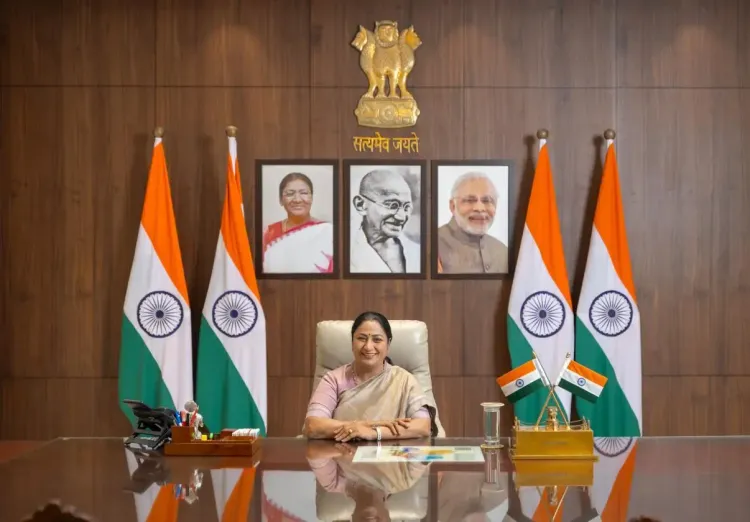
New Delhi, March 15 (NationPress) Chief Minister Rekha Gupta of Delhi declared on Sunday that the government has initiated plans to amalgamate several prominent public healthcare facilities in the city, including Guru Teg Bahadur (GTB) Hospital, the Delhi State Cancer Institute (DSCI), and Rajiv Gandhi Super Speciality Hospital (RGSSH). This initiative aims to establish a cohesive autonomous institution modeled after AIIMS.
Additionally, the Institute of Human Behaviour and Allied Sciences (IHBAS) is set to evolve into a future NIMHANS-2, serving as a significant national center for mental health and neurosciences, as stated by Gupta.
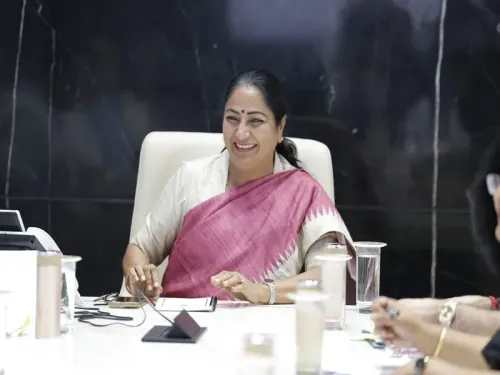
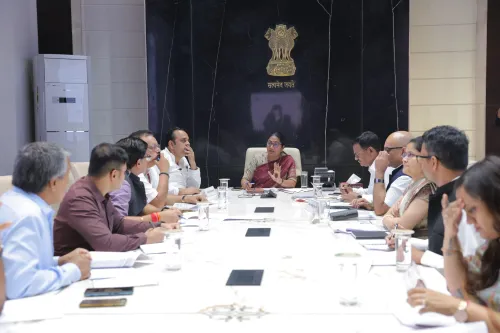
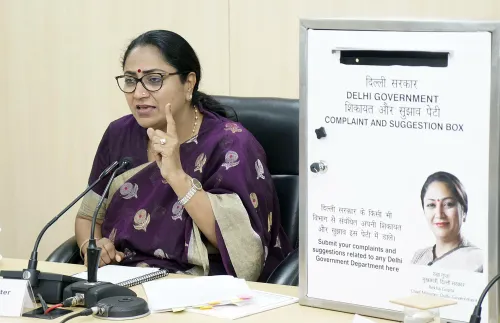
This proposal was deliberated during a meeting led by CM Gupta, which also included Health Minister Pankaj Kumar Singh and senior officials from various departments.
The meeting focused on strategies for integrating the capital's major public medical facilities to enhance and modernize the healthcare system, according to an official statement.
The emphasis was placed on optimizing current resources and developing top-tier healthcare amenities in Delhi.
CM Gupta articulated that fortifying healthcare in the capital entails the systematic and effective deployment of available resources.
By merging various institutions, the plan aims to maximize the utilization of doctors, specialists, medical apparatus, and infrastructure, ensuring that patients receive more organized and superior treatment.
Furthermore, the meeting also reviewed the existing bed capacity in hospitals along with the increasing patient demand.
Officials revealed that the Rajiv Gandhi Super Speciality Hospital is designed to accommodate 650 beds, yet only about 250 are operational, leaving almost 400 beds idle.
Conversely, both the Delhi State Cancer Institute and GTB Hospital are experiencing patient loads that exceed their capacities. GTB Hospital, with an original capacity of around 1,400 beds, currently operates with over 1,500 beds in use.
Patient data illustrates the strain on GTB Hospital, which records more than 1.4 million OPD visits each year, while almost 95,000 patients receive inpatient care.
Simultaneously, the Delhi State Cancer Institute manages around 127,000 OPD patients, while the Rajiv Gandhi Super Speciality Hospital logs nearly 287,000 OPD patients.
These statistics indicate that while GTB Hospital is inundated with patients, some facilities still have unutilized capacity, highlighting the necessity for improved coordination and resource management.
CM Gupta mentioned that the integration of these institutions will facilitate the more systematic distribution of super-speciality services among hospitals, guaranteeing that patients receive the most suitable specialist care.
The Rajiv Gandhi Super Speciality Hospital will enhance services in areas such as cardiology, pulmonology, gastroenterology, gastrointestinal surgery, nephrology, urology, rheumatology, and clinical haematology.
Meanwhile, the Delhi State Cancer Institute will establish itself as the primary center for cancer treatment, consolidating services including radiation oncology, surgical oncology, nuclear medicine, palliative care, and radio-imaging.
Point of View
It's evident that the integration of Delhi's major medical institutions signifies a proactive approach to address the city's healthcare challenges. By optimizing resources and enhancing coordination, this initiative could significantly improve patient care and operational efficiency.
NationPress
20 Sept 2026
Frequently Asked Questions
What institutions are being integrated?
The integration includes Guru Teg Bahadur Hospital, Delhi State Cancer Institute, and Rajiv Gandhi Super Speciality Hospital.
What is the objective of this integration?
The goal is to create a unified autonomous institution similar to AIIMS, enhancing healthcare delivery in Delhi.
How will this affect patient care?
It aims to improve the organization of treatment and maximize the use of resources, leading to better patient outcomes.
What future developments are planned for IHBAS?
IHBAS will evolve into NIMHANS-2, focusing on mental health and neurosciences.
How is the current patient load in these hospitals?
GTB Hospital is operating beyond capacity, while some hospitals have significant unused bed capacity.