Delhi Chief Minister Rekha Gupta Unveils Plan for Medical Institution Integration to Enhance MBBS and PG Seats
Synopsis
In a bold move to revolutionize healthcare and medical education in Delhi, CM Rekha Gupta announces the integration of key medical institutions, promising significant increases in MBBS and PG seats. This initiative aims to position Delhi at the forefront of medical excellence.
Key Takeaways
Integration of major medical institutions in Delhi.
Significant increase in MBBS and PG seats projected.
Creation of an autonomous institution following the AIIMS model.
Enhancements in faculty utilization and training opportunities.
Development of modern academic infrastructure to support medical education.
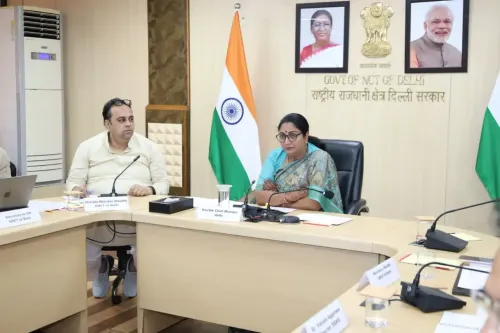
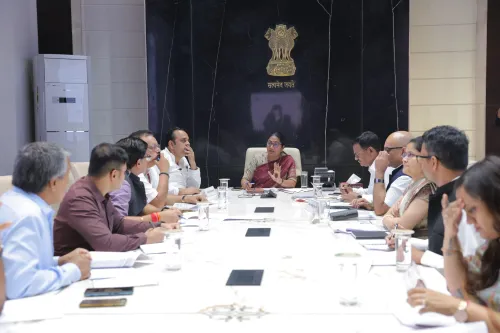
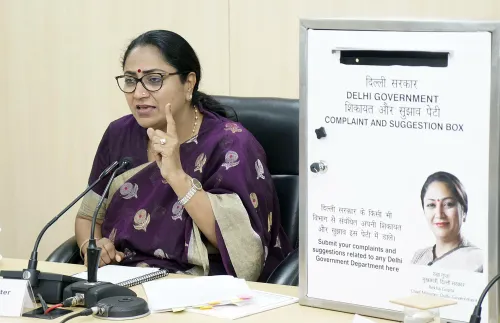
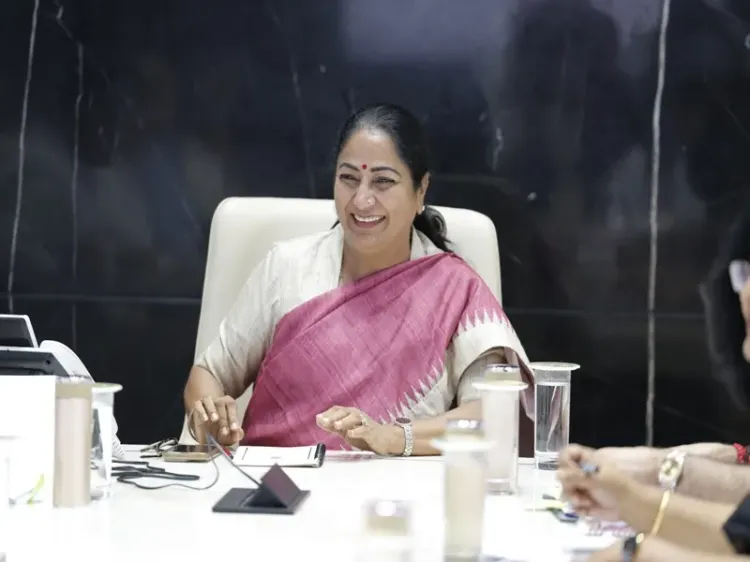
New Delhi, March 22 (NationPress) On Sunday, Chief Minister Rekha Gupta announced that the merger of major medical institutions in the capital will not only enhance healthcare services but will also lead to a notable advancement in medical education.
This initiative is projected to facilitate a significant augmentation in MBBS and postgraduate (PG) seats, as stated by the Chief Minister.
The Delhi government aims to consolidate Guru Teg Bahadur Hospital (GTB), Delhi State Cancer Institute (DSCI), and Rajiv Gandhi Super Speciality Hospital (RGSSH) to form an autonomous institution following the AIIMS model, she elaborated.
Additionally, there are plans to transform the Institute of Human Behaviour and Allied Sciences (IHBAS) into a second National Institute of Mental Health and Neurosciences (NIMHANS-2).
The Chief Minister highlighted that a primary goal of this project is to greatly increase PG seats, enabling more doctors to receive specialized training and thereby enhancing the overall quality of healthcare.
As part of this strategy, similar departments and disciplines that currently operate independently across GTB Hospital, DSCI, and RGSSH will be integrated. Currently, resources and personnel are scattered, resulting in underutilization.
After the integration, faculty members—including assistant professors, associate professors, and professors—will be combined into a unified team. Medical guidelines suggest that an associate professor can oversee two PG seats, while a professor can manage three.
Officials have indicated that departments such as radiology, pathology, and anaesthesia are expected to experience a significant increase in available seats. In radiology, which currently has very few available seats, the number could rise to approximately 22 after the integration. Pathology seats may increase to nearly 26, while anaesthesia could expand to around 48 seats.
This growth will stem not only from departmental mergers but also from filling several vacant faculty positions, as numerous posts remain unoccupied across hospitals.
Some specialized departments presently do not offer PG seats, particularly at DSCI and RGSSH.
Post-integration, new faculty will be hired, and PG courses will be introduced in these specialties. For DSCI, an estimated 26 new PG seats could be added in areas such as radiation oncology, nuclear medicine, cancer research, and intensive care. At RGSSH, about 14 new seats are anticipated in super-specialty fields like cardiology and cardiac surgery, according to a statement.
The Chief Minister added that an increase in bed capacity, patient volume, and faculty numbers will also create robust opportunities for expanding MBBS seats in the future. To support this growth, the government intends to develop hostels, modern laboratories, lecture theatres, and additional academic infrastructure to provide a superior learning atmosphere for students.
CM Gupta emphasized that this initiative not only aims to improve healthcare delivery but also to expand medical education and foster research.
She underlined that the strategy will help position Delhi as a leading national hub for medical education, research, and advanced healthcare services.
Through institutional integration, the government seeks to optimize the use of faculty, infrastructure, and cutting-edge medical equipment, thereby offering students enhanced training and research opportunities.
The Chief Minister reiterated that the government's objective is to fortify healthcare systems in the capital while elevating medical education, ensuring that Delhi stands out as a leader in both treatment and medical research.
Point of View
The government aims to not only improve healthcare services but also expand training opportunities for future medical professionals, which is essential for addressing the growing healthcare needs of the population.
NationPress
21 Sept 2026
Frequently Asked Questions
What is the primary goal of the medical institution integration plan?
The primary goal is to significantly increase MBBS and postgraduate seats while enhancing the quality of medical education and healthcare services.
Which hospitals are being integrated in this initiative?
The initiative involves merging Guru Teg Bahadur Hospital, Delhi State Cancer Institute, and Rajiv Gandhi Super Speciality Hospital.
How will this integration benefit medical education?
The integration will optimize faculty resources, leading to an increase in available PG seats and facilitating the introduction of new courses.
What new facilities are planned to support this initiative?
The government plans to develop hostels, modern laboratories, lecture theatres, and other academic infrastructure to enhance the learning environment.
What impact will this have on patient care?
The integration is expected to improve patient care through enhanced training for doctors and increased healthcare capacity.