Dengue hotspots surge in West Bengal ahead of Durga Puja 2026
Synopsis
With Durga Puja days away and millions set to crowd Bengal's streets, the state health department has flagged 14 gram panchayats and 8 urban bodies as dengue hotspots. Nearly 1,100 cases in the first week of October alone signal an acceleration — even as the yearly total remains below 2025 levels — raising fears of a festival-season spike.
Key Takeaways
West Bengal has flagged 14 gram panchayats and 8 urban civic bodies as dengue hotspots ahead of Durga Puja 2026 .
Most rural hotspots are concentrated in Murshidabad district ; urban hotspots span wards in KMC , BMC , and HMC .
3,948 dengue cases were reported in September 2026 ; nearly 1,100 more in the first week of October alone.
The cumulative 2026 tally of 10,177 cases (till 7 October) remains below the 12,652 recorded in the same period in 2025 .
Nine districts — including Murshidabad , Kolkata , and North 24 Parganas — account for the highest case loads this year.
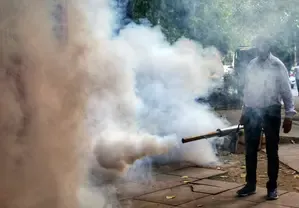
Authorities are expected to intensify fogging and larval source reduction drives in the flagged zones before the festival.
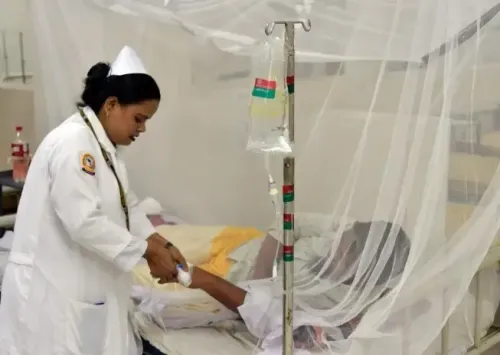
A sudden spike in dengue cases across 14 gram panchayats and eight urban civic bodies in West Bengal has put the state health administration on alert, with the Durga Puja festival days away. The surge, concentrated in specific pockets of rural and urban Bengal over the past month, has prompted authorities to designate these zones as dengue hotspots requiring heightened surveillance.
Where the Hotspots Are
According to a state health department official, the majority of the 14 gram panchayats flagged as dengue hotspots fall within Murshidabad district, with the remaining spread across South 24 Parganas, Nadia, Jalpaiguri, Birbhum, and Hooghly districts.
On the urban front, three municipal corporations have reported a similar rise in certain wards: the Kolkata Municipal Corporation (KMC), the Bidhannagar Municipal Corporation (BMC) in North 24 Parganas, and the Howrah Municipal Corporation (HMC) in Howrah district. Specifically, six wards within the KMC, three in the HMC, and four in the BMC have been identified as zones of sudden case escalation.
Five municipalities have also been flagged as sensitive zones: Chakdaha in Nadia district and Dumdum, South Dumdum, Kamarhati, and Baranagar in North 24 Parganas.
The Numbers Behind the Concern
State health department data show that the overall dengue tally for 2026 remains marginally lower than the previous year — 10,177 cases recorded up to 7 October 2026, compared with 12,652 cases during the same period in 2025. However, officials caution that the trajectory within the past five weeks is what warrants concern.
3,948 new cases were reported in September 2026 alone, followed by nearly 1,100 cases in the first week of October — a pace that suggests acceleration rather than seasonal decline. The nine districts recording the highest case loads this year are Murshidabad, Kolkata, North 24 Parganas, South 24 Parganas, Nadia, Hooghly, Howrah, Malda, and East Burdwan.
Why Durga Puja Raises the Stakes
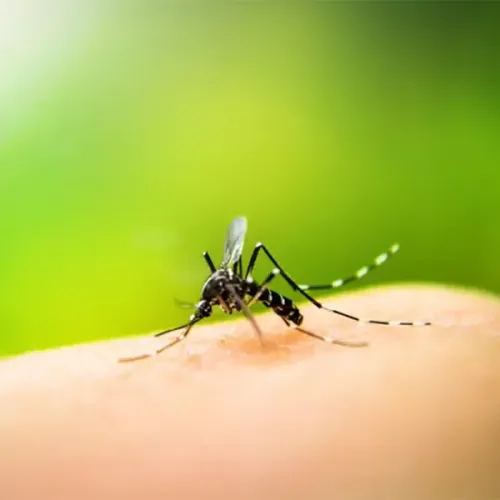
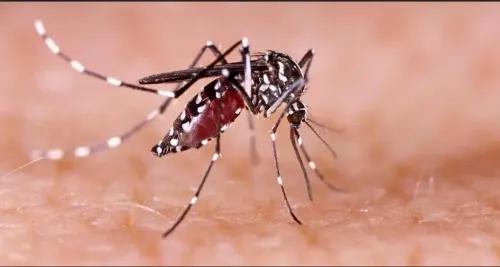
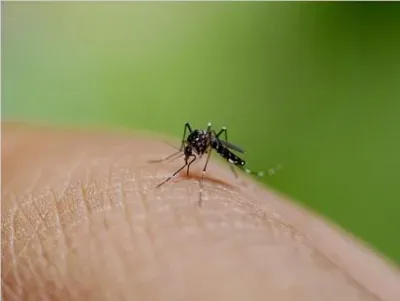
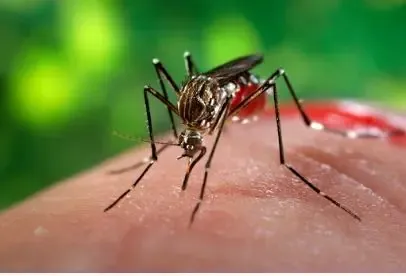
The timing of the surge is particularly sensitive. Durga Puja draws millions of visitors across West Bengal's cities and districts, generating large public gatherings, temporary installations, and the movement of populations between rural and urban zones — all conditions that can amplify vector-borne disease transmission. Waterlogging from post-monsoon rains and stagnant water in and around pandals are established breeding grounds for Aedes aegypti, the mosquito that transmits dengue.
This is not the first time Bengal has faced a dengue scare during the festive season. In recent years, post-Puja dengue spikes have followed the festival period in both Kolkata and surrounding districts, prompting retrospective control drives. Authorities are reportedly seeking to front-load those efforts this time.
Official Response and What Comes Next
'Despite the lower overall number of cases this year, the worrying aspect is the recent rise in infections. While 3,948 new dengue cases were reported in September, nearly 1,100 cases were recorded in the first week of October alone,' the health department official said.
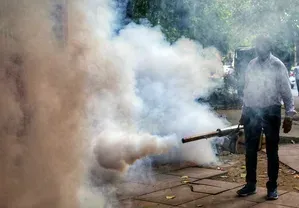
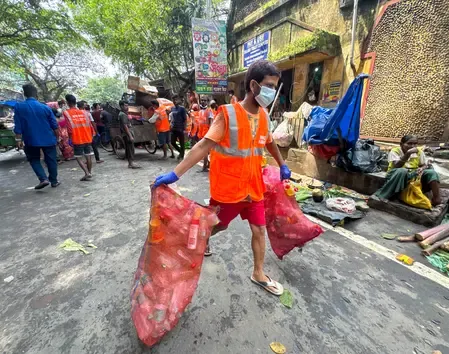
State officials have identified the hotspot zones to enable targeted vector control and awareness campaigns in the days leading up to and during the festival. The health department is expected to intensify fogging operations, larval source reduction drives, and fever surveillance at the community level in the flagged wards and panchayats. How effectively these measures can be deployed in the compressed window before the festival begins will determine whether the current spike stabilises or deepens.
Point of View
100 cases in a single week just before Durga Puja is a red flag that the seasonal curve is bending upward at the worst possible moment. Bengal's festive-season dengue problem is a recurring one, and the pattern of post-Puja spikes suggests that crowd-driven transmission is a structural risk the state has not fully solved. The compressed timeline between the hotspot identification and the festival leaves little room for the kind of sustained larval source reduction that actually moves the needle on dengue — fogging alone is largely ineffective. Whether the administration can mobilise ward-level action across 22-plus flagged zones in days, rather than weeks, is the question the health department's response will be judged on.
NationPress
10 Oct 2026
Frequently Asked Questions
Which areas have been identified as dengue hotspots in West Bengal?
State health authorities have identified 14 gram panchayats — mostly in Murshidabad, with others in South 24 Parganas, Nadia, Jalpaiguri, Birbhum, and Hooghly — and 8 urban civic bodies as dengue hotspots. The urban zones include specific wards in the Kolkata, Bidhannagar, and Howrah municipal corporations, as well as five municipalities including Chakdaha, Dumdum, and Baranagar.
How many dengue cases has West Bengal recorded in 2026?
West Bengal recorded 10,177 dengue cases up to 7 October 2026, which is marginally lower than the 12,652 cases reported during the same period in 2025. However, the recent acceleration — 3,948 cases in September and nearly 1,100 in the first week of October alone — has raised concern.
Why is dengue a particular concern ahead of Durga Puja?
Durga Puja draws massive public gatherings and population movement across West Bengal, creating conditions that can amplify mosquito-borne disease transmission. Stagnant water in and around festival installations also provides breeding grounds for the Aedes aegypti mosquito, which spreads dengue.
What steps is the West Bengal government taking to control the outbreak?
Authorities have designated the affected zones as hotspots to enable targeted intervention, including fogging operations, larval source reduction drives, and community-level fever surveillance. The health department is expected to intensify these measures in the flagged wards and panchayats before and during the festival period.
Which districts in West Bengal have the highest dengue case loads in 2026?
The nine districts with the highest dengue case counts in 2026 are Murshidabad, Kolkata, North 24 Parganas, South 24 Parganas, Nadia, Hooghly, Howrah, Malda, and East Burdwan, according to state health department data.