DGFT urges industry to tap FTAs for export growth at CII conclave
Synopsis
India has signed FTAs with the UK, Oman and soon New Zealand — but the DGFT is sounding the alarm that Indian industry is far less engaged than its UK counterparts in understanding what these deals actually offer. With 10 states driving 85% of exports and 500-plus district action plans yet to deliver, the government's export push faces a last-mile problem that policy alone cannot solve.
Key Takeaways
DGFT Lav Agarwal addressed the CII national manufacturing conclave in New Delhi on 29 September , urging industry to convert FTAs into actual exports.
India has operationalised FTAs with the UK and Oman this financial year; a third FTA with New Zealand is due next month.
Agarwal flagged that UK industry showed significantly greater engagement with the India-UK FTA than Indian counterparts.
Industry associations were asked to take the 11-component Export Promotion Mission — approved by the Union Cabinet last November — to the grassroots level.
Over 500 district export action plans and the Districts as Export Hubs initiative need industry partnership to deliver results.
10 states account for around 85% of India's total exports, highlighting the scope for broader geographic participation.
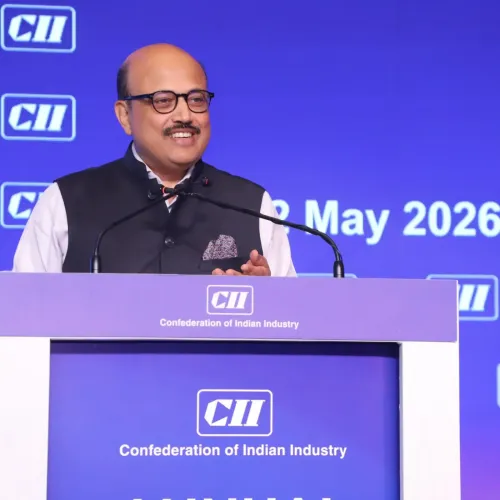
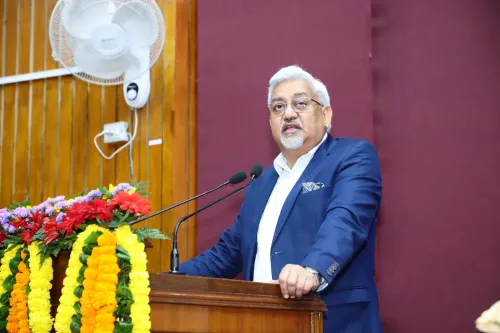
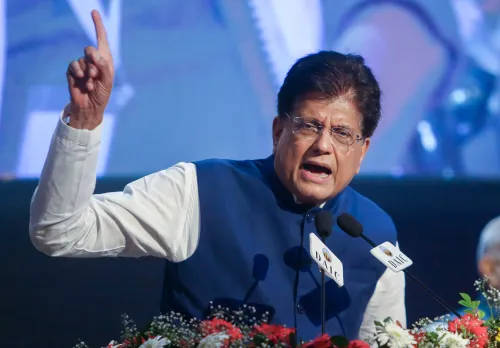
The Director General of Foreign Trade (DGFT), Lav Agarwal, on Tuesday, 29 September called on Indian manufacturers to actively leverage the country's new free trade agreements (FTAs) and partner with the government to translate market access into measurable export growth. Speaking at the Confederation of Indian Industry (CII) national manufacturing conclave in New Delhi, Agarwal stressed that the real challenge is converting treaty text into on-the-ground trade activity.
Key Developments at the CII Conclave
Addressing industry leaders, Agarwal said: 'Through the new trade agreements, India has opened up markets across the globe and created opportunities that can make Indian industry more competitive. The challenge now is to translate these FTAs into action on the ground.' He urged manufacturers to factor trade into their expansion plans and seek deeper integration into global value chains.
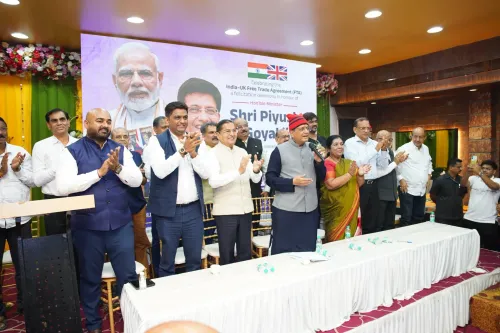
His remarks come against the backdrop of India having operationalised FTAs with the United Kingdom and Oman during the current financial year, with a third agreement — with New Zealand — scheduled for implementation next month.
India-UK FTA: A Gap in Industry Engagement
Agarwal pointed to a telling contrast: UK government and industry representatives held multiple meetings with the DGFT to understand the market access provisions of the India-UK FTA, while comparatively fewer Indian industry representatives sought similar discussions. 'We are here to work with all of you. We want to create a framework so that whatever market access an agreement offers does not only remain on paper,' he said.
This gap in proactive engagement, he argued, risks leaving significant export opportunity unrealised — a concern that is particularly acute given the scale of access the agreement provides to one of India's largest trading partners.
Export Promotion Mission and District-Level Push
Agarwal urged industry associations to carry the 11 components of the government's Export Promotion Mission — approved by the Union Cabinet last November — to the grassroots level. The mission covers export finance, market intelligence, logistics efficiency, inland export support, and compliance with international trade agreements.
He also called on associations to mentor prospective exporters, including micro, small and medium enterprises (MSMEs) and start-ups, and to help convert more than 500 district export action plans into actual exports. Agarwal suggested combining the Export Promotion Mission with the government's Districts as Export Hubs initiative — which aims to turn every Indian district into a centre for global trade — to build a more effective export ecosystem.
The Export Concentration Problem
Agarwal highlighted a structural imbalance in India's export geography: 10 states currently account for around 85% of the country's total exports, while 15 states account for approximately 95%. This concentration, he argued, underscores the untapped potential for significantly wider participation across India's districts and states.
'Government policy alone cannot lead to the required results. What we need is a true partnership, and a true measure of success would be how those initiatives are adopted by the industry at large,' he said, noting that DGFT has funds available under the Export Promotion Mission to support this effort.
What Comes Next
With the India-New Zealand FTA set to be implemented next month, industry bodies will face an immediate test of whether they can mobilise faster than they did for the UK agreement. The DGFT's call for an end-to-end framework — covering mentoring, hand-holding, and market intelligence — signals that the government is looking to industry associations as the primary delivery channel for export growth at scale.
Point of View
But the private sector often lacks the capacity or incentive to exploit it. With 85% of exports concentrated in 10 states, the Districts as Export Hubs initiative is well-conceived but chronically under-resourced at the last mile. Until industry associations are held to measurable mentoring and export-conversion targets — not just attendance at conclaves — the risk is that another set of FTAs joins the long queue of agreements that look better on paper than in trade data.
NationPress
29 Sept 2026
Frequently Asked Questions
What did the DGFT say about India's new free trade agreements?
DGFT Lav Agarwal urged Indian industry on 29 September to actively leverage India's new FTAs with the UK, Oman and New Zealand to generate real export growth, warning that market access must not remain only on paper. He called for a government-industry partnership to build an end-to-end framework for exporters.
Which FTAs has India recently operationalised?
India has operationalised FTAs with the United Kingdom and Oman during the current financial year. A third agreement, with New Zealand, is scheduled to be implemented next month.
What is the Export Promotion Mission and what does it cover?
The Export Promotion Mission is a government initiative approved by the Union Cabinet last November, comprising 11 components including export finance, market intelligence, logistics efficiency, inland export support, and compliance with international trade agreements. The DGFT has urged industry associations to take it to the grassroots level.
What is the Districts as Export Hubs initiative?
The Districts as Export Hubs initiative aims to transform every Indian district into a centre for global trade. The DGFT has suggested combining it with the Export Promotion Mission to create a more effective export ecosystem, particularly for MSMEs and start-ups.
Why is India's export concentration a concern?
Currently, 10 states account for around 85% of India's total exports and 15 states for about 95%, according to Agarwal. This heavy concentration means a large part of India's productive capacity — particularly in smaller states and districts — is not contributing to global trade, limiting the country's overall export potential.