Is the Outlook for India's Textile Industry Becoming More Positive with Key FTAs?
Synopsis
The Indian textile industry is on an optimistic trajectory as key Free Trade Agreements unlock new market opportunities and enhance tariff competitiveness. With strategic initiatives aimed at modernizing the sector, experts believe it is well-positioned for growth, attracting investments and expanding its global presence.
Key Takeaways
Positive Outlook: The Indian textile industry is witnessing an optimistic future.
New Market Opportunities: Key FTAs are unlocking significant avenues for exporters.
Government Support: Focused initiatives aim to enhance competitiveness and sustainability.
Collaborative Approach: The Ministry emphasizes collaboration for effective policymaking.
Job Creation: The sector is positioned as a key driver for employment generation.
New Delhi, Feb 20 (NationPress) After a challenging year defined by resilience against global challenges, the outlook for the Indian textile sector is becoming more optimistic, as stated by a senior government representative. The implementation of crucial Free Trade Agreements (FTAs) is paving the way for substantial new market avenues for Indian exporters, improving tariff competitiveness and fortifying India’s role in global value chains.
Neelam Shami Rao, Secretary (Textiles), pointed out that the alignment of these trade agreements with a distinctly textile-focused Union Budget presents a timely and strategic advantage for the industry.
With enhanced market access, clear policies, and dedicated government backing, she asserted that the sector is poised to increase production, draw investments, and solidify its presence in global markets.
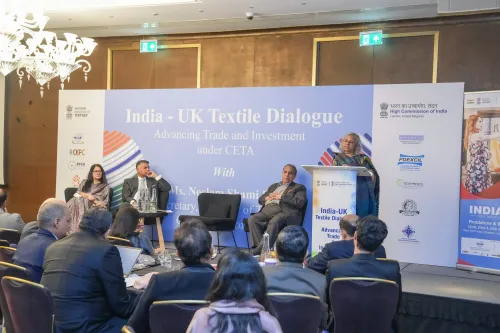
She made these remarks during the first national industry consultation post-budget, which convened senior government officials, industry leaders, financial institutions, development partners, and representatives from the entire textile value chain to discuss implementation priorities following the Union Budget 2026 announcements.
The consultation zeroed in on operationalising two vital initiatives introduced in the Budget—the Textile Expansion and Employment (TEEM) Scheme and the Tex Eco Initiative—aimed at bolstering competitiveness, modernisation, sustainability, and job creation across the textile and apparel sector.
According to Rohit Kansal, Additional Secretary (Textiles), the Union Budget has been distinctly textile-centric, with a robust emphasis on job creation and manufacturing expansion.
He remarked that the announcement of a comprehensive programme for the textile sector delivers an integrated framework to align investments, policy support, and institutional efforts throughout the value chain.
Kansal further stressed that the Budget reflects a clear intention to enhance manufacturing, bolster domestic capabilities, and position textiles as a key driver of inclusive growth and employment generation.
Kansal also reiterated the Ministry’s commitment to a collaborative approach to transform policy objectives into tangible, measurable outcomes.
He commended the industry's proactive engagement and honest feedback, asserting that such structured consultations will continue to shape effective and responsive policymaking.
Point of View
I believe that the Indian textile industry’s potential for growth is being amplified by recent trade agreements and government initiatives. This is a pivotal moment for the sector, with opportunities to enhance its global footprint and contribute significantly to the economy.
NationPress
29 Sept 2026
Frequently Asked Questions
What are the key benefits of the new FTAs for the textile industry?
The new FTAs open up significant new market opportunities for Indian exporters, enhance tariff competitiveness, and strengthen India's position in global value chains.
How is the government supporting the textile sector?
The government is providing policy clarity, focused support, and introducing initiatives like the TEEM Scheme and Tex Eco Initiative to modernize and strengthen the industry.
What is the significance of the Union Budget for the textile industry?
The Union Budget has been textile-centric, focusing on employment generation, manufacturing growth, and providing a structured framework for investment and policy support.
What challenges does the Indian textile industry face?
The sector faces challenges including competition from global markets, the need for modernization, and ensuring sustainability in production.
How can the textile industry attract more investments?
By enhancing competitiveness, providing clear policies, and demonstrating growth potential, the textile industry can attract more investments and expand its market reach.