CM Dhami Calls Congress, Rahul Gandhi Opponents of Sanatan Dharma
Synopsis
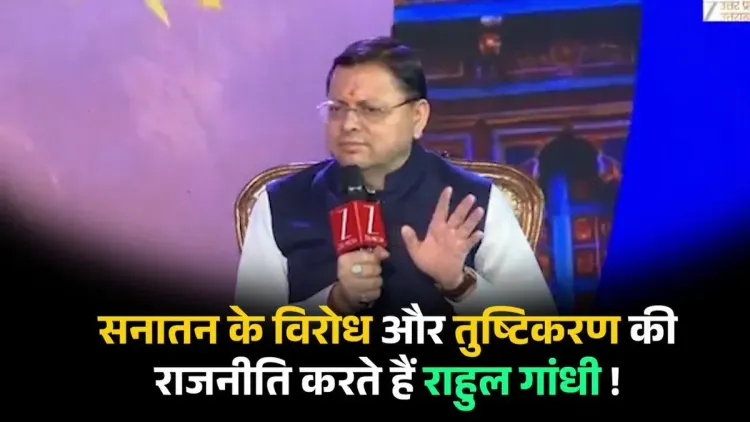
Uttarakhand CM Pushkar Singh Dhami has accused Congress and Rahul Gandhi of being opponents of Sanatan Dharma and pursuing appeasement as their sole political goal, sharpening BJP's cultural offensive ahead of the 2027 state assembly elections.
Key Takeaways
Uttarakhand CM Pushkar Singh Dhami posted on June 7, 2026 accusing Congress and Rahul Gandhi of opposing Sanatan Dharma.
Dhami stated that 'appeasement alone is the goal' of Congress, using the Hindi term tushtikaran .
The charge continues a BJP narrative rooted in the Shah Bano controversy of the 1980s and the Mandal-Mandir era .
Uttarakhand became the first Indian state to notify the Uniform Civil Code in 2024 under Dhami's government.
The statement comes roughly a year ahead of the 2027 Uttarakhand assembly elections , signalling early campaign positioning.
No specific triggering event for the post has been confirmed; Congress had not publicly responded at the time of publication.
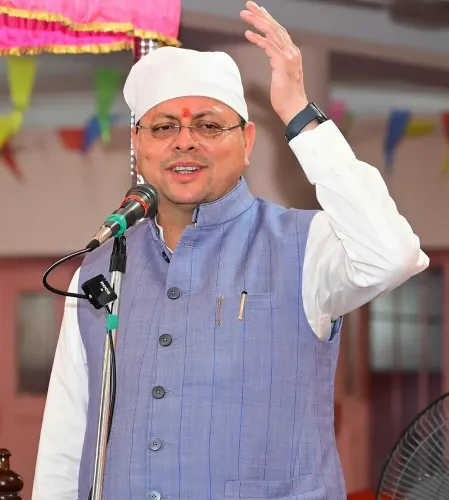
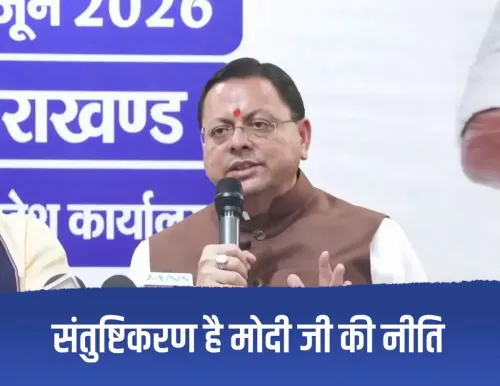
Uttarakhand Chief Minister Pushkar Singh Dhami on Sunday, June 7, 2026, publicly accused the Indian National Congress and its leader Rahul Gandhi of opposing Sanatan Dharma, asserting that appeasement is their sole political objective. The charge was levelled in a post on X accompanied by a video, intensifying the BJP's ongoing cultural-political offensive against the principal opposition party.
Context
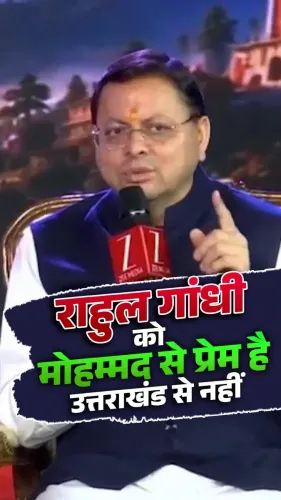
Dhami's post, written in Hindi, states: 'Sanatan ke virodhi hain Congress aur Rahul Gandhi, keval tushtikaran hai lakshya' — 'Congress and Rahul Gandhi are opponents of Sanatan Dharma; appeasement alone is their goal.' The statement is direct and unambiguous, framing the Congress's secular politics as hostility toward Hindu religious tradition. No specific incident was cited in the post itself, though the accompanying video is expected to elaborate the charge.
The accusation echoes a line of attack the BJP has deployed against Congress since at least the 1980s, rooted in controversies such as the Shah Bano case and the Mandal-Mandir era of the early 1990s. The party has long argued that Congress prioritises minority vote banks over the cultural sensibilities of the Hindu majority.
Policy Backdrop
The rhetorical offensive gained fresh momentum after DMK leader Udhayanidhi Stalin's 2023 remarks against Sanatan Dharma triggered a nationwide BJP counter-campaign. BJP chief ministers across multiple states, including Dhami, participated in coordinated messaging that tied Congress to the anti-Sanatan remarks made by its alliance partners.
Uttarakhand itself has been at the forefront of BJP's cultural-legislative agenda. The state notified the Uniform Civil Code (UCC) in 2024 — the first state in independent India to do so — which the Dhami government presented as ending religion-based personal laws and bringing all citizens under a common legal framework. The UCC has become a central symbol of the state's Hindutva-aligned governance.
Stakeholders and Impact
Hindu voters, who form the overwhelming majority of Uttarakhand's electorate, are the primary audience for such messaging. The state, often called the 'devbhoomi' or land of the gods, has a significant religious and pilgrimage economy, making Sanatan Dharma a politically resonant issue beyond mere symbolism.
Congress and Rahul Gandhi have consistently denied the appeasement label, arguing that their policies reflect constitutional secularism rather than minority favouritism. The party has not yet responded publicly to this specific post. Muslim communities, who are implicitly positioned as the beneficiaries of Congress's alleged appeasement in the BJP's framing, remain stakeholders in how this political narrative develops.
What's Next
With Uttarakhand assembly elections scheduled for 2027, political observers will watch whether Dhami's post marks the opening of a sustained pre-election cultural campaign or remains an isolated statement. Congress's response — and whether it chooses to engage on the Sanatan Dharma framing or pivot to governance issues — will shape the terms of that contest.
Further state-level moves on religious or cultural policy from the Dhami government, as well as any coordinated national BJP messaging on the same theme, could signal the scale of the strategy being deployed ahead of the next electoral cycle.
Point of View
The chief minister is clearly working to lock in the state's Hindu identity narrative before the campaign season opens in earnest. The move also serves a national function — reinforcing the Congress-appeasement frame at a moment when the BJP needs to maintain ideological coherence across its state governments. Whether Congress engages this framing or sidesteps it will be a telling indicator of the opposition's electoral strategy in a state where governance alternatives have struggled to gain traction.
NationPress
25 Sept 2026
Frequently Asked Questions
What did CM Dhami say about Congress and Sanatan Dharma?
Uttarakhand CM Pushkar Singh Dhami said that Congress and Rahul Gandhi are opponents of Sanatan Dharma and that appeasement is their only political objective, posting the charge on X on June 7, 2026.
What is the BJP's appeasement accusation against Congress?
The BJP has long accused Congress of prioritising minority communities — particularly Muslims — over the Hindu majority through policies it labels 'tushtikaran' or appeasement, a charge Congress denies as a misrepresentation of constitutional secularism.
What is Sanatan Dharma and why is it politically significant in India?
Sanatan Dharma broadly refers to the eternal principles underlying Hinduism and is used by BJP leaders as a cultural-political symbol to rally Hindu voters, especially following the controversy over DMK leader Udhayanidhi Stalin's 2023 remarks against it.
What is the Uniform Civil Code in Uttarakhand?
Uttarakhand became the first Indian state to notify the Uniform Civil Code in 2024 under CM Dhami, replacing religion-based personal laws with a common legal framework for all citizens in matters such as marriage, divorce, and inheritance.
When are the next Uttarakhand assembly elections?
The next Uttarakhand assembly elections are scheduled for 2027, and political analysts view Dhami's cultural messaging in 2026 as early positioning for that electoral contest.