CM Dhami Cabinet Clears 7 Key Decisions for Uttarakhand
Synopsis
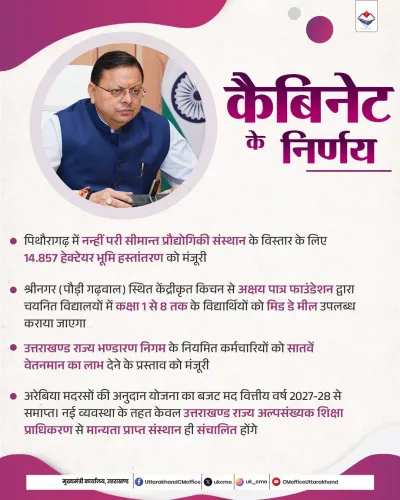
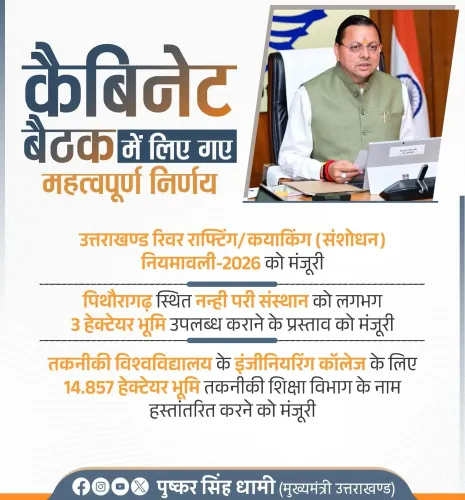
The Uttarakhand cabinet chaired by CM Pushkar Singh Dhami on 18 June 2026 cleared seven decisions: a bovine embryo-transfer pilot, a 20 per cent state subsidy on Char Dham equine insurance covering 15,000 animals, PWD bitumen price-adjustment guidelines, excise policy corrections, five TIES posts at Selaqui, a Himalayan Car Rally organiser, and a revised equal-pay cut-off for contractual workers.
Key Takeaways
The cabinet approved a pilot project for embryo transplantation and milk enhancement in bovine cattle for breed improvement.
The state will bear 20 per cent (₹105 lakh) of insurance premiums for an estimated 15,000 horses and mules on the Char Dham Yatra route for 2026.
Three 2024 recruitment exams will allow state-movement activist reservation certificate holders a one-time document-verification opportunity to claim their 10 per cent horizontal reservation.
PWD bitumen contracts formed before 1 April 2026 will receive price-adjustment relief for the period 1 May – 30 June 2026, following a 30-plus per cent rise in bitumen prices.
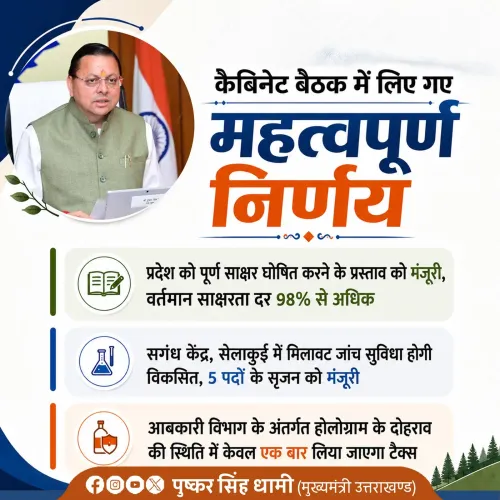
Five PMU posts approved at the Aromatic Plant Centre, Selaqui under TIES to operate AMS adulteration-testing machines for essential-oil exporters.
The equal-pay cut-off date for UPNL contractual workers revised from 12 November 2018 to 15 October 2024 in line with a Supreme Court order.
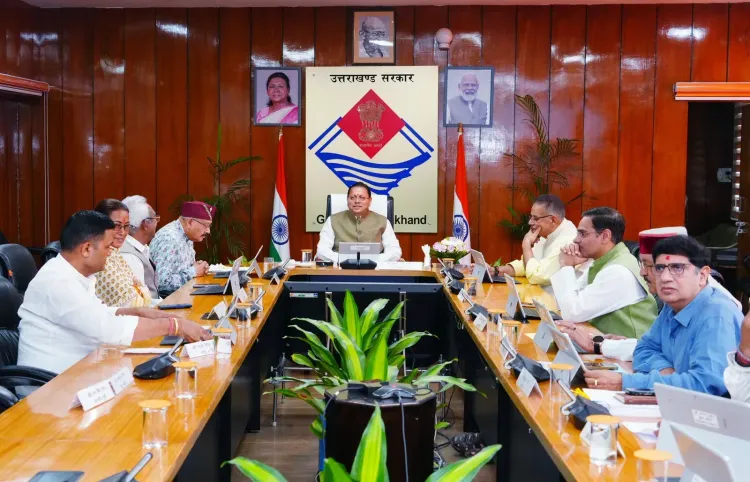
The Chief Minister's Office of Uttarakhand announced on Thursday, 18 June 2026 that a cabinet meeting chaired by Chief Minister Pushkar Singh Dhami approved seven significant decisions spanning animal husbandry, pilgrimage logistics, public works, excise policy, export infrastructure, tourism, and workers' pay parity.
Context
The cabinet cleared a pilot project for embryo transplantation and milk enhancement in bovine cattle (gau-vanshiya pashu) aimed at breed improvement across the state. Separately, it approved a state subsidy covering 20 per cent of the insurance premium for equines — horses and mules — deployed on the Char Dham Yatra route, with the remaining 80 per cent to be borne by animal owners. The scheme targets an estimated 15,000 registered horses and mules for the 2026 pilgrimage season. With each animal valued at ₹70,000 and an insurance rate of 5 per cent, the total premium works out to ₹525 lakh, of which the state government will bear ₹105 lakh.
Policy Backdrop
The cabinet addressed a procedural gap in the 10 per cent horizontal reservation for Uttarakhand state movement activists and their dependents in subordinate state services. Three recruitment examinations — the Junior Assistant and Other Posts Recruitment Exam 2024, the Constable District Police (Male) and PAC/IRB (Male) Recruitment Exam 2024, and the Additional Private Secretary, Personal Assistant, Stenographer and Other Posts Exam 2024 — had their application deadlines fall between the issuance of Notification No. 244 dated 18 August 2024 and Government Order No. 139 dated 24 November 2024. The cabinet decided that candidates who submit state-movement activist reservation certificates in the prescribed format will be allowed a one-time opportunity to present those documents at the document-verification stage.
On public works, the cabinet acknowledged that crude-oil price pressures linked to the Middle East conflict have pushed bitumen prices up by more than 30 per cent in India. It approved guidelines for price adjustment in all existing bituminous-work contracts under the Uttarakhand Public Works Department (PWD) — specifically those formed before 1 April 2026 where bituminous work remains pending — for the period 1 May 2026 to 30 June 2026.
On excise, the cabinet amended the triennial excise policy 2025-26, 2026-27 and 2027-28 notified vide Notification No. 112 dated 31 March 2026. The amendment removes a duplication of the hologram fee that had appeared in Schedule 'B' at Serial No. 4, and integrates the cess listed in Schedules 'A' and 'B' into the VAT Act 2005 computation framework.
Stakeholders and Impact
Under the Trade Infrastructure for Export Scheme (TIES), the cabinet approved the creation of five posts to constitute a Project Management Unit (PMU) at the Aromatic Plant Centre, Selaqui. The PMU will operate advanced AMS (Automated Mass Spectrometry) machines to test adulteration in aromatic oils and products, directly benefiting essential-oil exporters from the state.
The cabinet also discussed the proposed International Himalayan Car Rally to promote tourism, setting a target of more than 120 entries: 25 international participants, 25 Asia Cup Country Rally entrants, 20 Classic Car Rally entries, and 50 Indian National Rally Championship competitors. It approved selection of an organising agency through a single-source procurement route, noting that the choice of an experienced body is critical to the event's success.
Finally, acting on a Uttarakhand High Court, Nainital order dated 20 April 2026, the cabinet revised the eligibility cut-off date for equal pay for equal work for contractual workers engaged through UPNL (Uttarakhand Project and Nodal Level). The earlier cut-off of 12 November 2018 has been replaced with 15 October 2024, the date of a corresponding Supreme Court of India order, expanding the pool of eligible workers.
What's Next
The embryo-transfer pilot for bovine breed improvement and the single-source agency selection for the 2026 Himalayan Car Rally will be key implementation milestones to watch in the coming weeks. The revised equal-pay cut-off date is expected to benefit a significant number of contractual employees once departmental processes are updated. The bitumen price-adjustment guidelines will provide immediate relief to PWD contractors navigating global commodity volatility through mid-2026.
Point of View
Pilgrimage logistics, public works, export infrastructure, and labour rights — reflects the Dhami government's effort to signal administrative momentum across multiple constituencies simultaneously. The equal-pay cut-off revision is notable because it responds directly to judicial pressure from both the High Court and the Supreme Court, narrowing the government's discretion while broadening worker entitlements. The single-source selection route for the Himalayan Car Rally, though administratively permissible, will invite scrutiny given the scale of the event and its tourism-promotion mandate. Taken together, the decisions illustrate a pattern common to Himalayan state governments: bundling livelihood and pilgrimage-economy measures with commodity-shock responses and legacy statehood commitments to maintain broad political support.
NationPress
18 Sept 2026
Frequently Asked Questions
What did the Uttarakhand cabinet decide about Char Dham Yatra horses and mules?
The cabinet approved a scheme under which the state government will pay 20 per cent of the insurance premium for horses and mules used on the Char Dham Yatra route. Around 15,000 registered equines are expected to be covered for the 2026 season, with the state contributing ₹105 lakh out of a total premium of ₹525 lakh .
What is the Uttarakhand state movement activist reservation and what did the cabinet decide?
Uttarakhand grants a 10 per cent horizontal reservation in state subordinate services to activists who participated in the agitation for separate statehood and their dependents. The cabinet decided that candidates who missed the certificate-submission deadline in three specific 2024 recruitment exams — due to the gap between Notification No. 244 (August 2024) and GO No. 139 (November 2024) — will get a one-time chance to submit their certificates at the document-verification stage.
Why did Uttarakhand revise PWD bitumen contract rates?
Bitumen prices in India rose by more than 30 per cent due to crude-oil price increases linked to the Middle East conflict. The cabinet approved price-adjustment guidelines for all PWD bituminous-work contracts formed before 1 April 2026 that still have pending work, covering the period 1 May to 30 June 2026 .
What is the International Himalayan Car Rally and how many participants are expected?
The International Himalayan Car Rally is a motorsport event being organised to promote tourism in Uttarakhand. The cabinet set a target of more than 120 entries , including 25 international participants, 25 Asia Cup Country Rally entrants, 20 Classic Car entries, and 50 Indian National Rally Championship competitors. An organising agency will be selected through a single-source route.
What changed for contractual workers' equal pay in Uttarakhand?
Following a Uttarakhand High Court, Nainital order dated 20 April 2026, the cabinet revised the eligibility cut-off date for equal pay for equal work for UPNL contractual workers from 12 November 2018 to 15 October 2024 , aligning it with a Supreme Court order of that date.