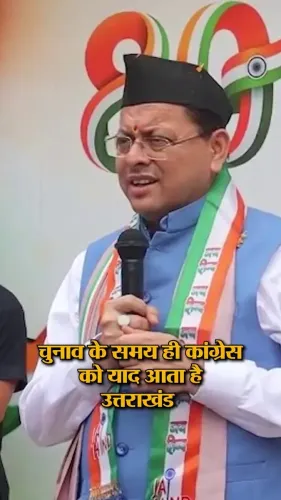
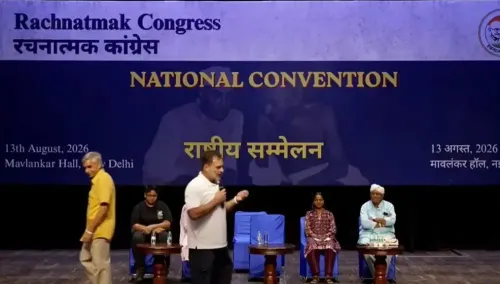
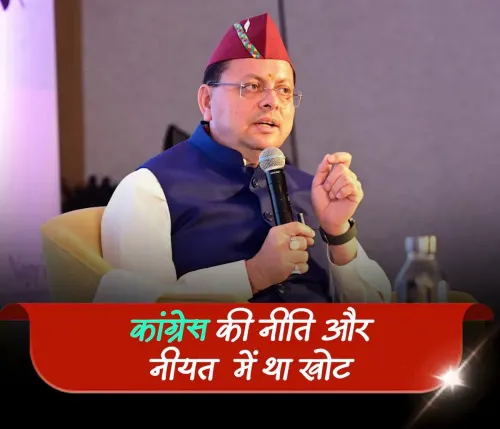
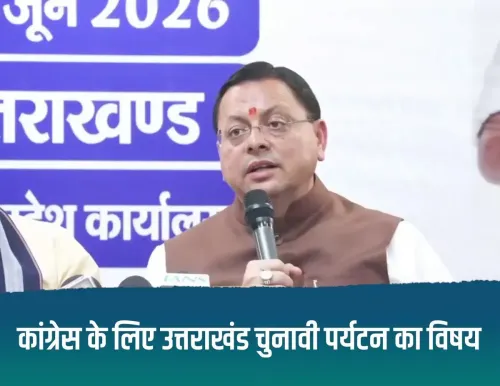
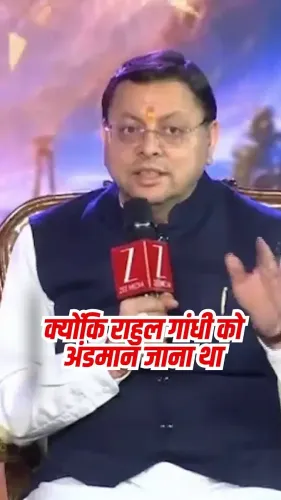
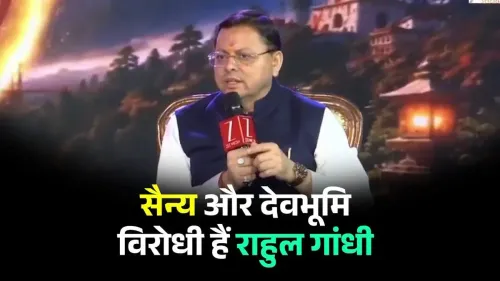
CM Dhami Accuses Rahul Gandhi of Vote-Bank Politics in Uttarakhand
Synopsis
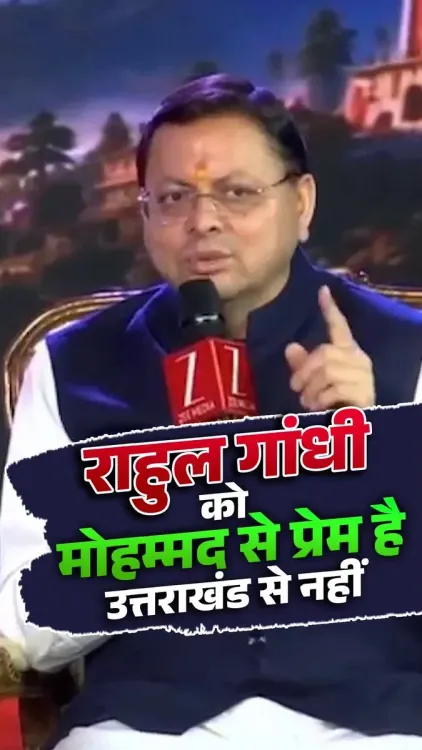
Uttarakhand CM Pushkar Singh Dhami on June 12 accused Rahul Gandhi of practising appeasement politics and said Gandhi's engagement with Uttarakhand serves only political self-interest. Dhami invoked the state's identity as Devbhoomi, asserting its voters recognise 'dual political character.'
Key Takeaways
CM Pushkar Singh Dhami posted a sharp attack on Rahul Gandhi on June 12, 2026 , accusing him of appeasement and vote-bank politics.
Dhami stated that Gandhi's connection to Uttarakhand is driven by 'political self-interest,' not genuine engagement.
The post appeals to Uttarakhand's identity as Devbhoomi , asserting local voters can identify 'dual political character.' BJP has governed Uttarakhand since 2017 and retained power in 2022 on an anti-appeasement platform.
The precise trigger for the post — a Gandhi statement or visit — was not confirmed at the time of publication.
A formal Congress rebuttal and any upcoming Gandhi activity in Uttarakhand will be closely watched.
Uttarakhand Chief Minister Pushkar Singh Dhami on Friday, June 12, 2026, sharply attacked Congress leader Rahul Gandhi, accusing him of reducing his politics to appeasement and vote-bank consolidation, and asserting that Gandhi's engagement with Uttarakhand is driven purely by political self-interest.
Context
Posting in Hindi on X, CM Dhami wrote: 'Rahul Gandhi ji ki rajneeti kewal tushtikaran aur vote bank sadhne tak seemit reh gayi hai' — 'Rahul Gandhi's politics has been reduced to mere appeasement and vote-bank consolidation.' He further stated that Gandhi's connection to Uttarakhand 'appears to be for the fulfilment of political self-interest,' and that the 'aware public of Devbhoomi recognises such a dual political character very well.'
The post was accompanied by a video, though the precise trigger — whether a recent Gandhi statement, visit, or remark on Uttarakhand — could not be independently confirmed at the time of publication.
Policy Backdrop
The Bharatiya Janata Party has governed Uttarakhand since 2017, and retained power in the 2022 assembly elections on a campaign platform anchored in anti-appeasement messaging and development. CM Dhami, who assumed office in 2021, has been a consistent face of that narrative in the state.
BJP leaders across the country routinely frame Congress outreach in states as vote-bank driven, contrasting it with their own governance record. In smaller Himalayan states like Uttarakhand — revered as Devbhoomi or the 'Land of the Gods' — regional and religious identity carries particular electoral weight, making the appeasement charge a politically potent line of attack.
Stakeholders and Impact
The remarks are directed at Uttarakhand's electorate, signalling to voters that Congress engagement with the state is transactional rather than substantive. The invocation of 'Devbhoomi ki jagruk janta' — 'the aware public of Devbhoomi' — is a deliberate appeal to local pride and the state's distinct cultural identity.
For Congress workers and Rahul Gandhi's team, the attack presents a challenge: any high-profile outreach in the state risks being framed by the ruling party as opportunistic, potentially blunting the impact of opposition visits or statements ahead of future polls.
What's Next
Political observers will watch for a formal rebuttal from the Indian National Congress and any scheduled visits or public statements by Rahul Gandhi in Uttarakhand in the coming weeks. With electoral cycles in mind, the exchange signals that both national parties are already positioning themselves in the state. How Congress responds — and whether it can reframe its Uttarakhand outreach around concrete policy commitments — will determine whether Dhami's attack lands with lasting effect among voters.
Point of View
Making any Congress activity appear cynical rather than substantive. By anchoring the attack in Uttarakhand's Devbhoomi identity, Dhami is doing double duty — reinforcing BJP's cultural ownership of the state while putting Congress on the defensive before any formal electoral cycle begins. The post is a reminder that in smaller, identity-sensitive states, the battle for narrative often precedes the battle for votes. How Congress responds will reveal whether it has a counter-narrative ready or is content to absorb the hit.
NationPress
13 Sept 2026
Frequently Asked Questions
Why did CM Dhami attack Rahul Gandhi over Uttarakhand?
CM Dhami accused Rahul Gandhi of practising appeasement and vote-bank politics, claiming Gandhi's engagement with Uttarakhand is motivated by political self-interest rather than genuine concern for the state.
What does 'Devbhoomi' mean and why did Dhami use the term?
'Devbhoomi' means 'Land of the Gods' and is a widely used cultural and religious reference for Uttarakhand. Dhami used it to invoke local pride and signal that the state's voters have a distinct identity that sees through opportunistic politics.
What is the BJP's track record in Uttarakhand?
The BJP has governed Uttarakhand since 2017 and won the 2022 assembly elections under CM Dhami, running on a platform that emphasised development and opposed what it called appeasement politics.
Has Rahul Gandhi responded to Dhami's remarks?
No formal response from Rahul Gandhi or the Indian National Congress had been confirmed at the time of publication.
What is the broader political significance of this exchange?
The exchange reflects national-level positioning by both BJP and Congress in a BJP-held state, with Dhami's remarks signalling that the ruling party intends to contest any Congress narrative-building in Uttarakhand well ahead of future elections.