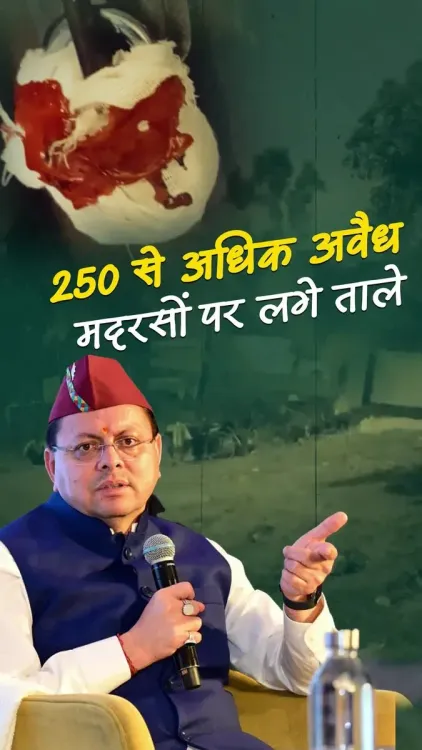
CM Dhami Vows No Room for Radicalism in Uttarakhand
Synopsis
Uttarakhand CM Pushkar Singh Dhami on 13 June 2026 declared his government will not allow radicalism to take root in Devbhoomi at any cost, reaffirming a dual commitment to cultural heritage protection and development-focused good governance.
Key Takeaways
CM Pushkar Singh Dhami on 13 June 2026 stated his government will not permit a 'radical mentality' to flourish in Uttarakhand at any cost.
The post was made in Hindi and tagged PM Narendra Modi , Home Minister Amit Shah , and the BJP 's official handle, signalling coordinated political messaging.
Dhami reaffirmed a commitment to sushasan (good governance) and development while protecting the state's cultural heritage and faith.
Uttarakhand , known as Devbhoomi , hosts the Char Dham pilgrimage circuit and draws millions of devotees annually, making its religious identity a central governance concern.
The BJP government in Uttarakhand has since 2017 pursued anti-encroachment drives near pilgrimage sites and committed to anti-conversion law enforcement since 2022 .
Analysts will watch the next Uttarakhand assembly session for legislation or executive orders translating this statement into concrete policy.
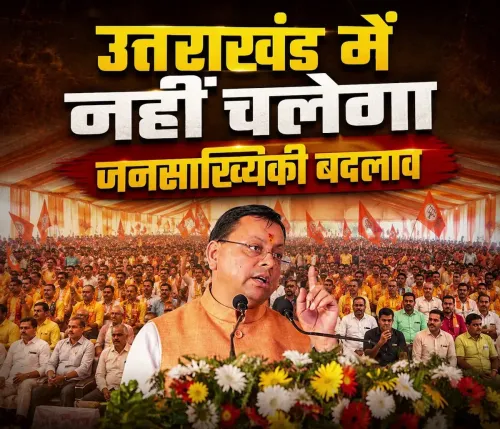
Uttarakhand Chief Minister Pushkar Singh Dhami on Saturday, 13 June 2026, declared that his government would not allow a 'radical mentality' to take root in the state at any cost, reaffirming his administration's commitment to protecting Uttarakhand's cultural heritage and religious character alongside development and good governance.
Posting in Hindi on X and tagging Prime Minister Narendra Modi, Union Home Minister Amit Shah, and the BJP's official handle, Dhami wrote: 'Devbhoomi Uttarakhand mein hamari sarkar kisi bhi keemat par kattarpanthi mansikta ko pananpne nahin degi' — 'Our government will not allow a radical mindset to flourish in Devbhoomi Uttarakhand at any cost.' He added that the administration's commitment is to advance development and sushasan (good governance) while safeguarding the state's cultural heritage, faith, and essential character.
Context
Uttarakhand, carved out of Uttar Pradesh in 2000, is constitutionally referred to and popularly revered as Devbhoomi — 'Land of the Gods' — owing to its dense concentration of Hindu pilgrimage sites, including the Char Dham circuit of Badrinath, Kedarnath, Gangotri, and Yamunotri. The state draws tens of millions of pilgrims and tourists annually, making its religious and cultural identity central to both its social fabric and its economy.
CM Dhami, who has led the state since 2021 and was re-elected in 2022, has consistently framed governance in terms of balancing infrastructure investment with the preservation of the state's spiritual and demographic character. The tagging of senior central leadership signals that the statement is intended as a coordinated message rather than a standalone remark.
Policy Backdrop
The BJP government in Uttarakhand has, since 2017, undertaken drives to remove illegal constructions around pilgrimage sites and river banks, citing the need to protect the religious character of these zones. In 2022, the Dhami administration publicly committed to strict enforcement of existing anti-conversion laws and to demographic monitoring in border districts that share frontiers with Nepal and China.
The language of sushasan paired with cultural preservation is a recurring feature of BJP-governed Himalayan states, reflecting a broader party framework that treats heritage protection as an integral pillar of good governance — not a separate agenda. Union Home Minister Amit Shah has been the principal architect of this policy alignment between state administrations and the central government on internal security and cultural issues.
Stakeholders and Impact
The statement is directed at multiple audiences: residents of Uttarakhand, the large pilgrim community that regards the state as sacred ground, and the BJP's national base, which views the protection of Hindu religious sites as a core governance commitment. Civil society groups and minority communities in the state will watch closely for any legislative or executive follow-through that translates this political declaration into specific policy action.
Local authorities in districts bordering Nepal and Tibet are likely to treat the statement as a signal to maintain existing vigilance protocols. Infrastructure and tourism stakeholders, meanwhile, will note the dual emphasis on development — suggesting the government does not intend to subordinate economic priorities to cultural concerns, but rather to pursue both simultaneously.
What's Next
Observers will track whether the Uttarakhand assembly's next session produces fresh legislation or executive orders on land use, anti-conversion enforcement, or cultural preservation near pilgrimage corridors. The tagging of PM Modi and Amit Shah raises the possibility that a central policy coordination on these themes may follow at the state-centre interface. Any concrete administrative order would convert this political statement into a measurable governance action — and would set a precedent for other BJP-ruled Himalayan states watching closely.
Point of View
The statement is elevated from a routine political remark to a signal of centre-state alignment on cultural security in a strategically sensitive border state. Uttarakhand's location adjacent to Nepal and Tibet gives such declarations a security subtext that resonates beyond domestic politics. The absence of a specific trigger in the post leaves room for the administration to deploy it reactively against any future incident, making it as much a pre-emptive political tool as a governance statement.
NationPress
14 Sept 2026
Frequently Asked Questions
What did Uttarakhand CM Dhami say about radicalism?
CM Pushkar Singh Dhami stated on 13 June 2026 that his government will not allow a radical mindset to flourish in Devbhoomi Uttarakhand at any cost, and reaffirmed his commitment to protecting the state's cultural heritage and faith while advancing development and good governance.
Why is Uttarakhand called Devbhoomi?
Uttarakhand is called Devbhoomi — meaning 'Land of the Gods' — because it is home to major Hindu pilgrimage sites including the Char Dham circuit of Badrinath, Kedarnath, Gangotri, and Yamunotri, drawing millions of devotees each year.
What is the BJP government's policy on anti-conversion in Uttarakhand?
Since 2022, the Dhami administration has publicly committed to strict enforcement of existing anti-conversion laws in Uttarakhand and to demographic monitoring in the state's border districts that adjoin Nepal and China.
Who did CM Dhami tag in his post about radicalism?
CM Dhami tagged Prime Minister Narendra Modi, Union Home Minister Amit Shah, BJP leader Nitin Nabin, and the BJP's official handle, indicating the statement was intended as a coordinated political message rather than an isolated remark.
What action is expected from the Uttarakhand government after Dhami's statement?
Political observers are watching the next Uttarakhand assembly session for possible legislation or executive orders on land use, anti-conversion enforcement, or cultural preservation near pilgrimage corridors that would give concrete policy form to Dhami's declaration.