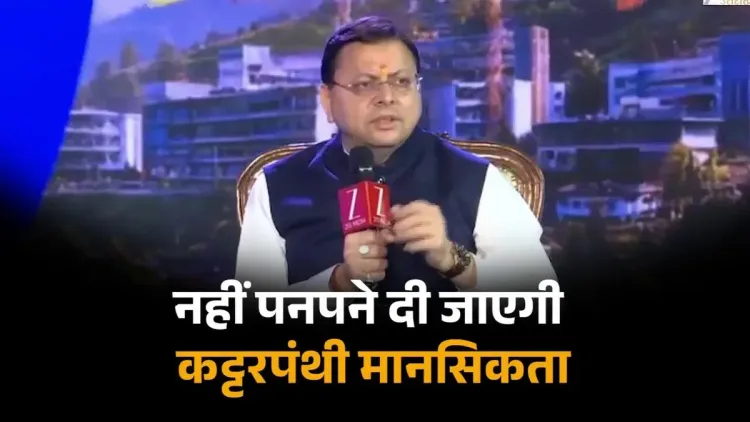
CM Dhami: No Place for Radical Mindset in Uttarakhand
Synopsis
Uttarakhand Chief Minister Pushkar Singh Dhami on June 7, 2026 declared that there is no place for a radical mindset in the state. The statement, posted on X with a video, reinforces the BJP government's long-standing stance against extremism and follows landmark moves including the Uniform Civil Code passage in 2024.
Key Takeaways
CM Pushkar Singh Dhami declared on June 7, 2026 that 'there is no place for a radical mindset in Uttarakhand.' The post was made on his official X account and was accompanied by a video.
Uttarakhand became the first Indian state to pass a Uniform Civil Code bill in February 2024 .
The Dhami government has also enacted legislation against forced religious conversions.
The statement fits a broader BJP pattern of public positions against radical ideologies across its governed states.
The 2027 Uttarakhand assembly elections are approaching, making governance messaging on social order increasingly significant.
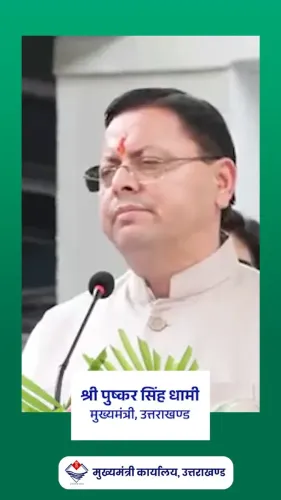
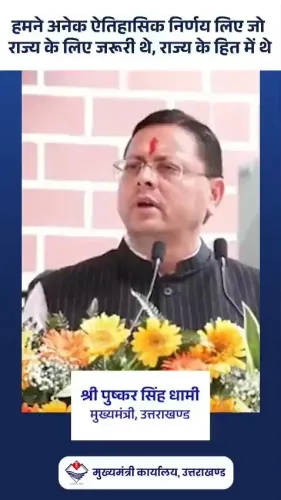
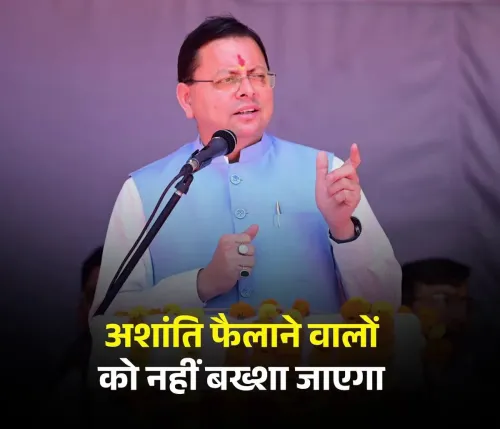
Uttarakhand Chief Minister Pushkar Singh Dhami on Sunday, June 7, 2026, issued a sharp public statement declaring that radicalism has no place in the state, posting the message directly on his official X account.
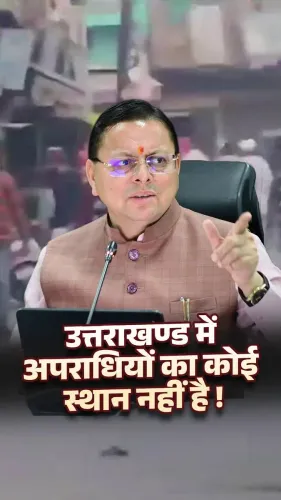
In his post, CM Dhami stated in Hindi: 'उत्तराखंड में कट्टरपंथी मानसिकता के लिए कोई जगह नहीं है' — 'There is no place for a radical mindset in Uttarakhand.' The statement, brief and unequivocal, was accompanied by a video, the contents of which signal the seriousness with which the administration is framing this position.
Context
Uttarakhand has been at the centre of several debates around communal harmony, religious conversions, and cultural identity over the past few years. Chief Minister Dhami, who has led the state since 2021, has consistently positioned his administration as one that will not tolerate ideological extremism in any form. This post continues that public posture, placing the state government on record against radical ideology.
The statement comes without a specific cited trigger, but fits a broader pattern of BJP-governed states issuing firm public positions against radical or fundamentalist tendencies, particularly amid national conversations on integration and communal harmony.
Policy Backdrop
Uttarakhand made national headlines in February 2024 when it became the first Indian state to pass a Uniform Civil Code (UCC) bill, replacing religion-specific personal laws with a common legal framework for all residents. The move was widely seen as a landmark step in the BJP's broader legislative agenda on civil uniformity.
The state has also been active in legislating against forced religious conversions, with laws that impose strict penalties on coercive or fraudulent conversion activities. Together, these measures form the legal backbone of the Dhami government's approach to what it describes as protecting the state's social fabric.
Stakeholders and Impact
The statement directly addresses all residents of Uttarakhand, particularly its religious communities, signalling that the administration expects adherence to constitutional values over ideological or sectarian loyalty. For minority communities in the state, the message underscores the government's zero-tolerance framing — while supporters of the ruling party view it as a reassertion of social order.
Civil society groups and opposition voices may scrutinise the statement for specificity — questioning what precise incidents or groups prompted the declaration. The absence of a named target makes it a broad-spectrum warning rather than a targeted administrative action.
What's Next
With the 2027 Uttarakhand assembly elections approaching, governance messaging around security, cultural preservation, and social order is expected to intensify. Further rollout or amendments to the state's laws on conversions and enforcement of the Uniform Civil Code will be closely watched as indicators of how this stated position translates into policy action.
The Dhami administration's willingness to make such declarations publicly — and on social media — suggests that countering radical ideology will remain a visible pillar of the government's political and administrative communication in the months ahead.
Point of View
Unambiguous, and designed for maximum reach on social media. It connects directly to the Dhami administration's broader legislative arc: the Uniform Civil Code, anti-conversion laws, and a consistent public posture against ideological extremism. With the 2027 state elections on the horizon, such statements serve a dual purpose — reassuring the BJP's core constituency while placing the opposition on the defensive on questions of communal order. The absence of a specific named trigger is deliberate; it makes the warning universal rather than reactive.
NationPress
26 Oct 2026
Frequently Asked Questions
What did CM Dhami say about radicalism in Uttarakhand?
CM Pushkar Singh Dhami stated on June 7, 2026 that 'there is no place for a radical mindset in Uttarakhand,' posting the declaration on his official X account along with a video.
What is the Uniform Civil Code in Uttarakhand?
Uttarakhand became the first Indian state to pass a Uniform Civil Code bill in February 2024, replacing religion-specific personal laws with a single common legal framework applicable to all residents of the state.
Why is CM Dhami making statements against radicalism?
The statement fits the BJP-governed state's consistent public posture against extremism and radical ideology, reinforced by laws on conversions and the Uniform Civil Code. It also comes ahead of the 2027 state assembly elections.
What laws has Uttarakhand passed against extremism?
Uttarakhand has enacted legislation against forced religious conversions and passed the Uniform Civil Code bill in February 2024 — two key measures the Dhami government cites in its broader effort to maintain social order.
When are the next Uttarakhand assembly elections?
The next Uttarakhand assembly elections are scheduled for 2027, and political observers note that governance messaging around security and social order is expected to intensify as the election approaches.