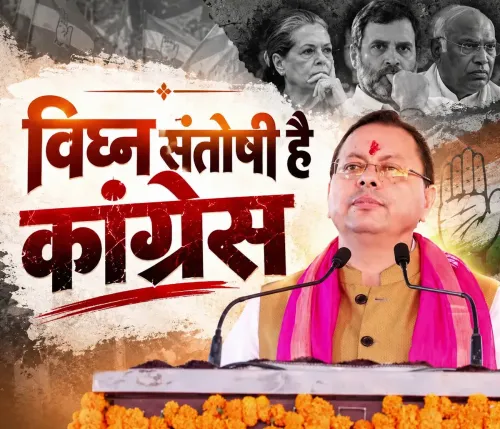
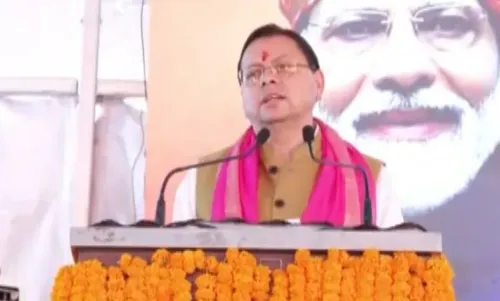
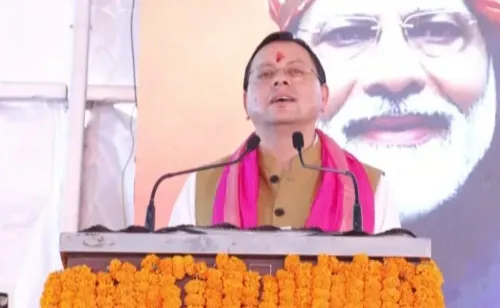
CM Dhami hails PM Modi's devotion to cow welfare as Sanatan ideal
Synopsis
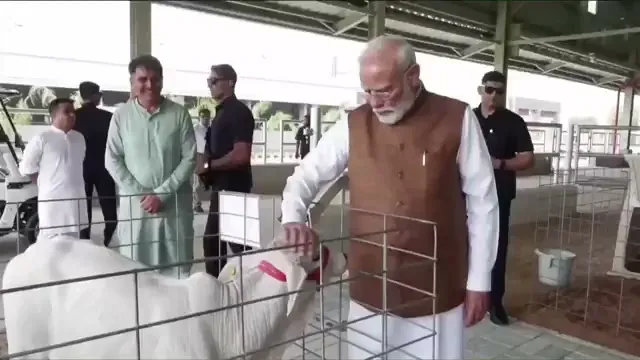
Uttarakhand CM Pushkar Singh Dhami praised PM Modi's affection for the sacred cow on 30 October 2026, framing it as a reflection of Sanatan values. The post echoes the BJP's long-standing cultural nationalism and Uttarakhand's alignment with central policy on cow welfare and Hindu traditions.
Key Takeaways
CM Pushkar Singh Dhami posted on X on 30 October 2026 praising PM Narendra Modi's affection, compassion, and warmth towards the sacred cow.
Dhami described the sentiment as a reflection of Indian culture and Sanatan tradition , calling cow service a symbol of 'service, empathy, and spiritual merit.' Article 48 of the Indian Constitution (1950) directs states to prohibit slaughter of cows and milch cattle, giving constitutional backing to cow protection.
The BJP's 2014 election manifesto explicitly included cow protection and gaushala promotion among cultural priorities.
Under Dhami, Uttarakhand has consistently aligned state policy with the BJP's Sanatan-values messaging, reflecting the state's significant Hindu pilgrimage identity.
Policy watchers are monitoring whether the statement will be followed by concrete gaushala funding in Uttarakhand's upcoming state budget .
Reverence for the cow as a living symbol of Indian civilisation found fresh political voice on Friday, 30 October 2026, when Uttarakhand Chief Minister Pushkar Singh Dhami took to X to praise Prime Minister Narendra Modi's affection for the cow — framing it not as a political stance but as a reflection of the deepest currents of Sanatan (ancient Hindu) tradition.
Posting in Hindi, CM Dhami wrote: 'गौमाता के प्रति आदरणीय प्रधानमंत्री श्री नरेन्द्र मोदी जी का स्नेह, करुणा और आत्मीय भाव हमारी भारतीय संस्कृति एवं सनातन परंपरा के मूल्यों को प्रतिबिंबित करता है।' — translated: 'Respected Prime Minister Narendra Modi's affection, compassion, and warmth towards the sacred cow reflects the values of our Indian culture and Sanatan tradition.' He added that within Indian culture, gaushala (cow shelter) service has always been regarded as a symbol of service, empathy, and spiritual merit.A constitutional echo: Article 48 and the cow's protected status
The sentiment Dhami invokes has deep constitutional roots. Article 48 of the Indian Constitution (1950) directs states to prohibit the slaughter of cows, calves, and milch cattle — an early legislative acknowledgement of cultural and agricultural significance. In the decades since, multiple states have enacted or tightened anti-cow-slaughter laws, with the pace accelerating after 2014 under BJP-led administrations.
The BJP's 2014 election manifesto explicitly included cow protection and the promotion of gaushalas among its cultural priorities — a promise that has translated into policy action at both the central and state levels, from increased gaushala funding to stricter enforcement of existing cattle protection laws.
Dhami's Uttarakhand and the alignment of state policy with cultural messaging
Under CM Dhami, Uttarakhand — a state with one of India's highest concentrations of Hindu pilgrimage sites — has consistently aligned its public posture with the BJP's ideological emphasis on Sanatan values and animal welfare. Public statements of this kind serve a dual purpose: they reinforce the party's cultural nationalist credentials with its Hindu voter base while simultaneously signalling Dhami's ideological proximity to the central leadership.
For livestock farmers and Hindu communities across the hill state, the cow occupies both a sacred and an economic role — a dual identity that gives these cultural affirmations practical resonance beyond the purely symbolic.
Whether the post is a precursor to concrete policy — additional gaushala funding in Uttarakhand's upcoming state budget, for instance — is the real test of intent. Words of reverence cost nothing; rupees in the state estimates tell the fuller story.
Point of View
Particularly in a state as symbolically freighted as Uttarakhand. The reference to 'service, empathy, and spiritual merit' subtly elevates what could be a purely political message into the register of dharmic obligation, making it harder to contest on rational grounds. The real policy question — whether this translates into new gaushala funding or welfare schemes — will determine whether the statement is a prelude to governance or a standalone cultural assertion.
NationPress
30 Oct 2026
Frequently Asked Questions
Why did Uttarakhand CM Dhami praise PM Modi for cow welfare?
CM Dhami praised PM Modi's affection for the sacred cow as a reflection of Sanatan tradition and Indian cultural values, framing cow service as a symbol of compassion and spiritual merit — messaging consistent with the BJP's cultural nationalism platform.
What does the Indian Constitution say about cow protection?
Article 48 of the Indian Constitution (1950) directs states to prohibit the slaughter of cows, calves, and milch cattle, making cow protection a constitutionally recognised directive principle of state policy.
Has BJP made cow protection an official policy priority?
Yes. The BJP's 2014 election manifesto explicitly listed cow protection and promotion of gaushalas among its cultural priorities, and multiple BJP-governed states have since strengthened anti-cow-slaughter legislation.
What is the significance of cow protection in Uttarakhand specifically?
Uttarakhand has one of India's highest concentrations of Hindu pilgrimage sites, making cultural and religious symbolism particularly resonant there. Under CM Dhami, the state has consistently aligned its public messaging with Sanatan values and animal welfare.