CM Dhami pitches youth, elders and public will for Uttarakhand's future
Synopsis
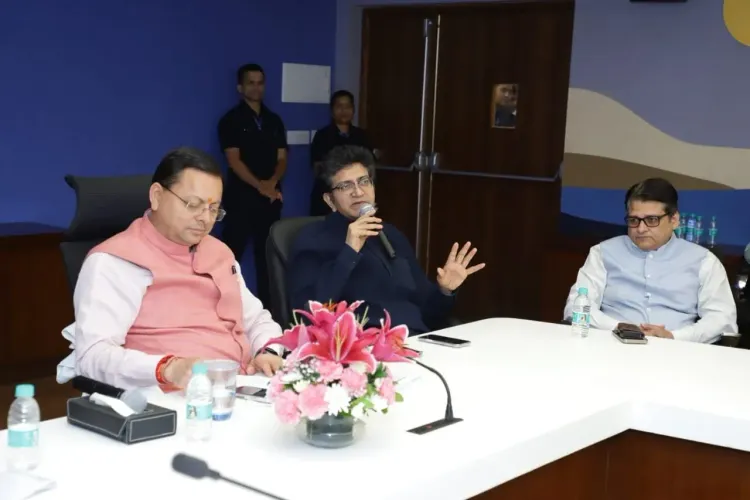
Uttarakhand CM Pushkar Singh Dhami called for a developed, self-reliant and prosperous state built on the wisdom of elders, youth energy and public aspirations, at an event also attended by senior writer Prasoon Joshi.
Key Takeaways
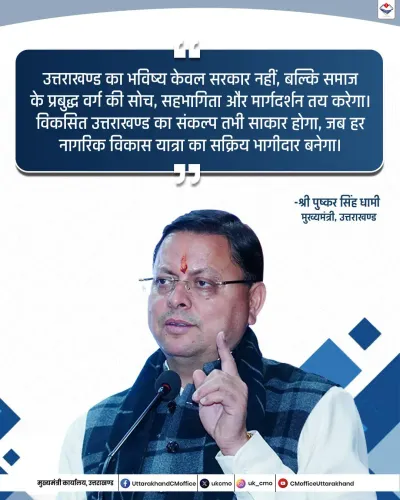
CM Pushkar Singh Dhami outlined a three-pillar vision for Uttarakhand combining the experience of learned citizens, youth energy, and public aspirations.
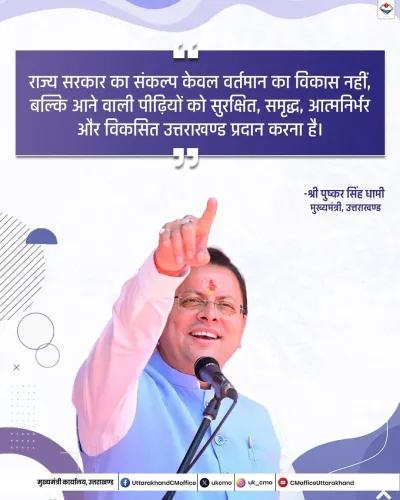
The goal, in his words, is a 'developed, self-reliant and prosperous Uttarakhand' that future generations can be proud of.
Senior litterateur and writer Prasoon Joshi was present at the occasion, adding a cultural-intellectual dimension to the event.
The 'atmanirbhar' framing echoes the national Atmanirbhar Bharat initiative launched in 2020 , now a standard element of BJP state-level messaging.
Uttarakhand, formed in 2000 , faces persistent youth out-migration, making the focus on young people's energy developmentally significant.
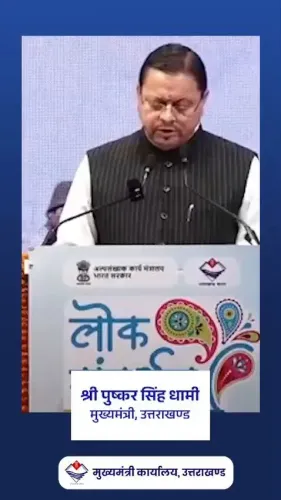
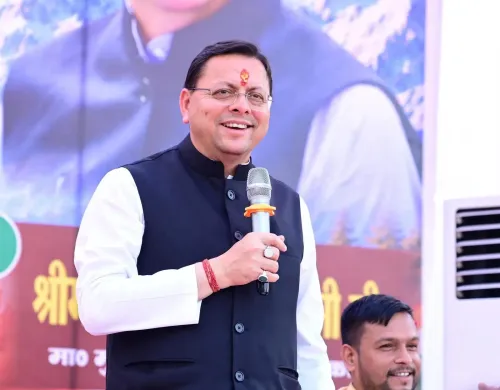
At a gathering that brought together senior literary voices and community leaders, Uttarakhand Chief Minister Pushkar Singh Dhami articulated a vision of the hill state built on three pillars — the wisdom of the learned, the energy of the young, and the aspirations of ordinary citizens.
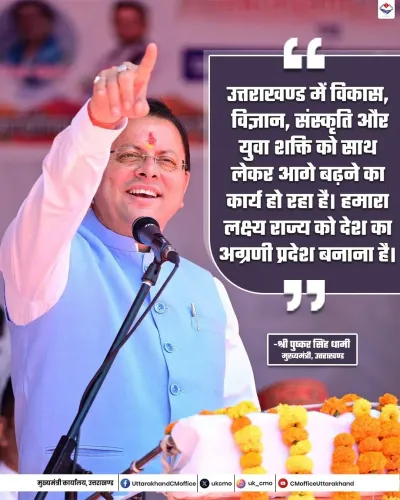
Speaking on the occasion, Dhami said the goal is to build 'ek aisa viksit, atmanirbhar aur samridh Uttarakhand' ('a developed, self-reliant and prosperous Uttarakhand') — one that future generations will look back on with pride. The statement frames state-building not as a government project alone but as a generational compact.
Prasoon Joshi's presence at the event
Notable at the gathering was Prasoon Joshi, senior litterateur and writer, whose attendance underscored the cultural and intellectual dimension Dhami was reaching for. Joshi, widely recognised in Hindi literary and creative circles, lent a distinctly non-political texture to what was otherwise a governance-themed address. The deliberate pairing of policy language with literary presence signals the kind of 'soft-power' outreach that state governments increasingly deploy to widen their social coalition.
Self-reliance messaging and its national echo
The phrase 'atmanirbhar' (self-reliant) is not incidental. Since the Atmanirbhar Bharat initiative launched nationally in 2020, state-level BJP governments have consistently woven the self-reliance vocabulary into local development narratives, connecting Uttarakhand's hill economy to a larger national ambition. Dhami's formulation — combining it with 'viksit' (developed) and 'samridh' (prosperous) — mirrors the 'Viksit Bharat' (Developed India) framing that has become standard BJP governance rhetoric ahead of planning cycles.
Uttarakhand, carved out of Uttar Pradesh in 2000, has long grappled with out-migration of its youth — making the explicit invocation of young people's energy both politically pointed and developmentally sincere. Any credible state vision for the Himalayan state must reckon with that demographic reality.
Point of View
Generationally inclusive, and tethered to the national 'Viksit Bharat' vocabulary. The presence of Prasoon Joshi is a deliberate cultural signal, broadening the coalition beyond political cadres to intellectual and literary circles. For a state with a chronic youth exodus problem, invoking young people's energy is both a policy challenge and an electoral calculation. Watch whether this rhetoric translates into specific budget allocations or remains in the register of vision-setting.
NationPress
28 Sept 2026
Frequently Asked Questions
What did CM Pushkar Singh Dhami say about Uttarakhand's development?
CM Dhami said the aim is to build a developed, self-reliant and prosperous Uttarakhand by combining the experience of learned citizens, the energy of youth, and the aspirations of the public — a state future generations can be proud of.
Who is Prasoon Joshi and why was he at the event?
Prasoon Joshi is a senior Hindi litterateur and writer. He attended the event alongside CM Dhami, lending a cultural and intellectual dimension to the governance-focused gathering.
What does 'atmanirbhar Uttarakhand' mean?
'Atmanirbhar Uttarakhand' means a self-reliant Uttarakhand. The term draws on the national Atmanirbhar Bharat initiative launched in 2020, which BJP-governed states have adopted into their local development messaging.
When was Uttarakhand formed as a separate state?
Uttarakhand was carved out of Uttar Pradesh and established as a separate Himalayan state in the year 2000.
What is the broader significance of CM Dhami's statement on youth and development?
Uttarakhand has long faced significant out-migration of its youth to other states, making the explicit focus on young people's energy both a policy priority and a politically resonant message for the BJP government.