CM Dhami transfers ₹148 cr pension to nearly 10 lakh Uttarakhand beneficiaries
Synopsis
CM Pushkar Singh Dhami disbursed ₹148.18 crore in October 2026 social security pensions to nearly 10 lakh Uttarakhand beneficiaries via DBT, covering old-age, widow, disability and other schemes — with a special Aadhaar-exempt provision for 7,000 vulnerable recipients.
Key Takeaways
₹148 crore 18 lakh 84 thousand 500 transferred to 9,99,484 beneficiaries in a single DBT event on 5 November 2026 .
Old-age pension was the largest outgo: 6,24,616 beneficiaries received ₹93.69 crore .
Widow pension covered 2,39,527 beneficiaries at ₹35.93 crore ; disability pension covered 89,971 at ₹13.50 crore .
Approximately 7,000 beneficiaries without Aadhaar receive pensions under a special state-centre coordination provision.
Disbursement was timed ahead of Diwali, Dhanteras, Bhaiyya Dooj, and Govardhan Puja celebrations.
Eight pension categories were covered, including the niche Teelu Rauteli Pension and Bauna (dwarfism) Pension .
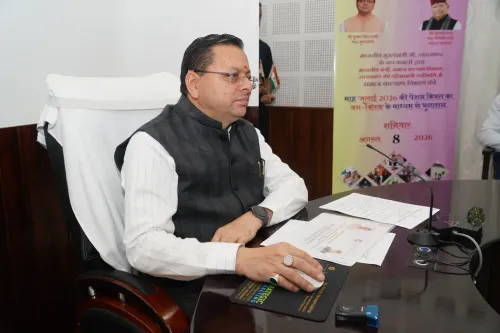
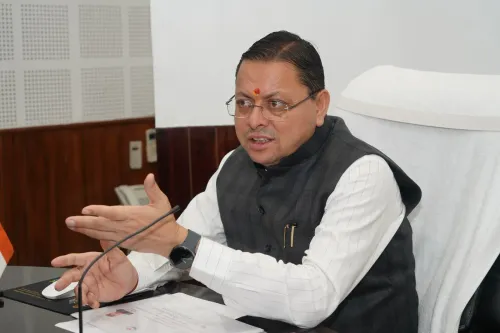
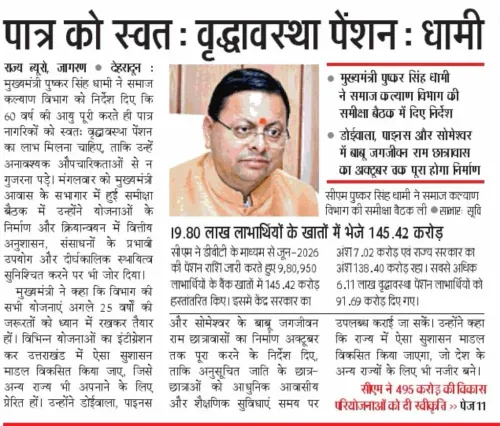
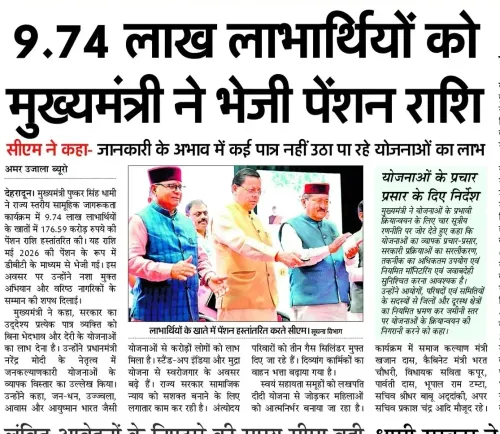
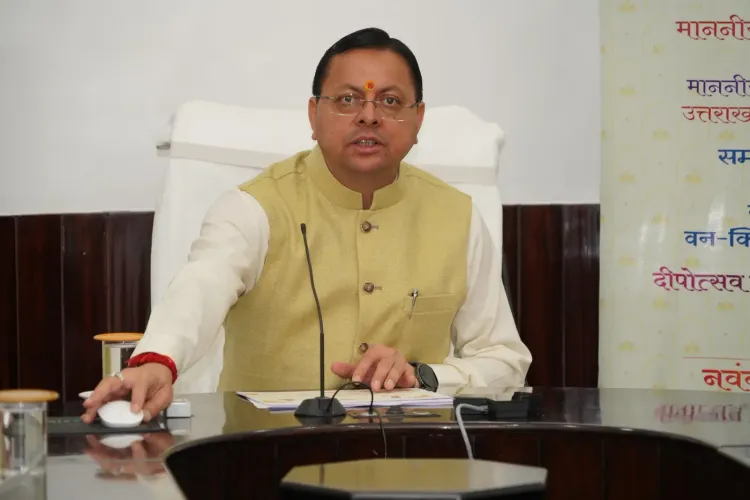
Just ahead of Diwali, Chief Minister Pushkar Singh Dhami sat at the Chief Minister's Camp Office on Thursday, 5 November 2026, and triggered a single digital transfer — pushing ₹148 crore 18 lakh 84 thousand 500 directly into the bank accounts of 9 lakh 99 thousand 484 welfare pension beneficiaries across Uttarakhand.
The disbursement, routed entirely through the Direct Benefit Transfer (DBT) mechanism, covered October 2026 payments under the Social Welfare Department's suite of pension schemes — old age, widow, disability, farmer, and several smaller categories. The timing was deliberate: CM Dhami noted that special efforts were made to ensure beneficiaries received funds before Diwali, Dhanteras, Bhaiyya Dooj, and Govardhan Puja.
Who got what: the pension breakdown
The lion's share went to the elderly. Old-age pension beneficiaries — numbering 6 lakh 24 thousand 616 — received ₹93.69 crore. Widow pension recipients, totalling 2 lakh 39 thousand 527, received ₹35.93 crore. The disability pension category covered 89 thousand 971 persons at ₹13.50 crore.
Beyond the three flagship categories, the government also paid out to 27,092 farmers under the Kisan Pension (farmer pension), 8,442 deserted women under Parityakta Pension, 7,461 under the maintenance grant (Bharan-Poshan Anudan), 2,248 under the Teelu Rauteli Pension, and 127 under the dwarfism pension (Bauna Pension).
The Aadhaar workaround for 7,000 left behind
One of the sharper policy notes from the event: CM Dhami acknowledged that elderly and disabled beneficiaries have often struggled to complete documentation formalities — particularly Aadhaar linkage. In coordination with the central government, the state has extended pension coverage to approximately 7,000 beneficiaries under special provisions, allowing payments even without an Aadhaar number.
This carve-out matters. India's DBT architecture is tightly Aadhaar-linked by design, so formal state-centre coordination to create a documented exception signals a willingness to prioritise last-mile inclusion over administrative convenience.
DBT as the accountability spine
Dhami invoked Prime Minister Narendra Modi's guidance, crediting the DBT framework for reducing leakages and eliminating unnecessary delays in scheme implementation. 'The government's objective is not merely to provide financial assistance, but to deliver social security and dignity to every section of society,' he said. The remark echoes the foundational logic of the National Social Assistance Programme (NSAP) — launched in 1995 and significantly expanded through the DBT rollout from 2013 onwards — which positioned direct bank transfers as the antidote to intermediary-driven fund leakages.
Present at the ceremony were Social Welfare Minister Khajan Das, Additional Secretary Vikram Yadav, Director Tribal Welfare Sanjay Tolia, Joint Secretary Dhirendra Singh, Joint Director Gitaram Nautiyal, and Assistant Director Hemlata Pandey.
Dhami closed by directing officials to maintain transparency and ensure that eligible beneficiaries face no inconvenience — a welfare promise that now has a price tag attached: nearly ₹148 crore, delivered in a single click.
Point of View
Number-anchored welfare delivery moment that doubles as a governance visibility exercise. Uttarakhand's festival-timed disbursement and the Aadhaar-exemption carve-out for 7,000 beneficiaries illustrate how states navigate the tension between the Centre's biometric-linked DBT architecture and genuine last-mile inclusion gaps. For CM Dhami, sustaining near-10-lakh monthly beneficiary coverage is both a welfare obligation and a political baseline ahead of any state-level electoral cycle. The explicit invocation of PM Modi's guidance also signals continued alignment with the Centre's flagship welfare-delivery narrative.
NationPress
5 Nov 2026
Frequently Asked Questions
How much pension did the Uttarakhand government transfer in October 2026?
The Uttarakhand government transferred ₹148 crore 18 lakh 84 thousand 500 to 9,99,484 beneficiaries under various Social Welfare Department pension schemes for October 2026.
Which pension schemes are covered under Uttarakhand's social welfare pension?
The schemes include old-age pension, widow pension, disability pension, farmer pension (Kisan Pension), deserted-women pension (Parityakta Pension), maintenance grant (Bharan-Poshan Anudan), Teelu Rauteli Pension, and dwarfism pension (Bauna Pension).
What is DBT and why is it used for pension payments?
Direct Benefit Transfer (DBT) is a national mechanism that sends welfare funds directly into beneficiaries' verified bank accounts, reducing leakages and administrative delays. It has been expanded across India since 2013.
Can Uttarakhand pension beneficiaries without Aadhaar receive payments?
Yes. Approximately 7,000 beneficiaries in Uttarakhand who lack Aadhaar are covered under a special provision developed in coordination with the central government, ensuring they still receive their pension.
How many old-age pension beneficiaries are there in Uttarakhand?
As of October 2026, 6,24,616 individuals receive old-age pension in Uttarakhand, with a total monthly outgo of ₹93.69 crore .