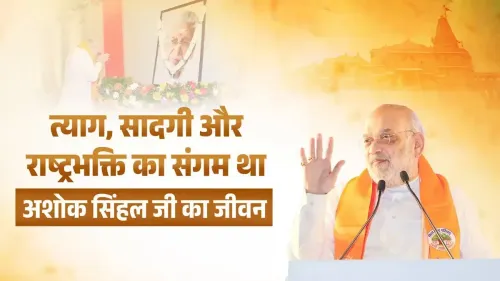
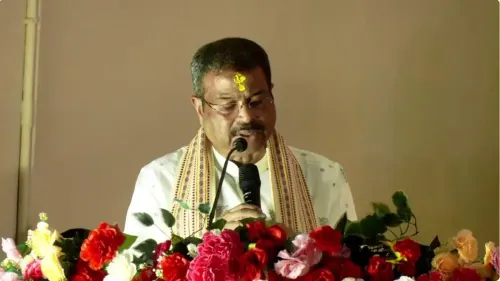
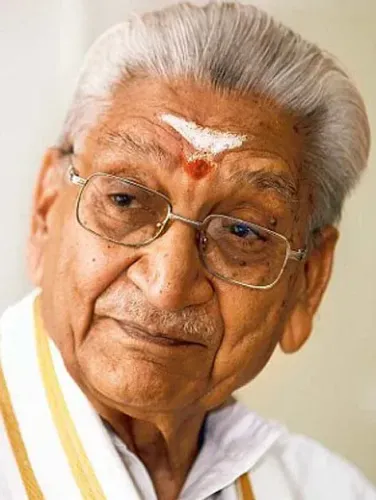
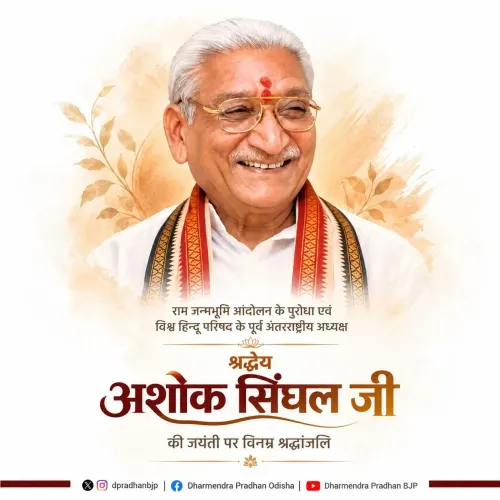
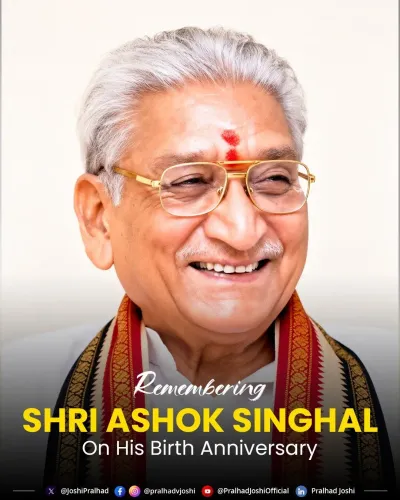
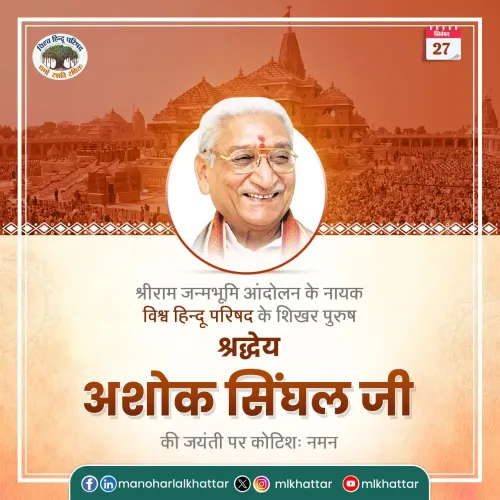
Dharmendra Pradhan pays tribute to Ashok Singhal
Synopsis
Union Education Minister Dharmendra Pradhan honoured late VHP president Ashok Singhal on X, describing his sacrifice and struggle as a source of inspiration — reaffirming BJP's ideological ties to the Sangh Parivar.
Key Takeaways
Dharmendra Pradhan posted a tribute to Ashok Singhal on X on September 27, 2026 , written in Odia.
He called Singhal's sacrifice and struggle 'a source of inspiration for all of us.' Ashok Singhal was a senior RSS pracharak and former Vishva Hindu Parishad (VHP) president who died in 2015 .
Singhal was the principal organisational force behind the Ram Janmabhoomi movement .
The tribute reinforces BJP's consistent practice of honouring Sangh Parivar icons on significant dates.
Pradhan's use of Odia adds a regional dimension to what is an ideologically national gesture.
A life of sacrifice and struggle — that is how Union Education Minister Dharmendra Pradhan chose to remember Ashok Singhal, the towering figure of the Vishva Hindu Parishad, in a post on X on Sunday, September 27, 2026. The tribute, written in Odia, was brief but pointed.
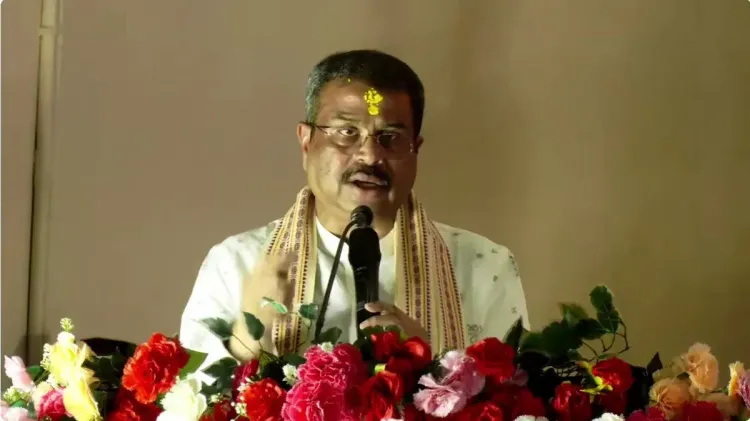
Pradhan wrote — 'Ashok Singhal Jinka tyaga o sangharsha ama samanku paain preranara srota' — 'The sacrifice and struggle of Ashok Singhal Ji is a source of inspiration for all of us.' The message was accompanied by a video, underscoring that this was more than a passing acknowledgement.
Who was Ashok Singhal?
Ashok Singhal, who passed away in 2015, was one of the most influential figures in the broader Sangh Parivar ecosystem. A senior RSS pracharak who rose to lead the Vishva Hindu Parishad (VHP) as its working president and later international president, Singhal was the driving force behind the Ram Janmabhoomi movement — one of the most consequential socio-religious mobilisations in post-independence Indian history.
His decades of organisational work, combined with an unflinching ideological commitment, made him a revered figure among Sangh workers across India and in the Hindu diaspora. His name remains inseparable from the campaign that culminated, years after his death, in the construction of the Ram Mandir in Ayodhya.
BJP's bond with the Sangh ecosystem on display
Pradhan's tribute is part of a broader, consistent pattern among BJP ministers and leaders of honouring deceased RSS and VHP figures on significant dates. These posts serve a dual purpose — reaffirming the party's ideological lineage and keeping the memory of movement architects alive for the next generation of workers.
That Pradhan chose Odia — his own mother tongue — to deliver the tribute adds a personal texture to the message, connecting the national figure of Singhal to a regional political base. For Odisha, where the BJP has worked to deepen its roots, invoking a Sangh icon in the local language is a gesture that resonates beyond Delhi.
Singhal's legacy endures not in policy files but in the lived conviction of millions. Pradhan's words are a reminder that for the Sangh Parivar, ideological memory is itself a form of mobilisation.
Point of View
High on symbolic capital. By invoking Singhal's 'sacrifice and struggle,' Pradhan links himself and his party to the movement that ultimately delivered the Ram Mandir, a defining achievement for the BJP base. The choice of Odia signals simultaneous outreach to a regional constituency where ideological grounding is electorally relevant. Such tributes carry no immediate legislative consequence, but they function as a steady drumbeat of identity reinforcement for core voters.
NationPress
28 Sept 2026
Frequently Asked Questions
Who was Ashok Singhal?
Ashok Singhal was a senior RSS pracharak and former president of the Vishva Hindu Parishad (VHP), widely regarded as the chief organiser of the Ram Janmabhoomi movement. He passed away in 2015.
What did Dharmendra Pradhan say about Ashok Singhal?
Pradhan wrote in Odia that Ashok Singhal's sacrifice and struggle is 'a source of inspiration for all of us,' posting the tribute along with a video on X on September 27, 2026.
Why is Ashok Singhal significant to the BJP and Sangh Parivar?
Singhal led the VHP for decades and was the principal architect of the Ram Janmabhoomi movement, which sought the construction of the Ram Mandir in Ayodhya — a cause central to the BJP's ideological identity.
Why did Dharmendra Pradhan post the tribute in Odia?
Odia is Pradhan's mother tongue and the language of Odisha, his home state. Posting in Odia gives the tribute a regional resonance while connecting a national Sangh icon to the local political base.
Is this tribute linked to a specific anniversary of Ashok Singhal?
The exact occasion for the September 27, 2026 tribute has not been officially specified by Pradhan. BJP and Sangh Parivar leaders regularly post tributes to movement figures on significant dates.