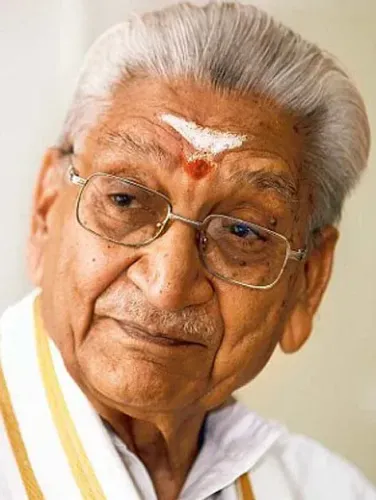
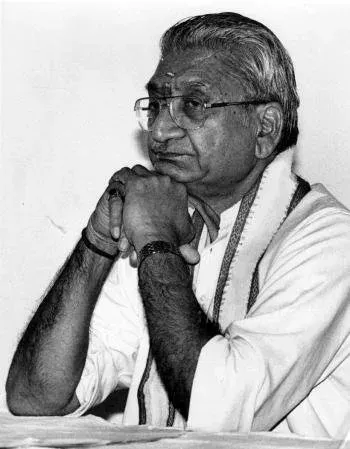
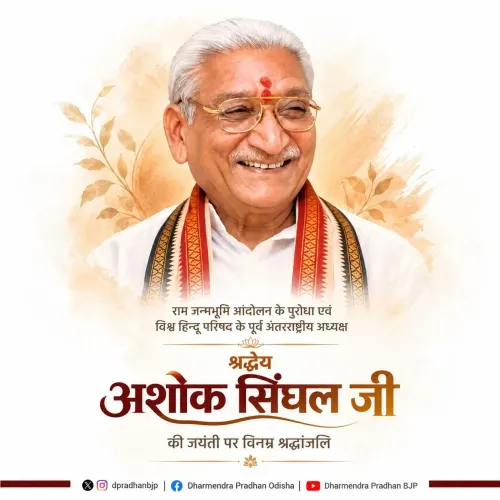
Dharmendra Pradhan pays tribute to Ashok Singhal on birth centenary
Synopsis
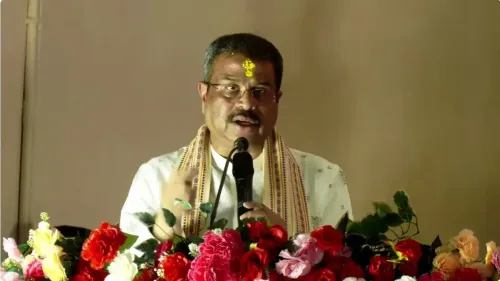
Union Education Minister Dharmendra Pradhan has paid tribute to VHP leader Ashok Singhal on his birth centenary, calling him an unparalleled symbol of sacrifice for the nation and linking his decades of Ram Janmabhoomi activism to the 2024 Ayodhya temple consecration.
Key Takeaways
Dharmendra Pradhan posted on 27 September 2026 honouring Ashok Singhal during his birth centenary year under the hashtag #100YearsOfAshokJi .
Singhal led the Vishva Hindu Parishad (VHP) Ram Janmabhoomi movement from the 1980s , including the landmark 1989 shilanyas at Ayodhya.
Pradhan credited Singhal's 'ceaseless resolve' as foundational to the January 2024 Ayodhya temple consecration.
Union Home Minister Amit Shah is also noted as having highlighted Singhal's contributions during the centenary year.
The 2024 consecration followed the 2019 Supreme Court verdict that cleared the site for temple construction.
Singhal passed away in 2015 , before either the Supreme Court judgment or the temple consecration.
Five centuries of longing, one completed temple — and behind that arc, a man whose name Union Education Minister Dharmendra Pradhan invoked on Sunday, 27 September 2026, calling Ashok Singhal's life an 'unparalleled example of sacrifice and dedication towards the nation, dharma, and Indian culture.'
Who was Ashok Singhal, and why does his centenary matter?
Ashok Singhal was the driving force behind the Vishva Hindu Parishad (VHP) — the Hindu organisation founded in 1964 — and the chief organiser of the Ram Janmabhoomi movement from the 1980s onward. It was under his leadership that the VHP's 1984 Dharma Sansad issued its call for a Ram temple at Ayodhya, and it was he who oversaw the landmark 1989 shilanyas (foundation-stone ceremony) at the disputed site, transforming a religious aspiration into a mass political movement.
His centenary year — 2026 — arrives two years after the movement's most consequential milestone: the January 2024 consecration of the Ram temple in Ayodhya, itself made possible by the 2019 Supreme Court verdict that cleared the site for temple construction. Singhal did not live to see either moment — he died in 2015 — but his decades of organised effort are widely credited as having kept the cause alive through its most turbulent phases.
Amit Shah's tribute and the centenary commemoration
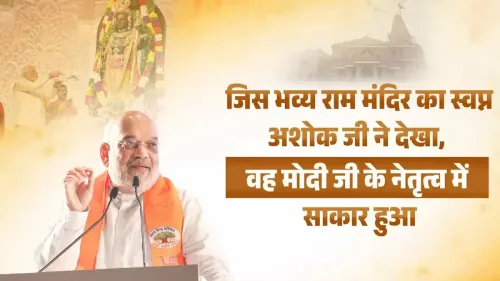
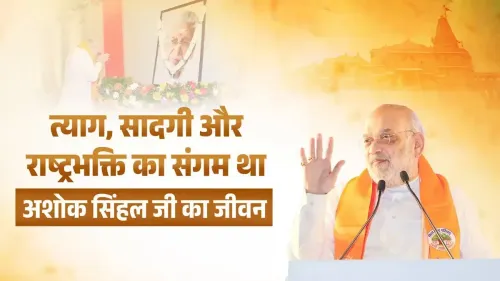
Pradhan's post notes that Union Home and Cooperation Minister Amit Shah had publicly highlighted the various dimensions of Singhal's life during the centenary year, in terms that, Pradhan wrote, made 'the breadth of his incomparable contribution clear.' The minister did not detail the specific contents of Shah's remarks.
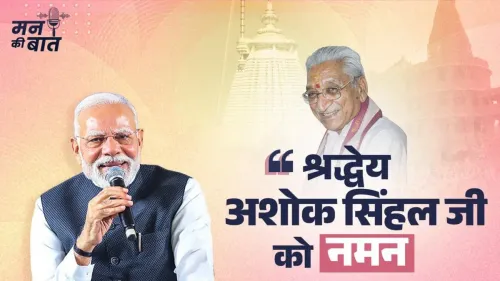
The hashtag #100YearsOfAshokJi signals a coordinated centenary observance that BJP leaders and affiliated organisations are marking through 2026, consistent with the party's pattern of formally recognising figures central to the Ram temple cause now that the temple stands.
The Ayodhya temple as the movement's culmination
Pradhan's post frames the completed temple's 'divine form' — visible to all today in Ayodhya — as the direct outcome of the 'ceaseless resolve and spiritual dedication of nation-devoted great men like Ashok Ji.' Pânch shataabdiyon ke lambe sangharsh ke baad — after a long struggle of five centuries — is the precise phrase the minister used, rooting the 2024 consecration in a historical sweep stretching back five hundred years.
The tribute closes with a forward-looking note: Singhal's dedicated life in service of Indian culture and Sanatana values, Pradhan writes, 'will always remain a source of inspiration for generations to come.'
Point of View
Pradhan signals cross-party leadership alignment on the commemoration, amplifying its official weight. The framing — 'five centuries of struggle' resolved in the completed temple — is designed to embed the 2024 consecration in a near-mythic historical arc, reinforcing the BJP's electoral identity as the movement's realiser. As the centenary year continues, further ministerial statements and VHP-led events will likely sustain this narrative through 2026.
NationPress
28 Sept 2026
Frequently Asked Questions
Who was Ashok Singhal?
Ashok Singhal was the longtime leader of the Vishva Hindu Parishad (VHP) and the principal organiser of the Ram Janmabhoomi movement that campaigned for a Ram temple at Ayodhya from the 1980s onward. He passed away in 2015.
Why is 2026 Ashok Singhal's centenary year?
2026 marks 100 years since Ashok Singhal's birth, prompting the BJP and affiliated organisations to hold commemorative events under the hashtag #100YearsOfAshokJi.
What is the Ram Janmabhoomi movement?
The Ram Janmabhoomi movement was a decades-long campaign, led prominently by the VHP and Ashok Singhal, to build a Ram temple at Ayodhya. The 2019 Supreme Court verdict cleared the site for construction, and the temple was consecrated in January 2024.
What did Dharmendra Pradhan say about Ashok Singhal?
Pradhan called Singhal's life 'an unparalleled example of sacrifice and dedication towards the nation, dharma, and Indian culture,' and credited his resolve as foundational to the Ayodhya temple now visible to all.
What role did Amit Shah play in the Ashok Singhal centenary?
According to Pradhan's post, Union Home Minister Amit Shah publicly highlighted various dimensions of Singhal's life during the centenary year, an act Pradhan described as making the breadth of Singhal's contribution clear.