CM Siddaramaiah, DK Shivakumar Chair Coastal Tourism Meet
Synopsis
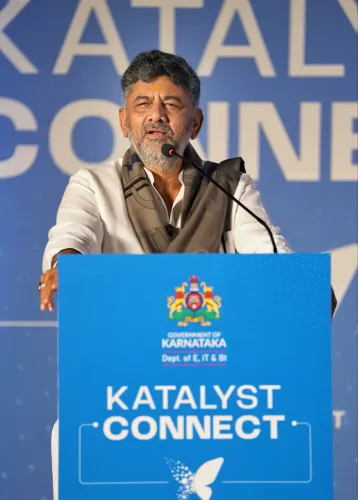
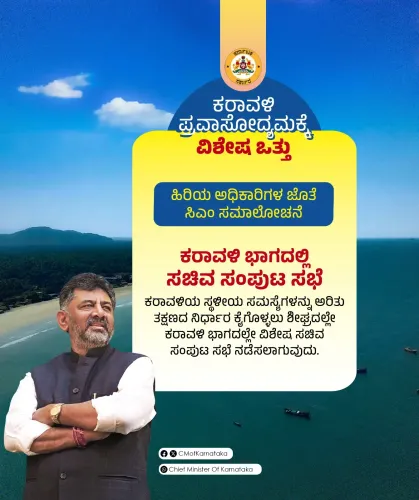
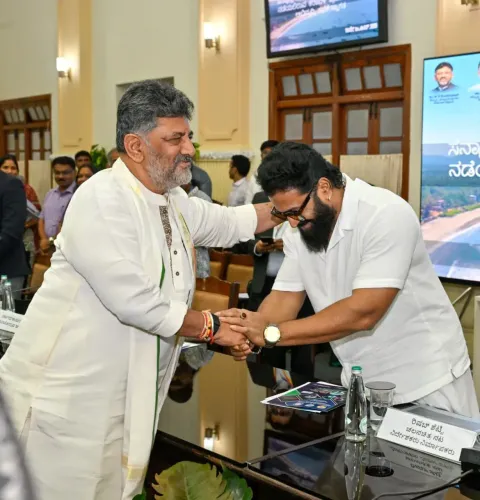
Deputy CM DK Shivakumar chaired a high-level meeting with senior Karnataka officials on Friday to review future coastal tourism development plans and assess project feasibility, signalling renewed state focus on unlocking the economic potential of the Arabian Sea coastline.
Key Takeaways
Deputy CM DK Shivakumar chaired a meeting with senior Karnataka government officials on Friday, 20 June 2026 focused on coastal tourism development.
The deliberations covered the blueprint and feasibility of future coastal tourism projects, with Shivakumar issuing directions to officials.
Karnataka's coast spans Dakshina Kannada, Udupi, and Uttara Kannada districts along approximately 320 km of the Arabian Sea.
Any new projects must navigate Coastal Regulation Zone (CRZ) environmental clearance requirements before construction can begin.
Central schemes such as Swadesh Darshan and PRASAD offer co-financing routes for state coastal tourism proposals.
Specific project names, costs, and timelines have not been officially disclosed following the meeting.
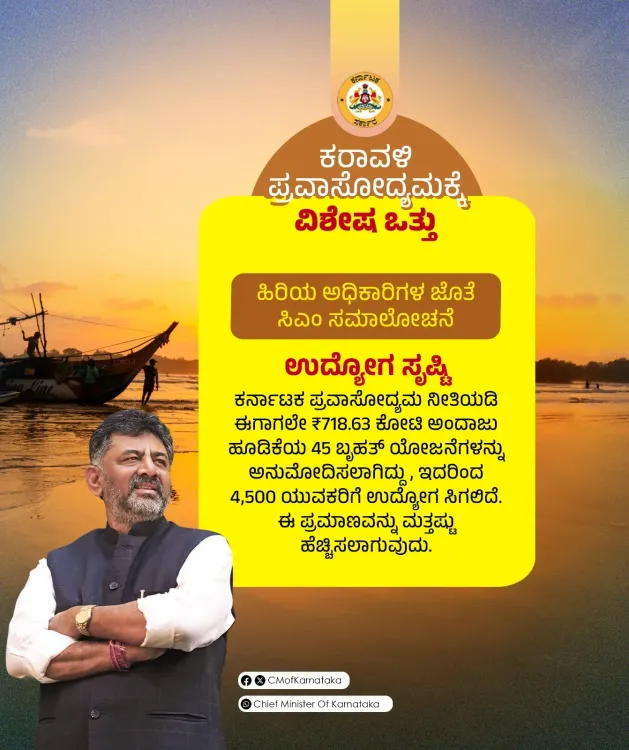
The Chief Minister's Office of Karnataka announced on Saturday, 20 June 2026 that Deputy Chief Minister DK Shivakumar chaired a high-level meeting with senior government officials to discuss the development of coastal tourism in the state, reviewing future project blueprints and assessing their feasibility.
The Kannada-language post from the official CMO account stated that 'ಭವಿಷ್ಯದ ಯೋಜನೆಗಳ ರೂಪುರೇಷೆ ಹಾಗೂ ಕಾರ್ಯಸಾಧ್ಯತೆ' ('the outline and feasibility of future plans') were deliberated upon, with Shivakumar offering directions and guidance to the assembled officers.
Context
Karnataka's coastline spans the districts of Dakshina Kannada, Udupi, and Uttara Kannada, stretching across roughly 320 kilometres along the Arabian Sea. The region is home to beaches, heritage temples, backwaters, and port towns that draw significant domestic tourist footfall every year. Despite its natural assets, the coastal belt has historically lagged behind Goa and Kerala in tourism infrastructure and brand visibility.
The meeting, held on a Friday as noted in the post, signals renewed executive attention to unlocking the economic potential of the western coastal corridor ahead of the next state budget cycle.
Policy Backdrop
Karnataka's Tourism Policy 2015-2020 had laid out a coastal circuit development framework, calling for upgrades to beach infrastructure, road connectivity, and hospitality facilities. Subsequent years saw incremental improvements, but stakeholders have consistently flagged gaps in last-mile connectivity and amenities at key sites.
At the national level, central schemes such as Swadesh Darshan and PRASAD have provided funding templates for states to develop thematic tourism circuits, including coastal routes. Karnataka has tapped these windows in previous fiscal years, and any new project proposals emerging from Friday's deliberations could be routed through these central channels for co-financing.
Coastal development in Karnataka must also navigate the Coastal Regulation Zone (CRZ) framework, which governs construction and land use within defined distances from the high-tide line. Environmental clearances under CRZ rules remain a critical procedural step before any infrastructure project on the coast can break ground.
Stakeholders and Impact
The primary beneficiaries of expanded coastal tourism infrastructure would be hotel and resort operators, local fishing communities who supplement incomes through tourism-linked services, and small businesses along popular beach destinations such as Murudeshwar, Malpe, Karwar, and Mangaluru. Improved connectivity and amenities typically translate into longer tourist stays and higher per-visitor spending.
However, fishing communities and environmental groups have in the past raised concerns about large-scale tourism projects encroaching on traditional livelihoods and ecologically sensitive coastal habitats. Balancing development with CRZ compliance and community interests will be a key challenge for planners.
What's Next
The immediate watch point is whether Friday's consultations translate into concrete proposals placed before the Karnataka Cabinet or earmarked in the next state budget. Specific project names, timelines, and cost estimates have not been disclosed in the official communication. Environmental clearances under CRZ norms and land acquisition processes, where applicable, would follow any formal project approvals.
With domestic travel demand rising steadily across India, Karnataka's move to actively plan coastal tourism expansion positions the state to compete more directly with established coastal destinations — provided execution keeps pace with intent.
Point of View
Where the BJP has strong roots, making visible state investment in the region strategically significant for the ruling party. The real test will be whether CRZ compliance and community consultations are embedded in the planning process from the outset, or treated as afterthoughts that delay execution.
NationPress
19 Sept 2026
Frequently Asked Questions
What did DK Shivakumar discuss in the coastal tourism meeting?
DK Shivakumar met senior Karnataka government officials to deliberate on the blueprint and feasibility of future coastal tourism development projects, issuing guidance and directions to the assembled officers.
Which districts in Karnataka are covered under coastal tourism plans?
Karnataka's coastal tourism focus primarily covers the districts of Dakshina Kannada, Udupi, and Uttara Kannada, which together form the state's roughly 320-km Arabian Sea coastline.
What is the Swadesh Darshan scheme and how does it relate to Karnataka?
Swadesh Darshan is a central government scheme that funds thematic tourism circuit development across India, including coastal routes. Karnataka has previously accessed this scheme and could route new coastal project proposals through it for co-financing.
What are CRZ rules and why do they matter for Karnataka's coastal projects?
Coastal Regulation Zone rules are environmental regulations that govern construction and land use within defined distances from the high-tide line. Any coastal tourism infrastructure project in Karnataka must obtain CRZ clearance before work can begin.
When will Karnataka announce specific coastal tourism projects?
No specific project names, costs, or timelines have been officially disclosed following the Friday meeting. Cabinet approvals or budget allocations in the next state fiscal cycle are the key milestones to watch.