DMK chief Stalin slams Vijay govt over Thiruparankundram SC order
Synopsis
DMK president M. K. Stalin on 27 November 2026 accused Tamil Nadu's TVK government of failing at the Supreme Court over Thiruparankundram, citing a hilltop lamp, CRPF control and a dissolved temple board as a surrender of state rights. He appealed for religious harmony.
Key Takeaways
Stalin on 27 November 2026 called the Thiruparankundram Supreme Court outcome a blatant defeat for the TVK government.
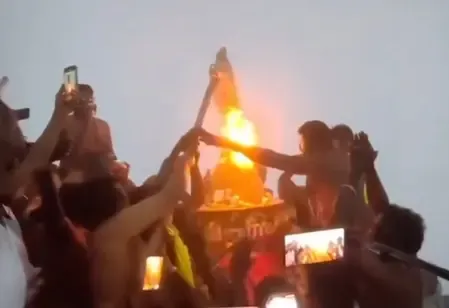
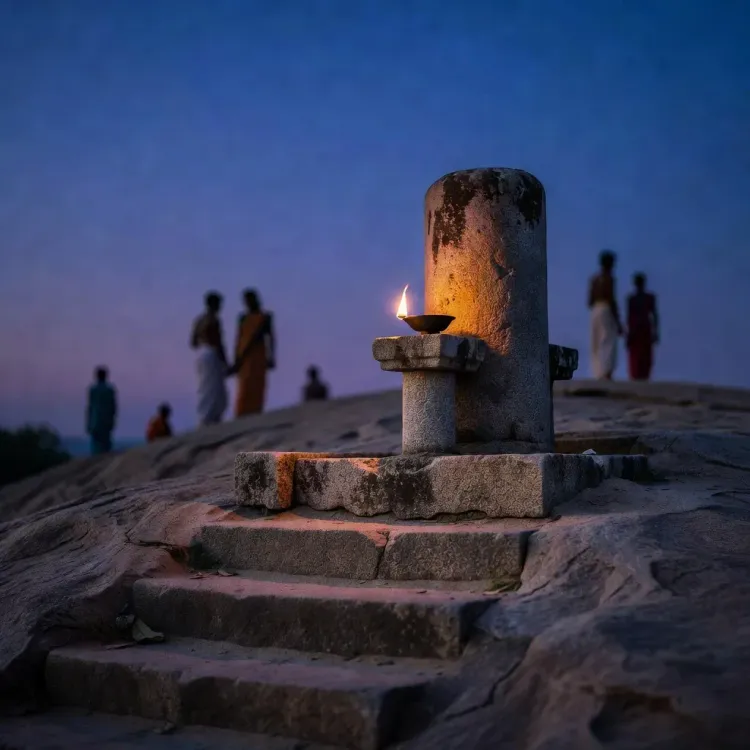
He said the court had ordered a lamp lit the next day on a pillar at the summit of Thiruparankundram hill in Madurai district.
Stalin listed further directions he said the court issued: CRPF control of the hill, dissolution of the temple trustees' committee, a former-judges panel, and personal appearance by the Chief Secretary, DGP, HRCE Commissioner, Madurai Collector and Deputy Commissioner.
He accused Chief Minister Vijay of not arguing strongly in court, outsourcing responsibility and remaining silent after the order.
Stalin tied the dispute to sixty years of Dravidian struggle for state rights and a century-long shift of temples under democratic control.
He appealed to Tamil Nadu's people to protect religious harmony under any circumstance.
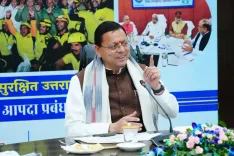
A former Chief Minister has just turned a hilltop lamp into a statewide political crisis. On Friday evening, DMK president M. K. Stalin accused Tamil Nadu's Tamilaga Vettri Kazhagam government of inviting, in his words, an unprecedented threat to tradition, religious harmony and state rights over the Thiruparankundram shrine in Madurai district.
Posting in Tamil on 27 November 2026, Stalin called the Supreme Court outcome in the Thiruparankundram matter 'a blatant defeat' for the TVK government. He said the court had directed that a lamp be lit the next day on a pillar at the summit of the hill that houses the ancient Murugan temple — and he framed that direction as the product of a weak defence in court, not merely a legal setback.
'Blatant defeat' on the Thiruparankundram hill
Stalin named Chief Minister Vijay and charged that an 'administratively inept' government had failed to place strong arguments before the court, thereby 'seeking humiliation for Tamil Nadu'. He listed a cluster of directions he said the Supreme Court had issued, calling them shocking: the entire hill entrusted to the CRPF; dissolution of the temple trustees' committee; transfer of responsibility to a panel of former judges; and personal appearance by the Chief Secretary, the DGP, the Hindu Religious and Charitable Endowments Commissioner, the Madurai Collector and the Deputy Commissioner.
Those claims are Stalin's account of the order. He accused the state of taking 'double positions', of not arguing with force, and of hiding behind the trustees' committee instead of owning the government's duty. He reached for a Tamil proverb — a flower garland that falls into a monkey's hands — to say the TVK government had wrecked whatever it touched.
CRPF on the hill, trustees out, officials summoned
The political sting, in Stalin's telling, is not only the lamp. It is who now holds the ground. Handing a historic hill shrine to a central paramilitary force, dissolving a local temple board, and pulling the state's top civil and police officers into the courtroom is, for a Dravidian party, a live wire: law and order and temple administration have long been treated in Chennai as core state subjects.
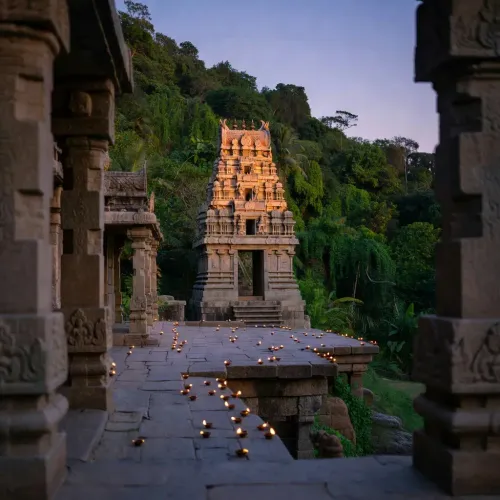
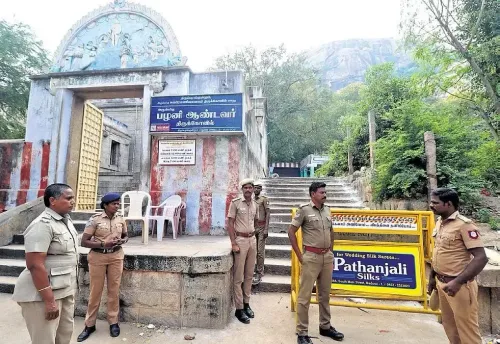
Thiruparankundram is not an anonymous rock. It is a multi-community worship landscape around an ancient Murugan temple, where local custom and inter-faith practice have been argued over for years. Stalin said successive DMK governments had protected the worship traditions followed there 'for ages' and had 'established religious harmony, peace and state rights'. Today's failure, he said, came from 'incompetence, publicity hunger and cowardice'.
Sixty years of temple control, one case, one charge
Then he widened the lens. The Dravidian movement, he said, had spent sixty years fighting — 'shedding blood, losing lives' — to secure state rights. Temples that, in the movement's account, had sat with 'fraudulent cliques' were, starting a hundred years ago, brought step by step under democratic and governmental control. That project, Stalin alleged, had been 'gifted to the Union government in a single case'.
The lineage he was invoking is real even if the 2026 order is being reported here only as he described it. Early twentieth-century Dravidian campaigns attacked hereditary temple control and pushed for elected or government-managed boards. From the 1960s onward, DMK governments expanded state supervision of Hindu religious institutions through the HRCE framework while treating any shift of authority toward New Delhi as a federal wound. Stalin's post plants Thiruparankundram inside that longer fight: not a local ritual dispute, but a test of who runs Tamil Nadu's sacred geography.
A silent Chief Minister, Stalin says, is the real problem
Stalin's sharpest personal line was aimed at the incumbent. The Chief Minister, he said, had 'outsourced' his duties and was performing dialogues 'like a stand-up comedian'. Inexperience, he added, was not the core problem. 'He does not allow experienced and knowledgeable people near him' — that, Stalin said, now sits behind many of Tamil Nadu's troubles. Vijay's refusal to 'open his mouth' after the order, he called a 'historic betrayal' of the state.
He closed with an appeal, not a legal brief. 'Under any circumstance we will protect our religious harmony. We will be an example for future generations.' That is the political bet: keep the communal temperature down while pinning administrative blame on the government of the day.
The next test is on the hill itself — who lights the lamp, who holds the perimeter, and whether Chennai answers Stalin's charge or lets the silence he condemned become the story.
Point of View
Central forces on a sacred hill as encroachment. The attack on Vijay's silence and inexperience is meant to convert a courtroom loss into a competence crisis, while the closing appeal on communal peace tries to keep the street from becoming the second front.
NationPress
27 Nov 2026
Frequently Asked Questions
What did MK Stalin say about the Thiruparankundram Supreme Court case?
DMK president M. K. Stalin said the verdict was a blatant defeat for Tamil Nadu's TVK government. He accused it of failing to argue strongly, endangering tradition, religious harmony and state rights, and of remaining silent after the order.
Where is Thiruparankundram and why does it matter?
Thiruparankundram is a hill shrine in Madurai district, Tamil Nadu, known for an ancient Murugan temple and long-standing local worship practices involving more than one community. Stalin presented it as a test of custom, communal peace and the state's control over temple administration.
What court directions did Stalin claim had been issued?
Stalin said the Supreme Court had ordered a lamp lit the next day on a pillar at the hilltop. He also said the hill had been entrusted to the CRPF, the temple trustees' committee dissolved, charge given to a former-judges panel, and top state officials told to appear in person.
Why did Stalin mention CRPF and state rights?
He argued that placing the hill under the Central Reserve Police Force and shifting temple control away from the state amounted to surrendering powers the Dravidian movement had fought for over sixty years. Dravidian governments have long treated temple oversight and local law and order as core state functions.
What did Stalin ask the people of Tamil Nadu to do?
He asked Tamils to protect religious harmony in every circumstance and to set an example for future generations. The appeal sat alongside his attack on Chief Minister Vijay for not speaking after the order.