DMK seeks separate Lok Sabha seating after Congress alliance collapse
Synopsis
The DMK has formally asked Lok Sabha Speaker Om Birla to seat its MPs away from Congress — a public, procedural break that turns a Tamil Nadu electoral fallout into a national parliamentary statement. With the Congress having backed C. Joseph Vijay's TVK after a fractured mandate, one of South India's most durable alliances has unravelled in full view of Parliament.
Key Takeaways
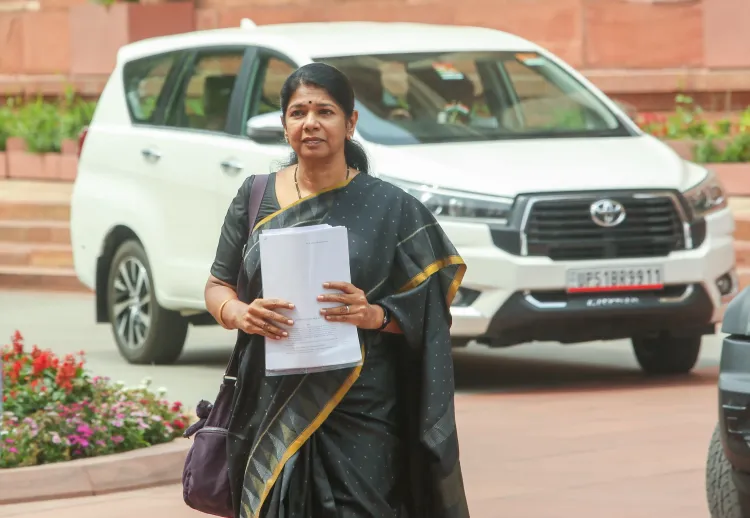
DMK Parliamentary Party leader Kanimozhi Karunanidhi has written to Lok Sabha Speaker Om Birla seeking a separate seating block for DMK MPs.
The request follows the collapse of the DMK-Congress alliance after the Tamil Nadu Assembly elections produced a fractured mandate.
Congress extended support to C.
Joseph Vijay's Tamilaga Vettri Kazhagam (TVK) after the election, triggering accusations of political betrayal from DMK leadership.
Neither the Congress nor the Lok Sabha Secretariat has officially responded to the letter as of 8 May .
Political observers warn the split could affect opposition coordination at the national level ahead of future parliamentary contests.
The Dravida Munnetra Kazhagam (DMK) has formally sought a separate seating arrangement for its Members of Parliament in the Lok Sabha, following the breakdown of its alliance with the Indian National Congress (INC) in the wake of the Tamil Nadu Assembly elections. The move marks a significant and public distancing between two parties that had been allies in both state and national politics for several years.
Kanimozhi's Letter to the Speaker
DMK Parliamentary Party leader Kanimozhi Karunanidhi has written to Lok Sabha Speaker Om Birla, requesting that DMK MPs be allotted an independent seating block in the House. In her letter, she cited the changed political circumstances between the two parties, arguing that it would be inappropriate for DMK MPs to continue sharing a seating arrangement alongside Congress members given the altered relationship.
Kanimozhi urged the Speaker to take necessary steps to provide a separate seating allocation so that DMK members could effectively carry out their parliamentary responsibilities. Neither the Congress nor the Lok Sabha Secretariat has officially responded to the letter so far. Sources indicated that the Speaker's office is expected to examine the request in accordance with parliamentary procedures and established seating norms.
What Triggered the Split
The alliance rupture stems from developments following the Tamil Nadu Assembly elections, which produced a fractured mandate. The Congress, which had contested the polls as part of the DMK-led alliance, subsequently extended support to actor-politician C. Joseph Vijay's Tamilaga Vettri Kazhagam (TVK) — a move that drew a sharp reaction from DMK leadership.
Senior DMK leaders publicly accused the Congress of political betrayal, and in subsequent meetings of newly elected DMK MLAs and party functionaries, the party openly criticised its former ally for shifting allegiance at a critical political juncture. The request for separate seating in Parliament is being read as a symbolic yet politically significant formalisation of that rupture.
Broader Implications for Opposition Unity
Political observers note that the development carries implications well beyond Tamil Nadu. The DMK holds a substantial bloc of seats in the Lok Sabha, and its estrangement from Congress could complicate coordination within the broader opposition at the national level. This comes at a time when regional parties across India are recalibrating their alliances ahead of future parliamentary contests.
Notably, the DMK-Congress partnership had been one of the more durable state-level alliances in South Indian politics, making its unravelling a notable shift in the opposition landscape. Whether the break proves temporary or permanent will likely depend on how both parties navigate the political fallout in Tamil Nadu in the months ahead.
Point of View
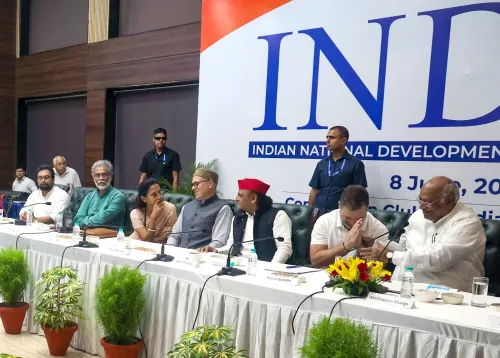
On the floor of Parliament itself, that the Congress alliance is over. What's being missed in coverage is that this is as much about Tamil Nadu's post-election arithmetic as it is about national opposition unity. The Congress's pivot to TVK was not a minor tactical adjustment; it was a direct challenge to DMK's dominance in the state. By formalising the break in Parliament, the DMK is ensuring there is no quiet reconciliation without a public reckoning. The bigger question is whether this fracture weakens the INDIA bloc's already fragile cohesion, or whether it accelerates a broader realignment of regional parties that have long been uncomfortable with Congress's terms of alliance.
NationPress
22 Sept 2026
Frequently Asked Questions
Why has the DMK sought separate seating in the Lok Sabha?
The DMK has sought separate seating because its alliance with the Congress collapsed after the Tamil Nadu Assembly elections. The Congress extended support to C. Joseph Vijay's Tamilaga Vettri Kazhagam (TVK) following a fractured mandate, which the DMK viewed as a political betrayal, making a shared seating arrangement untenable.
Who wrote the letter to the Lok Sabha Speaker and what did it say?
DMK Parliamentary Party leader Kanimozhi Karunanidhi wrote to Lok Sabha Speaker Om Birla, requesting an independent seating block for DMK MPs. She cited the changed political relationship between DMK and Congress as the reason, arguing that continuing to share seating with Congress members would be inappropriate.
What happened in the Tamil Nadu Assembly elections that caused the split?
The Tamil Nadu Assembly elections produced a fractured mandate. The Congress, which had contested as part of the DMK-led alliance, subsequently backed actor-politician C. Joseph Vijay's Tamilaga Vettri Kazhagam (TVK), prompting DMK leaders to accuse Congress of switching allegiances at a critical moment.
Has the Lok Sabha Speaker responded to the DMK's request?
As of 8 May, neither the Congress nor the Lok Sabha Secretariat has officially responded to Kanimozhi's letter. Sources indicate the Speaker's office is expected to examine the request in line with parliamentary procedures and seating norms.
What are the broader political implications of the DMK-Congress split?
The split could complicate opposition coordination at the national level, given the DMK's significant presence in the Lok Sabha. Political observers believe it may accelerate a broader realignment of regional parties and weaken the cohesion of the wider opposition grouping ahead of future parliamentary contests.