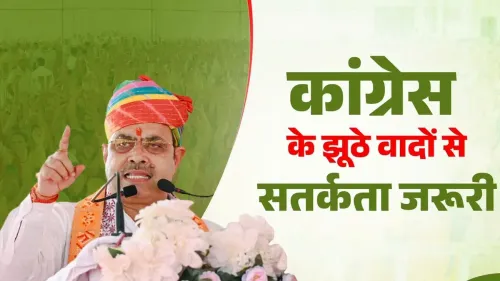
Rajasthan CM Bhajanlal Sharma tells Congress: introspect, don't blame EVMs
Synopsis
Rajasthan CM Bhajanlal Sharma turned the Congress's EVM narrative on its head, pointing to MLC poll defeats across four states conducted via ballot papers. His message: the problem is not the process — it is Congress's leadership, policies, and eroding voter trust.
Key Takeaways
Rajasthan CM Bhajanlal Sharma criticised Congress on 28 October 2026 for blaming the electoral process after repeated defeats.
He cited elections for 28 MLC seats in Uttar Pradesh , Maharashtra , Bihar , and Karnataka — conducted via ballot papers — as evidence against the EVM argument.
Sharma alleged Congress was unwilling to enforce internal accountability despite a string of electoral setbacks.
He stressed that respecting the people's verdict and accepting responsibility are fundamental to democratic conventions .
Sharma called on Congress to examine its leadership , policies , and declining voter connect rather than question the electoral system.
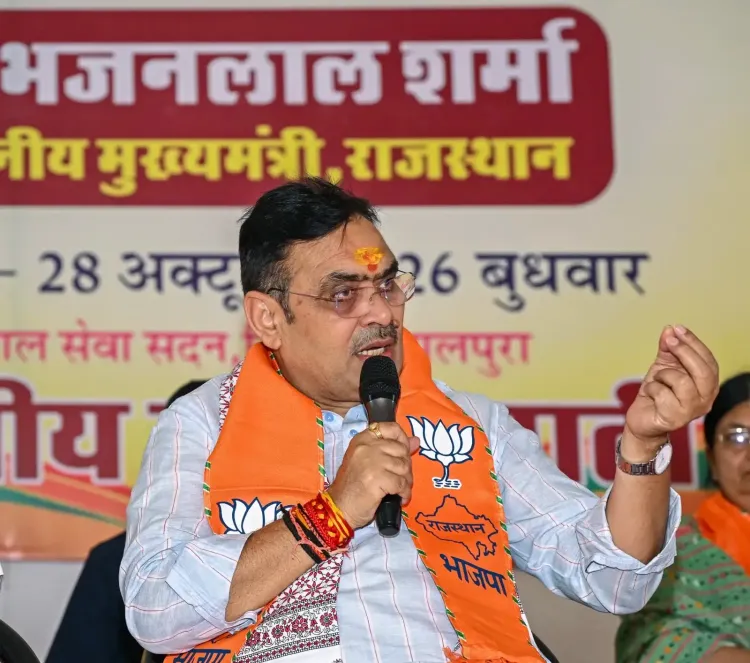
Rajasthan Chief Minister Bhajanlal Sharma on 28 October 2026 sharply criticised the Congress for repeatedly questioning the electoral process after election defeats, saying the party must instead examine its own leadership, policies, and dwindling voter support. Speaking in Jaipur, Sharma argued that blaming the system — whether ballot papers or Electronic Voting Machines (EVMs) — could not override a people's mandate delivered against a party that had lost touch with voters.
The MLC Poll Results That Triggered the Remarks
Sharma pointed to recently concluded elections for 28 Legislative Council (MLC) seats across Uttar Pradesh, Maharashtra, Bihar, and Karnataka — all conducted using ballot papers rather than EVMs — as evidence that the Congress's electoral difficulties transcended any particular voting technology. The results, he said, should serve as a mirror for the party rather than fresh ammunition against the electoral framework.
What Sharma Said About Congress Leadership
The Chief Minister alleged that despite a string of electoral reverses, the Congress had shown little willingness to acknowledge internal weaknesses or enforce accountability within its leadership ranks. 'The Congress should look beyond EVMs and assess its leadership, policies and diminishing support among voters,' Sharma said, according to reports. He stressed that without honest self-assessment, the party could not hope to rebuild public confidence.
Democratic Values and Accepting the Mandate
Sharma emphasised that in a democracy, the people's verdict was paramount and every political party carried a responsibility to respect it. He argued that accepting electoral setbacks and taking institutional responsibility were not just political niceties but essential obligations for maintaining democratic conventions. Critics of the ruling establishment, however, have long contended that EVM integrity deserves scrutiny regardless of ballot-paper outcomes — a point Sharma's remarks did not directly address.
Broader Political Context
The remarks arrive amid a continuing national debate over electoral accountability and the conduct of India's voting process. The Congress and several Opposition parties have periodically raised concerns about EVMs, a position the Election Commission of India (ECI) and successive ruling coalitions have consistently rejected. Sharma's intervention adds to that chorus from the ruling side, framing the issue as one of Opposition credibility rather than institutional integrity. How the Congress responds — and whether it engages substantively with the MLC poll data Sharma cited — will shape the next round of this long-running political argument.
Point of View
But it sidesteps a more nuanced reality: the Congress's EVM concerns and its own organisational failures are not mutually exclusive. The party can simultaneously have a leadership problem and a legitimate process question — and conflating the two, as Sharma does, allows the ruling side to avoid institutional scrutiny. What is striking is how predictable this exchange has become: defeat triggers Opposition EVM allegations, which trigger ruling-party 'introspect' rebuttals, and the cycle repeats without any structural resolution. Until the ECI proactively addresses technical auditability in a manner that satisfies independent observers, this debate will outlast any single election cycle.
NationPress
28 Oct 2026
Frequently Asked Questions
Why did Rajasthan CM Bhajanlal Sharma criticise Congress?
Sharma criticised Congress for blaming the electoral process — specifically EVMs — for its repeated election defeats, arguing the party should instead introspect on its leadership, policies, and declining voter support. His remarks came on 28 October 2026 in Jaipur.
Which elections did Sharma cite in his remarks?
Sharma cited the recently held elections for 28 Legislative Council seats across Uttar Pradesh, Maharashtra, Bihar, and Karnataka. He noted these polls were conducted using ballot papers, not EVMs, to challenge Congress's argument that voting technology was responsible for its losses.
What specifically did Sharma say Congress must do?
Sharma called on Congress to examine its leadership, review its policies, and assess why voters have distanced themselves from the party. He argued that questioning the electoral system without addressing internal weaknesses would not help the party regain public trust.
What has Congress said about the electoral process?
Congress and several Opposition parties have periodically raised concerns about the integrity of Electronic Voting Machines, a position the Election Commission of India has consistently rejected. Sharma's remarks were a direct response to this ongoing Opposition narrative.
What is the broader significance of this political exchange?
The exchange reflects a recurring national debate over electoral accountability in India. The ruling establishment, including the BJP, frames Opposition EVM allegations as deflection from organisational failures, while the Opposition argues institutional scrutiny is a democratic right regardless of electoral outcomes.