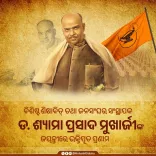
Dr Syama Prasad Mookerjee's 125th birth anniversary: VP Radhakrishnan pays tribute
Synopsis
On Dr. Syama Prasad Mookerjee's 125th birth anniversary, Vice President C.P. Radhakrishnan paid tribute at Uprashtrapati Bhawan, invoking the Jana Sangh founder's fight against Article 370 and his 1953 death in Kashmir detention — a legacy the BJP continues to claim as the ideological foundation of its national integration politics.
Key Takeaways
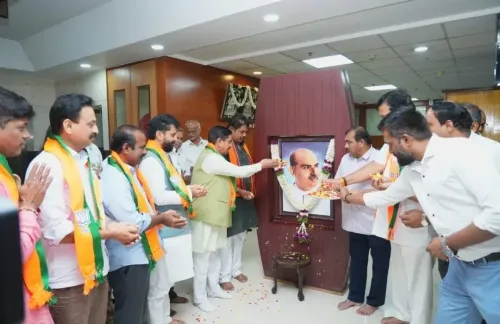
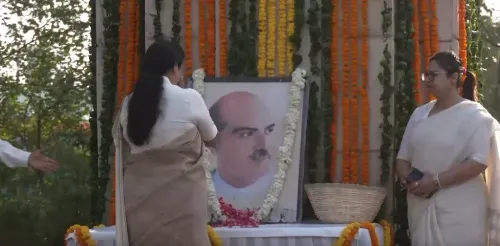
Radhakrishnan paid floral tributes to Dr.
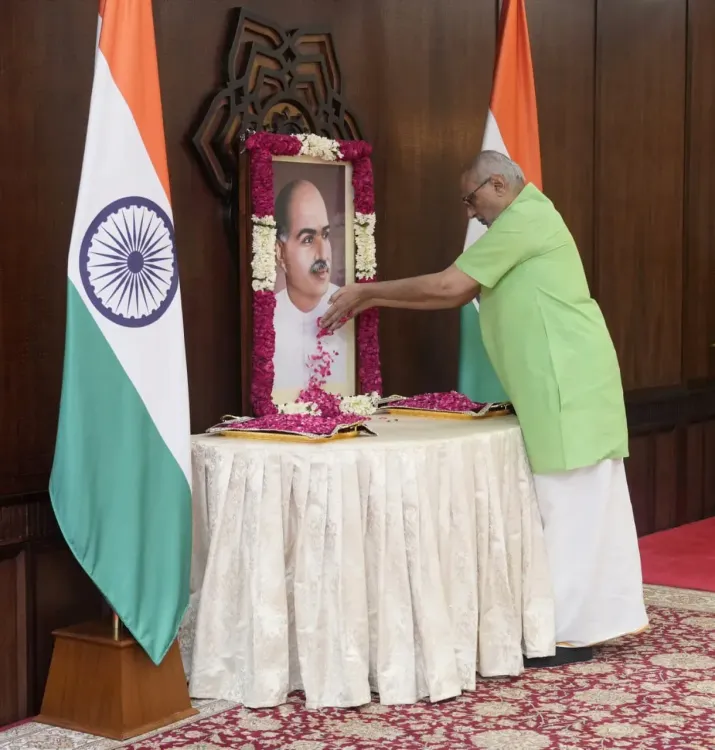
Syama Prasad Mookerjee at Uprashtrapati Bhawan on 6 July , his 125th birth anniversary .
Radhakrishnan described Mookerjee as a 'distinguished educationist, visionary statesman and nation-builder' who left an enduring imprint on India's democratic journey.
Mookerjee was born on 6 July 1901 in Kolkata and served as Independent India's first Minister for Industry and Supply .
He founded the Bharatiya Jana Sangh and was a staunch opponent of Article 370 , viewing it as a threat to national unity.
He died on 23 June 1953 in Jammu and Kashmir under disputed circumstances while in detention, after defying the state's permit law.
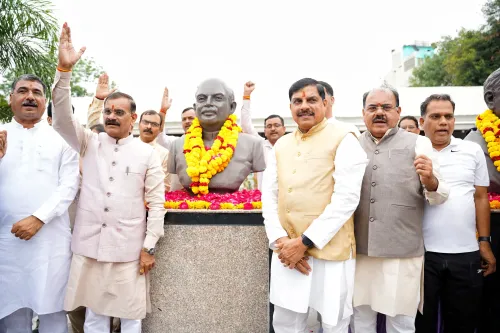
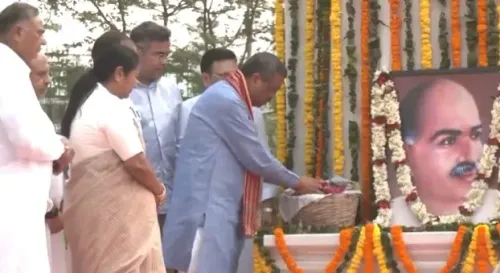
Vice President C.P. Radhakrishnan on Monday, 6 July paid floral tributes to Dr. Syama Prasad Mookerjee at the Uprashtrapati Bhawan in New Delhi, marking the late leader's 125th birth anniversary. Radhakrishnan said Dr. Mookerjee left 'an enduring imprint on India's educational, political and democratic journey.'
Tribute and Remarks by the Vice President
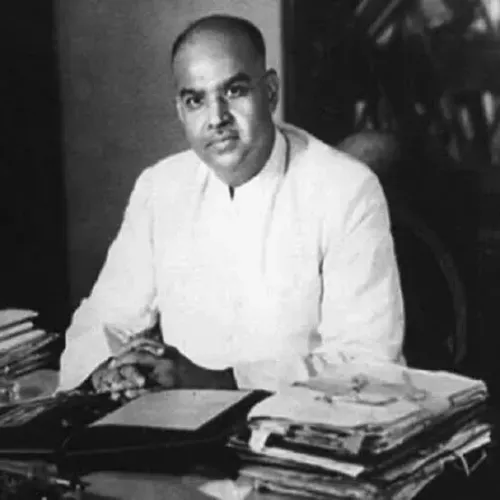
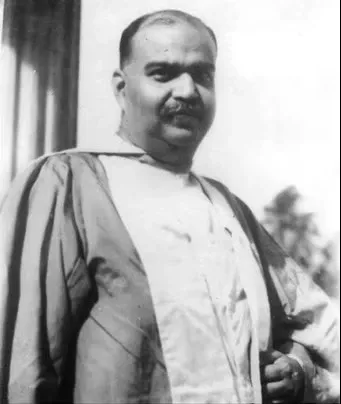
Sharing his tribute on social media platform X, Radhakrishnan described Dr. Mookerjee as 'a distinguished educationist, visionary statesman and nation-builder.' He highlighted the leader's multiple roles: one of the youngest Vice-Chancellors of the University of Calcutta, a member of the Constituent Assembly, President of the Akhil Bharatiya Hindu Mahasabha, Independent India's first Minister for Industry and Supply, and founder of the Bharatiya Jana Sangh — the ideological precursor to today's Bharatiya Janata Party (BJP).
Radhakrishnan further said that Dr. Mookerjee 'envisioned an India where every citizen would be equal under a single constitutional framework,' adding that the abrogation of Article 370 in 2019 was a tribute to his lifelong commitment to national integration.
Who Was Dr. Syama Prasad Mookerjee
Born on 6 July 1901 in Kolkata, Dr. Mookerjee was a barrister, academician, and prominent political figure of early independent India. He served as Minister for Industry and Supply in Prime Minister Jawaharlal Nehru's cabinet before resigning over policy differences.
Dr. Mookerjee was a vocal opponent of Article 370, which granted autonomous status to Jammu and Kashmir. He viewed it as a direct threat to national unity and the constitutional principle of equal citizenship.
His Final Stand in Kashmir
In 1953, Dr. Mookerjee entered Jammu and Kashmir in defiance of a law that required Indian citizens to carry identity permits to enter the state — a restriction he considered unconstitutional and discriminatory. He was detained and subsequently went on a hunger strike to protest the permit system. According to historical accounts, his efforts contributed to the revocation of the ID card requirement. He died on 23 June 1953 under circumstances that his supporters have long described as mysterious, while still in detention.
Legacy and Contemporary Relevance
Radhakrishnan noted that Dr. Mookerjee's 'supreme sacrifice' in Kashmir while striving for its full integration with India would never go unheeded. This comes amid continued political invocation of Dr. Mookerjee's legacy by the BJP, which traces its ideological lineage directly to the Bharatiya Jana Sangh he founded. The 125th birth anniversary has seen tributes from senior government figures across the country. His life and ideals, as Radhakrishnan put it, 'continue to inspire generations in the collective endeavour to build a strong, united, self-reliant and developed India.'
Point of View
Linking the party's current policy wins, most visibly the 2019 abrogation of Article 370, to a pre-Independence ideological lineage. What mainstream coverage often misses is the contested nature of Mookerjee's 1953 death: his detention and death in Kashmir remain a live grievance in BJP political memory, not merely a historical footnote. The 125th birth anniversary amplifies that narrative at a moment when Kashmir's post-370 status is still being institutionally settled. Whether this represents genuine historical reckoning or selective commemoration is a question India's political discourse has never fully resolved.
NationPress
6 Jul 2026
Frequently Asked Questions
Who was Dr. Syama Prasad Mookerjee?
Dr. Syama Prasad Mookerjee was a barrister, academician, and politician born on 6 July 1901 in Kolkata. He served as Independent India's first Minister for Industry and Supply and founded the Bharatiya Jana Sangh, the ideological predecessor of the BJP.
Why is Dr. Mookerjee's 125th birth anniversary significant?
The 125th birth anniversary marks a milestone in commemorating one of India's most influential early political figures. Senior government leaders, including Vice President C.P. Radhakrishnan, paid formal tributes, underscoring his continued relevance to India's national integration narrative.
What was Dr. Mookerjee's stand on Article 370?
Dr. Mookerjee strongly opposed Article 370, which granted autonomous status to Jammu and Kashmir. He viewed it as unconstitutional and a threat to equal citizenship, and entered the state in 1953 in defiance of its permit law to protest the restriction.
How did Dr. Syama Prasad Mookerjee die?
Dr. Mookerjee died on 23 June 1953 while in detention in Jammu and Kashmir, after being arrested for entering the state without the required permit. The circumstances of his death have long been described as mysterious by his supporters.
What is Dr. Mookerjee's connection to the BJP?
Dr. Mookerjee founded the Bharatiya Jana Sangh in 1951, which is the direct ideological predecessor of the Bharatiya Janata Party (BJP). The BJP traces its political and ideological lineage to his vision of national integration and a single constitutional framework for all citizens.