Dr. Jitendra Singh Addresses Egyptian Delegation at NCGG Governance Training
Synopsis
Union Minister Dr. Jitendra Singh addressed 25 Egyptian Deputy Governors at NCGG's Smart Governance capacity-building programme on November 19, 2026, citing the 2023 India-Egypt Strategic Partnership, over US$ 7.26 billion in bilateral trade, and calling for future modules shaped around partner nations' priorities.
Key Takeaways
25 Egyptian Deputy Governors and civil servants attended the Special Capacity-Building Programme on Smart Governance at the National Centre for Good Governance (NCGG) .
Jitendra Singh described India's civil service as the 'steel frame of governance' and positioned its institutional experience as shareable with partner nations.
Bilateral India-Egypt ties were elevated to a Strategic Partnership during Prime Minister Narendra Modi 's state visit to Egypt in June 2023 .
India-Egypt bilateral trade reached US$ 7.26 billion in FY 2021–22 , with more than 500 Indian companies registered in Egypt and investments exceeding US$ 4.5 billion .
The Minister called for future NCGG training modules to be shaped around the priorities and requirements of participating countries, emphasising mutual learning over one-way knowledge transfer.
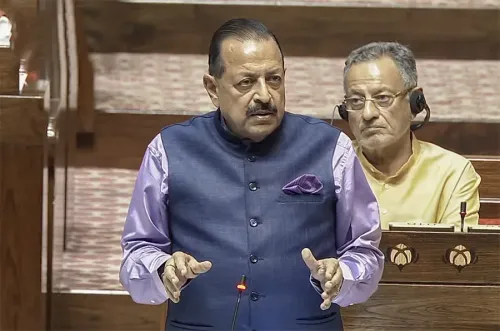
Twenty-five Egyptian Deputy Governors and civil servants arrived in India for a specialised capacity-building programme — and Union Minister of State Dr. Jitendra Singh used the occasion to frame India not just as a training host, but as a governance model the world is increasingly looking to replicate. Speaking at the National Centre for Good Governance (NCGG) on Thursday, November 19, 2026, Dr. Singh addressed the visiting Egyptian delegation enrolled in the Special Capacity-Building Programme on Smart Governance.
India's 'Steel Frame' — and What Egypt Came to Study
Dr. Singh opened by situating India's administrative architecture in global terms, describing it as 'one of the world's largest and most robust civil services frameworks' — a tradition long called the 'steel frame of governance'. He stressed that India's sheer diversity, spanning geography, language, and development stages, has forced it to build governance models flexible enough to work across vastly different conditions. That range of institutional experience, he argued, is precisely what makes it transferable to partner nations.
Crucially, the Minister pushed back against any sense of one-way instruction. 'Such programmes must encourage mutual learning,' he said, adding that future training modules should be shaped around the priorities and requirements of the participating countries — not India's convenience alone.
From Nehru-Era Ties to Modi's 2023 Strategic Partnership
Dr. Singh placed the NCGG programme squarely within the larger arc of India-Egypt relations, which stretch back to the first years of Indian independence when formal diplomatic ties were established. That long friendship took a qualitative leap in June 2023, when Prime Minister Narendra Modi's state visit to Cairo elevated bilateral ties to a Strategic Partnership — covering economic, political, cultural, and strategic cooperation.
The governance training is, in that sense, a direct institutional dividend of the 2023 upgrade. Administrative diplomacy is now running in parallel with trade, investment, and security engagement between the two countries.
US$ 7.26 Billion in Trade and 500 Indian Companies in Egypt
Dr. Singh anchored the relationship in hard economic numbers. Bilateral trade between India and Egypt reached US$ 7.26 billion in FY 2021–22. More than 500 Indian companies are registered in Egypt, with investments exceeding US$ 4.5 billion — figures that underline how deep commercial integration has run alongside diplomatic warmth.
The economic footprint gives both sides a material stake in the success of institutional exchanges like this one. When Indian companies operate at scale in Egypt, smooth governance and administrative alignment on both ends matters — making NCGG programmes less a courtesy and more a strategic investment.
NCGG's Expanding Role in South-South Cooperation
The National Centre for Good Governance, an autonomous body under the Department of Administrative Reforms and Public Grievances, has steadily expanded its remit as India's primary vehicle for administrative diplomacy. It regularly hosts batches from across Africa, Southeast Asia, and the broader Global South — training foreign civil servants in e-governance, public service delivery, and institutional design. The Egypt programme fits a recognisable pattern: post-summit institutional follow-through that converts diplomatic momentum into durable, people-to-people knowledge links.
What sets this batch apart is its size — 25 Deputy Governors — and its focus on smart governance, a domain where India has built credible credentials through the rollout of digital public infrastructure at a scale few nations have matched.
The next test is whether the 'mutual learning' pledge translates into genuinely co-designed modules — or whether future batches continue on a largely India-teaches-Egypt format. Dr. Singh's explicit call to shape programmes around participating countries' priorities sets an expectation that Cairo will now hold New Delhi to.
Point of View
Reinforcing India's credentials as a south-south cooperation leader at a moment when several African and Arab nations are reassessing their traditional partnerships. The minister's call for 'mutual learning' and partner-driven module design is notably calibrated: it softens any perception of paternalism while keeping India at the centre of the relationship. Watch whether future NCGG-Egypt batches see Egyptian priorities genuinely shape the curriculum, or whether the asymmetry of trainer and trainee quietly persists.
NationPress
19 Nov 2026
Frequently Asked Questions
What is the NCGG and what does it do?
The National Centre for Good Governance (NCGG) is an autonomous body under India's Department of Administrative Reforms and Public Grievances. It designs and delivers capacity-building programmes for Indian and foreign civil servants, covering areas such as e-governance, public service delivery, and institutional design as part of India's south-south cooperation outreach.
When did India and Egypt become Strategic Partners?
India and Egypt elevated their bilateral relationship to a Strategic Partnership in June 2023, during Prime Minister Narendra Modi's state visit to Cairo. The partnership covers economic, political, cultural, and strategic cooperation.
How much is bilateral trade between India and Egypt?
Bilateral trade between India and Egypt reached US$ 7.26 billion in FY 2021–22. More than 500 Indian companies are registered in Egypt with investments exceeding US$ 4.5 billion, reflecting deep commercial ties between the two countries.
What is the Special Capacity-Building Programme on Smart Governance?
It is a training programme organised by the NCGG for Egyptian Deputy Governors and civil servants, focused on smart governance practices. The current batch comprises 25 participants and is part of India's broader administrative diplomacy with strategic partners.
What did Dr. Jitendra Singh say about mutual learning at the NCGG programme?
Dr. Singh said that capacity-building programmes must encourage mutual learning, with future training modules shaped around the priorities and requirements of participating countries rather than being one-directional. He positioned India's diverse administrative experience as a shareable resource for partner nations.