Dr. Jitendra Singh hails Roshibina Devi's Asian Games silver
Synopsis
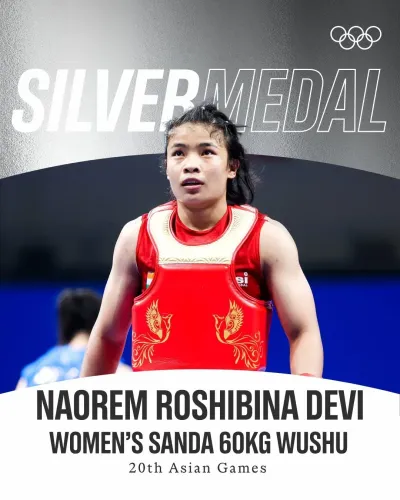
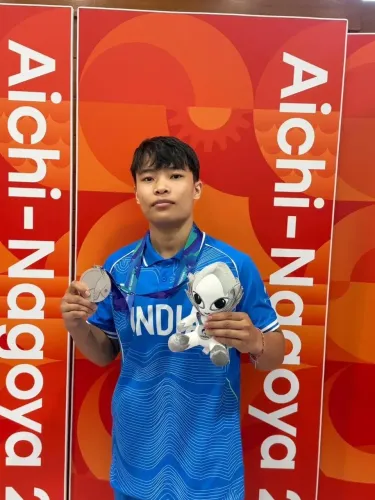
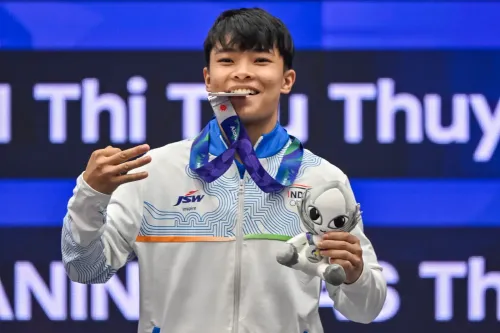
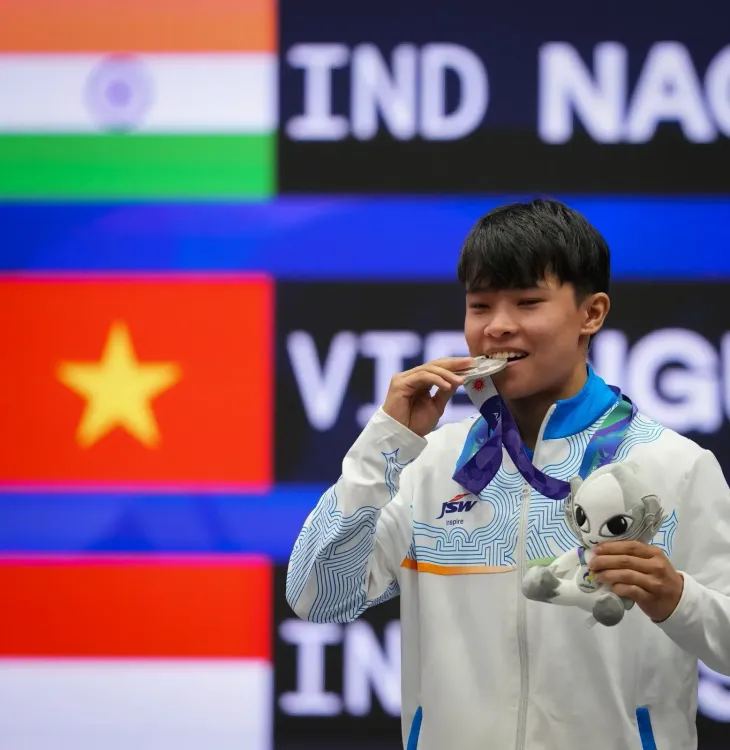
Union Minister Dr. Jitendra Singh congratulates wushu athlete Naorem Roshibina Devi on her silver medal in Women's Sanda 60kg at the Asian Games — celebrating her rare feat of winning medals at three consecutive Asian Games editions.
Key Takeaways
Naorem Roshibina Devi won the silver medal in the Women's Sanda 60kg event at the 2026 Asian Games .
The silver is her medal at three consecutive Asian Games , an extraordinary run of continental consistency.
Jitendra Singh publicly congratulated her on 24 September 2026 via his official social-media account.
Roshibina competes in Sanda , the full-contact striking-and-grappling discipline of wushu.
Her three-medal streak positions her as one of Indian wushu's most visible ambassadors for greater institutional recognition.
Three consecutive Asian Games, three medals — Naorem Roshibina Devi has built a record in Indian wushu that few athletes in any discipline can match, and on Thursday, 24 September 2026, Union Science and Technology Minister Dr. Jitendra Singh stepped forward to mark the moment publicly, congratulating her on winning the silver medal in the Women's Sanda 60kg event.
A hat-trick of medals on the Asian stage
Roshibina's silver adds to a sequence of podium finishes across three successive editions of the Asian Games — a run that places her among India's most durable multi-sport performers. Competing in Sanda, the full-contact striking discipline of wushu, she has returned from each cycle with hardware, a feat that demands not just talent but the physical and mental resilience to peak repeatedly on an international stage.
Dr. Singh's congratulatory post called her consistency, courage, and determination 'truly commendable', noting that three consecutive medals at the Asian Games is a 'remarkable achievement' — a characterisation that, given the competitive nature of the continental field, is hard to dispute.
Wushu's long fight for mainstream recognition in India
Wushu has operated in the margins of India's sporting mainstream for decades, overshadowed by sports with Olympic status. Yet athletes like Roshibina have quietly assembled a record of continental-level success that rivals performers in far better-resourced disciplines. The Sanda 60kg category demands striking, grappling, and ring-craft — a full combat skill set — making sustained excellence across age and competition cycles genuinely difficult.
Official social-media recognition from a Union minister, while a familiar pattern at major Games, carries symbolic weight for a sport still seeking wider institutional support. It signals that Roshibina's achievement has cleared the threshold of national visibility.
What the hat-trick means for her future
The question now is whether this third medal marks a peak or a platform. World Wushu Championships and future Asian Games cycles remain the logical next targets. For Indian wushu as a whole, a three-time Asian Games medallist in an active career is exactly the kind of flag-bearer the sport needs to attract federation attention and grassroots investment.
For Roshibina herself, the silver in 2026 is proof that her arc is still rising — and the best answer to anyone who doubted she could sustain it.
Point of View
Unglamorous excellence that India's sports ecosystem has historically struggled to reward. A Union minister's public congratulation is a small but visible step in a wider pattern of official recognition being extended to athletes in non-Olympic disciplines — a pattern that matters for funding conversations and federation priorities. Whether symbolic acknowledgment translates into structural support for wushu — coaching infrastructure, stipends, competition exposure — remains the more consequential question. If it does, Roshibina's career could become the reference point that shifts institutional attention toward a sport that has punched quietly above its weight for years.
NationPress
24 Sept 2026
Frequently Asked Questions
Who is Naorem Roshibina Devi?
Naorem Roshibina Devi is an Indian wushu athlete who specialises in the Sanda discipline. She has represented India at multiple Asian Games editions and has won medals at three consecutive Asian Games.
What medal did Roshibina Devi win at the 2026 Asian Games?
Roshibina Devi won the silver medal in the Women's Sanda 60kg event at the 2026 Asian Games.
What is Sanda in wushu?
Sanda is the full-contact combat discipline of wushu, involving striking, kicking, and grappling techniques inside a raised ring. It is distinct from the forms-based Taolu discipline.
Why is three consecutive Asian Games medals significant?
Winning medals at three consecutive Asian Games requires an athlete to sustain elite performance across multiple four-year cycles, overcoming evolving competition, physical changes, and the pressure of expectation — making it a rare and respected achievement in any discipline.
What did Dr. Jitendra Singh say about Roshibina Devi?
Dr. Jitendra Singh called her consistency, courage, and determination 'truly commendable' and described her three-consecutive-Games medal run as a 'remarkable achievement', extending best wishes for her future endeavours.