Dr. Jitendra Singh Highlights IIT Madras Brain Research
Synopsis
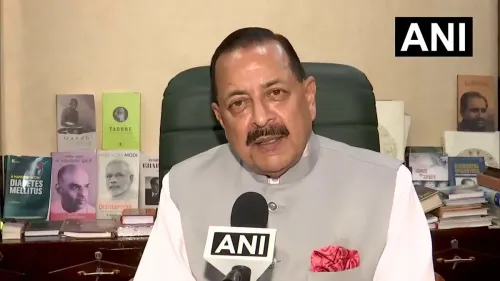
Union Science Minister Dr. Jitendra Singh spotlighted IIT Madras's brain research on X under the Mann Ki Baat banner, signalling high-level government attention to India's growing neuroscience capabilities.
Key Takeaways
Union Science and Technology Minister Dr.
Jitendra Singh posted on 25 October 2026 highlighting IIT Madras 's advances in brain research.
The post was tagged #MannKiBaat , linking institutional science achievements to PM Modi's monthly national radio address .
IIT Madras , founded in 1959 , has expanded from core engineering into interdisciplinary life-sciences and neuroscience research.
India's dedicated neuroscience infrastructure dates to 1997 , when the National Brain Research Centre was set up under the Department of Biotechnology .
Ministerial amplification through national outreach platforms often foreshadows formal policy attention, including funding reviews and inter-institutional mandates.
India's push to decode the human brain found a national platform on Sunday, 25 October 2026, when Union Science and Technology Minister Dr. Jitendra Singh flagged IIT Madras's advancing neuroscience work on X, tying it directly to Prime Minister Narendra Modi's monthly radio address, Mann Ki Baat.
IIT Madras and the neuroscience frontier
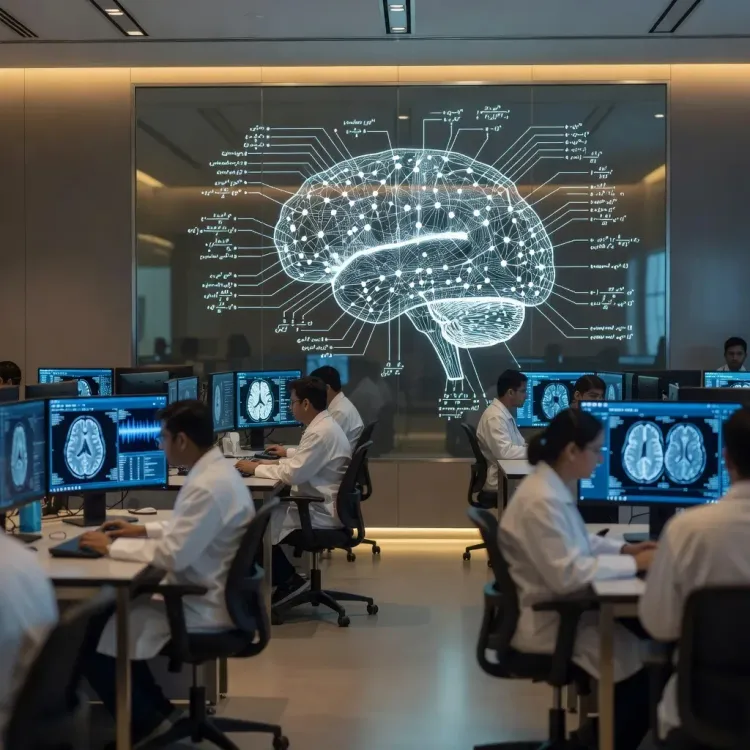
IIT Madras, established in 1959, has grown well beyond its engineering roots into interdisciplinary life-sciences research. Its neuroscience efforts sit within a broader institutional push to understand brain function at the cellular, systems, and computational levels — work that draws on the institute's existing strengths in data science and biomedical engineering.
Dr. Jitendra Singh's post described the institute as 'advancing brain research to help scientists better understand the human brain' — a characterisation that, while broad, signals ministerial attention to a field that has historically received modest funding compared to India's engineering and space programmes.
Mann Ki Baat as a science-outreach stage
The #MannKiBaat hashtag attached to the minister's post is significant. Prime Minister Modi's monthly radio programme routinely spotlights institutional achievements across sectors, and a science ministry amplification of that theme signals that IIT Madras's brain research is being positioned as a national success story — not merely an academic milestone.
India has maintained a dedicated neuroscience infrastructure since 1997, when the National Brain Research Centre was established as an autonomous institute under the Department of Biotechnology. That centre's existence underlines that government interest in the field predates the current administration, even as newer IIT-led programmes expand the ecosystem.
Where India's brain research agenda goes next
Ministerial visibility of this kind often precedes formal policy moves — updated research mandates, fresh funding tranches, or inter-institutional collaborations. Specific details of the IIT Madras projects referenced remain to be confirmed through official science ministry communications. What is clear is that neuroscience is being woven into India's broader science-and-technology narrative at the highest levels of public communication.
For a country that graduates hundreds of thousands of life-science researchers annually, translating that talent pipeline into globally competitive brain research could redefine India's place in one of the century's most consequential scientific races.
Point of View
It positions brain research as a pillar of India's ambition to move from a technology-consumer to a knowledge-producer nation.
NationPress
25 Oct 2026
Frequently Asked Questions
What brain research is IIT Madras doing?
IIT Madras is conducting neuroscience research aimed at better understanding human brain function, combining the institute's strengths in data science, biomedical engineering, and life sciences. Specific project details are yet to be officially confirmed by the science ministry.
Why did Dr. Jitendra Singh mention IIT Madras on Mann Ki Baat?
Mann Ki Baat is PM Modi's monthly radio programme used to highlight institutional achievements across India. The Science Minister tagged the hashtag to amplify IIT Madras's research as a national success story within that outreach framework.
What is the National Brain Research Centre India?
The National Brain Research Centre is an autonomous institute established in 1997 under India's Department of Biotechnology, dedicated to promoting neuroscience research and training in the country.
Is India investing in neuroscience research?
Yes. India has supported neuroscience through dedicated centres like the National Brain Research Centre since 1997, and more recently through interdisciplinary research programmes at premier institutes like IIT Madras.
What is Dr. Jitendra Singh's role in India's science sector?
Dr. Jitendra Singh serves as Union Minister of State (Independent Charge) for Science and Technology and Earth Sciences, and also as Minister of State in the Prime Minister's Office, making him the key political figure overseeing India's science and research agenda.