Dr. Jitendra Singh Holds Public Durbar in Kishtwar, J&K
Synopsis
Union Minister Dr. Jitendra Singh conducted a public durbar in Kishtwar, Jammu and Kashmir, on November 2, 2026, meeting citizen delegations alongside Leader of Opposition Sunil Sharma and DC Pankaj Sharma, and issuing directions for timely grievance resolution.
Key Takeaways
Jitendra Singh held a public durbar at Kishtwar, Jammu and Kashmir on November 2, 2026 .
Leader of Opposition Sunil Sharma and Deputy Commissioner Pankaj Sharma were both present at the event.
The minister met delegations before the main durbar, listened to citizen grievances, and issued directions to district administration for timely resolution.
The visit is part of the central government's post- 2019 pattern of deploying Union ministers for on-ground grievance hearings in J&K districts.
Singh reiterated commitment to 'strengthening grassroots governance' and ensuring citizen concerns receive due attention.
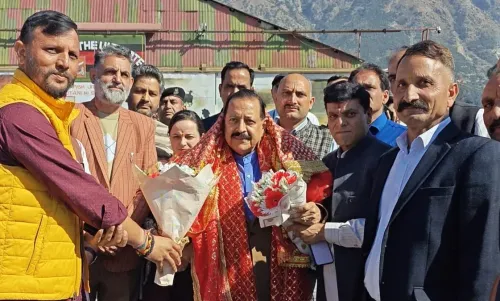
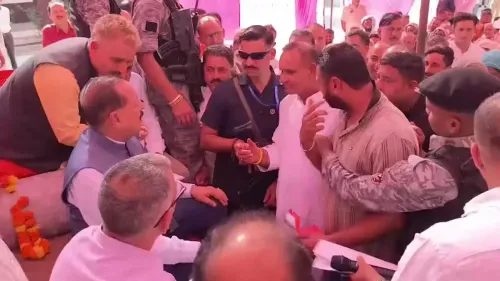
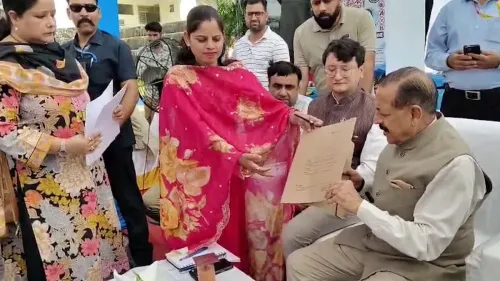
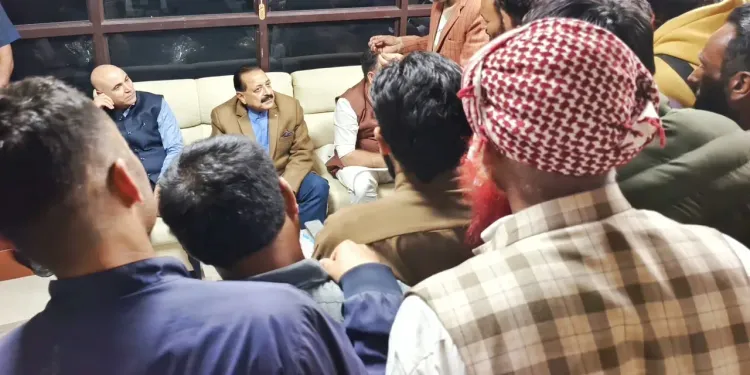
In the shadow of the Himalayas, Union Minister Dr. Jitendra Singh sat down with delegations of ordinary citizens at a public durbar in Kishtwar, Jammu and Kashmir, on Monday, November 2, 2026 — listening to grievances before issuing on-the-spot directions to district officials for their timely resolution.
Who Was in the Room at Kishtwar
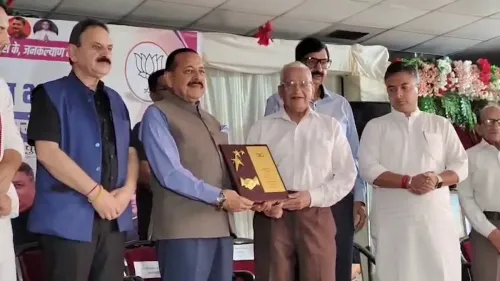
Leader of Opposition Sunil Sharma and Deputy Commissioner Pankaj Sharma were both present at the outreach event, signalling a rare convergence of political and administrative leadership at a single citizen-facing forum. The minister met delegations ahead of the main durbar, giving local residents a structured channel to raise concerns directly with a Union-level authority.
Dr. Singh noted on X that he 'listened to the concerns and issues raised by local citizens,' discussed their grievances, and 'issued directions to the administration and the concerned administration for timely resolution.' The explicit mention of directions — not just discussions — marks the event as an administrative intervention, not a ceremonial visit.
Kishtwar's Place in J&K's Governance Story
Kishtwar, a remote district in the Jammu division, has long faced challenges around connectivity, development delivery, and access to government services. Following the reorganisation of Jammu and Kashmir in 2019, the central government began deploying Union ministers directly into districts for public durbars and grievance camps — a deliberate effort to rebuild the citizen-administration interface in a territory now administered at the Centre's level.
The durbar format itself carries historical weight in J&K: it echoes the 'Darbar Move' tradition of the erstwhile state and the public-hearing culture that defined earlier princely administration. Repurposed for modern governance, these camps are designed to compress the distance between a remote mountain district and the corridors of New Delhi.
Grassroots Governance as a Stated Priority
Dr. Singh used the occasion to 'reiterate the commitment to addressing public grievances, strengthening grassroots governance and ensuring that the concerns of the people receive due attention' — language that places this visit squarely within a broader political messaging framework around responsive administration in J&K.
With the DC Pankaj Sharma in attendance, directions issued at the durbar carry the weight of immediate administrative follow-up rather than deferred bureaucratic processing. Whether those timelines hold will be the real test — one that residents of Kishtwar will be watching closely.
Point of View
Even as the minister's visit reinforces Central authority on the ground. For the BJP, such durbars serve the dual purpose of visible outreach and political consolidation in a newly restructured Union Territory. The follow-through on specific directions will be the true measure of whether this is governance or performance.
NationPress
2 Nov 2026
Frequently Asked Questions
What is a public durbar in J&K?
A public durbar is an open grievance-hearing forum where officials or ministers meet citizens directly to listen to complaints and issue administrative directions for resolution. The tradition has roots in J&K's princely history and has been revived post-2019 as a governance tool.
Who is Dr. Jitendra Singh and what is his role in J&K?
Dr. Jitendra Singh is Union Minister of State (Independent Charge) for Science and Technology and Earth Sciences, and MoS in the Prime Minister's Office. As an MP from the Udhampur constituency in J&K, he regularly engages in on-ground outreach across the Union Territory.
Who is Sunil Sharma in Jammu and Kashmir politics?
Sunil Sharma is the Leader of Opposition in the Jammu and Kashmir Legislative Assembly. His presence at the Kishtwar durbar alongside a Union minister is notable as it represents cross-party participation in a citizen-facing governance event.
Why does Kishtwar frequently host central government outreach events?
Kishtwar is a remote district in J&K's Jammu division with significant developmental and connectivity challenges. After the 2019 reorganisation, central ministers began holding regular grievance camps there to improve direct administrative access for citizens.
What happens after a public durbar — are grievances actually resolved?
At the Kishtwar durbar, Dr. Jitendra Singh issued directions to the Deputy Commissioner's office for 'timely resolution.' Follow-up typically depends on the DC office acting on those directions; watchdog observers and J&K Legislative Assembly discussions often track outcomes of such events.