Dr. Jitendra Singh, Odisha Minister chart Rare Earth, BioE3 plan
Synopsis
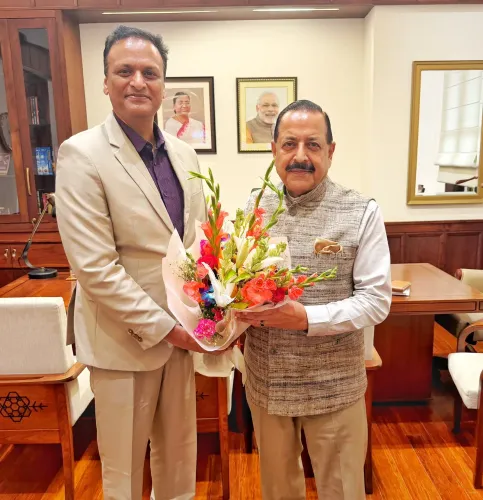
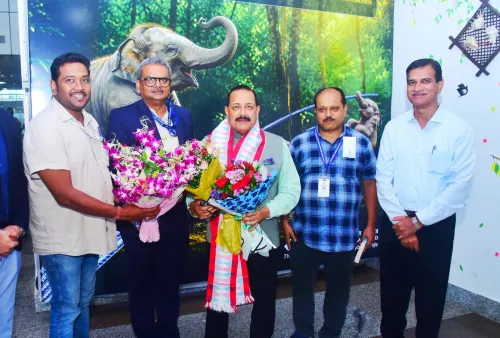
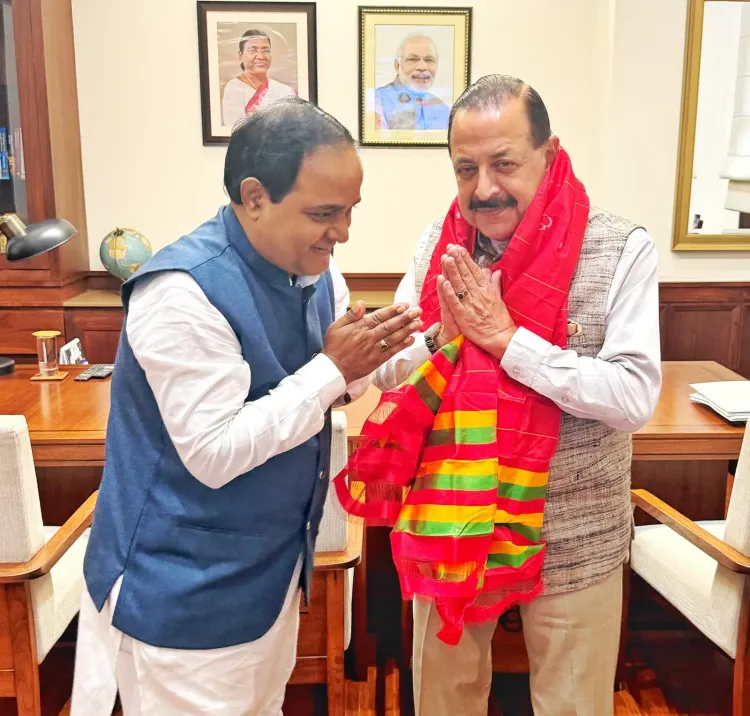
Union Minister Dr. Jitendra Singh met Odisha S&T Minister Krushna Chandra Patra on 11 August 2026 to discuss the Rare Earth Corridor, a proposed BioE3 Cell, marine biotechnology, space capabilities, and a 50-acre expansion of the Institute of Life Sciences in Bhubaneswar.
Key Takeaways
Rare Earth Corridor : Odisha and the Union government discussed how the state's coastal mineral deposits can feed into India's newly announced Rare Earth Corridor.
Jitendra Singh offered to set up a BioE3 Cell in Odisha through the Central Department of Biotechnology.
ILS Bhubaneswar expansion : The Odisha government will provide an additional 50 acres of land for the expansion of the Institute of Life Sciences, Bhubaneswar.
Marine Biotechnology and Space : Both sectors were identified as key drivers of future economic growth for Odisha given its long coastline and disaster-prone geography.
Centre-state alignment : The meeting reflects a broader national push to match state resource endowments with central strategic priorities in critical minerals and biotechnology.
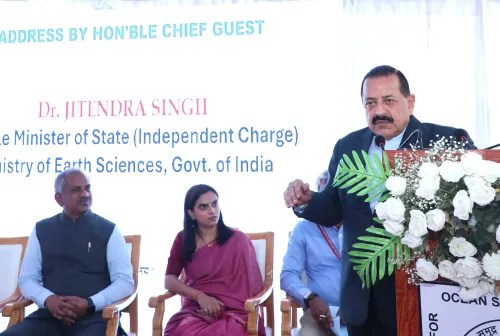
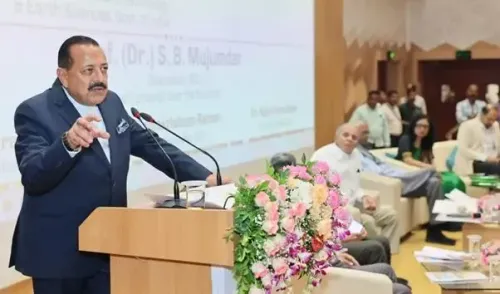
Odisha's mineral-rich coastline and its growing biotechnology footprint landed squarely on the Union government's agenda on Tuesday, 11 August 2026, when Union Science and Technology Minister Dr. Jitendra Singh met Odisha Minister of Science and Technology Shri Krushna Chandra Patra for a wide-ranging discussion on centre-state scientific collaboration — from rare earths buried in beach sands to the frontiers of marine biotechnology and space applications.
The Rare Earth Corridor and what it means for Odisha
At the centre of the conversation was the Rare Earth Corridor recently announced by the Government of India — a strategic initiative that Odisha, with its significant deposits of beach sand minerals along the Bay of Bengal coast, is positioned to anchor. Minister Patra called on Dr. Singh specifically to discuss how the state can plug into this corridor and translate its geological endowment into industrial and economic advantage. Rare earth elements are critical inputs for semiconductors, electric vehicles, defence electronics, and clean energy systems — sectors that sit at the heart of India's self-reliance agenda.
A BioE3 Cell for Odisha and the ILS expansion
Dr. Singh offered to establish a 'BioE3 Cell' in Odisha through the Central Department of Biotechnology (DBT) — a proposal that would bring the government's high-performance biomanufacturing framework directly into the state's research ecosystem. The two ministers also finalised a significant expansion of the Institute of Life Sciences (ILS), Bhubaneswar, a premier DBT-affiliated research institution: the Odisha government will provide an additional 50 acres of land to enable the institute's growth, deepening a centre-state partnership that has been quietly building since the DBT began decentralising its institute network in the 2000s.
Marine Biotechnology and Space: Odisha's next growth frontier
Beyond minerals and biotech infrastructure, the meeting flagged Marine Biotechnology and Space capabilities as twin levers for Odisha's economic diversification. The state's long coastline gives it a natural laboratory for marine biological research — from novel pharmaceuticals to aquaculture innovation — while space-linked applications could support disaster management, coastal monitoring, and agricultural planning in a state frequently exposed to cyclones. The framing reflects a wider national pattern: central ministries are increasingly working with resource-rich states to align regional assets with strategic priorities, rather than treating them as passive recipients of policy.
With a land transfer agreed, a BioE3 Cell on the table, and a corridor linking Odisha's minerals to national supply chains, the state's science-and-technology ambitions have moved from conversation to concrete commitment — and the next milestone to watch is the formal rollout of each of these initiatives on the ground.
Point of View
Union ministries are now co-designing infrastructure and research assets with states that hold the underlying resource advantage. Odisha's rare earth deposits and coastline make it a natural pilot for this approach. The 50-acre ILS land transfer is the most concrete deliverable so far, but the BioE3 Cell offer and Rare Earth Corridor alignment signal that Odisha is being positioned as a node — not just a beneficiary — in India's critical minerals and biomanufacturing supply chains.
NationPress
11 Aug 2026
Frequently Asked Questions
What is the Rare Earth Corridor for Odisha?
The Rare Earth Corridor is a Government of India initiative aimed at developing India's rare earth mineral resources. Odisha, which has significant beach sand mineral deposits along its coast, is expected to be a key contributor to this corridor.
What is a BioE3 Cell and why is one being proposed for Odisha?
A BioE3 Cell is a unit under the Department of Biotechnology's BioE3 (Biotechnology for Economy, Environment and Employment) framework promoting high-performance biomanufacturing. Union Minister Dr. Jitendra Singh offered to establish one in Odisha to boost the state's biotechnology ecosystem.
What is the Institute of Life Sciences, Bhubaneswar?
The Institute of Life Sciences (ILS) in Bhubaneswar is a premier autonomous research institution under the Department of Biotechnology, Government of India, focused on life sciences and biotechnology research. Its expansion will be supported by an additional 50 acres of land from the Odisha government.
How does marine biotechnology benefit Odisha?
Odisha's long coastline along the Bay of Bengal provides a natural resource base for marine biological research, including novel pharmaceutical development and aquaculture innovation, making marine biotechnology a significant growth opportunity for the state.
Who is Krushna Chandra Patra?
Krushna Chandra Patra is the Minister of Science and Technology of the Government of Odisha. He met Union Minister Dr. Jitendra Singh on 11 August 2026 to discuss science and technology collaboration between Odisha and the central government.